
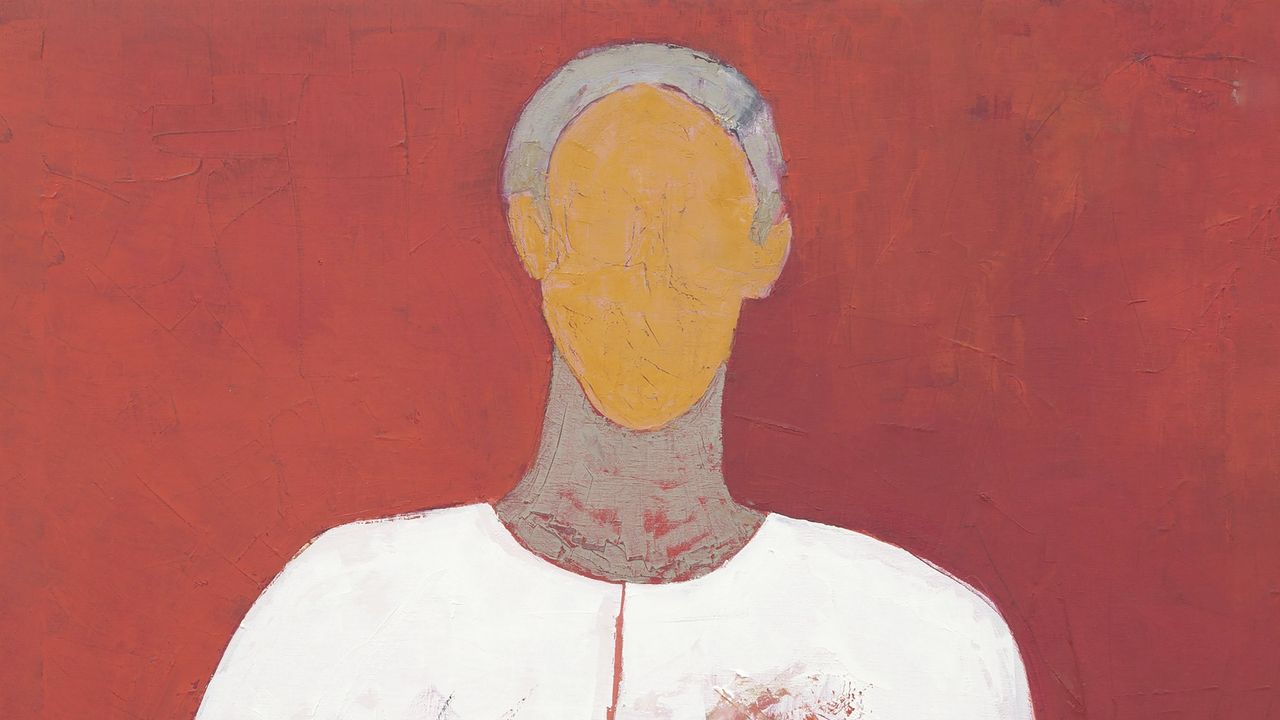
Born in 1931, Caland was ahead of her time. Lebanese by birth, French by marriage and American by choice, she was renowned for her bold and unapologetic body-inspired abstractions. She married Paul Caland, a French Lebanese lawyer who was the nephew of one of her father’s fiercest political rivals. They lived in Beirut and had three children – Pierre, Philippe and Brigitte. After her father died, she began painting eagerly in her early 30s – a sign of her need for more autonomy – and enrolled in the American University of Beirut in 1964 to study fine arts. In 1970, she sought complete creative liberation and left her family life behind and moved to Paris to pursue her art.
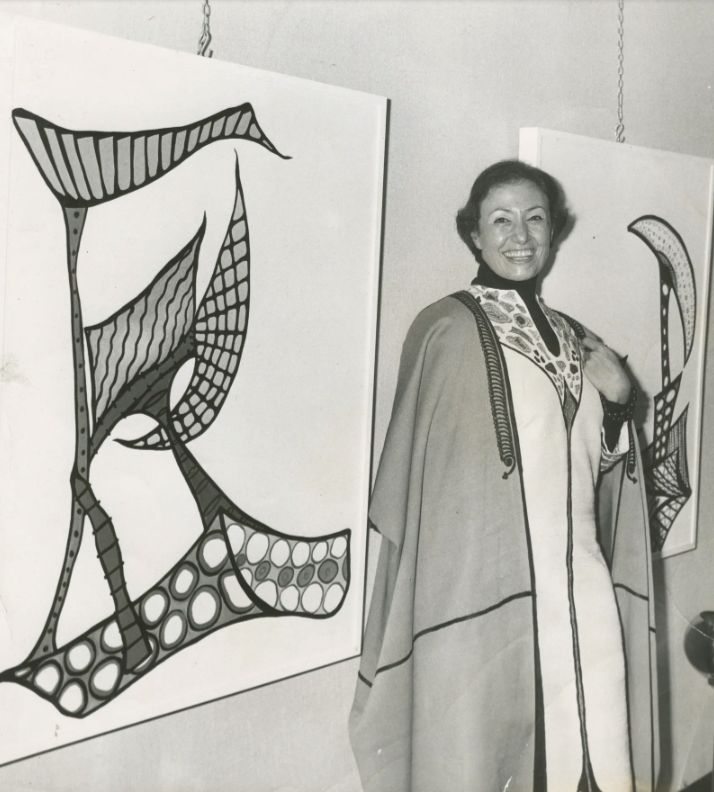
Photo: Huguette Caland Estate
“Throughout her career, both line and colour have been highly expressive elements, bearing not only compositional weight but also that of communication and emotion,” explains Hannah Feldman, the exhibition’s curator. “In Paris, Caland’s use of lines and colours shifted. Lines in paintings became something to resist, yielding to hues like in Bribes de Corps, and taking on even greater complexity in her drawings. One can sense her expression of freedom and push towards autonomy both in her art and life.” Fearless and uncompromising, Caland devoted her life to art. This exhibit, which was previously staged in Madrid and Hamburg posthumously, marks a newfound appreciation for the artist in the West.
Huguette Caland: A Life in a Few Lines is on view from September 27, 2026 to February 28, 2027 at the Hammer Museum, Los Angeles.
This article was originally published in the September 2026 issue of Vogue Arabia.