
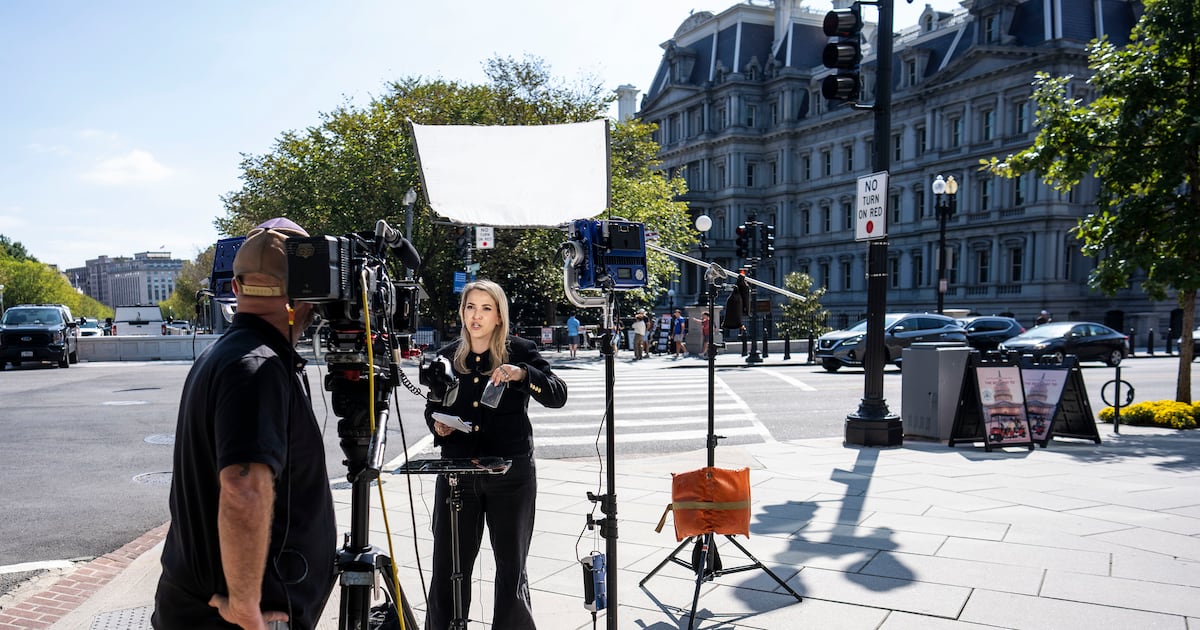
Major television networks have agreed to suspend their pooled coverage of US president Donald Trump after the White House refused to allow CNN to serve as a pool representative on Monday.
The move is an extraordinary escalation of an unfolding showdown between the Trump administration and the White House press corps, which began last week when the president barred journalists at CNN, MS Now and Politico from entering the White House grounds. Those three outlets said Monday they would sue to regain access.
Despite Trump’s years of lawsuits and threats against the news media, rival news organisations have rarely undertaken this kind of collective action.
Five networks – ABC, CBS, CNN, Fox News and NBC – have long shared the responsibility of providing television coverage of presidential events, splitting the financial costs and distributing footage that is carried by news organisations worldwide. The networks perform their duties on a rotation, and CNN had been due to provide coverage for Trump’s travel on Monday to the UN General Assembly.
It is extremely unusual for a president to travel or hold public events without being accompanied by representatives from the television pool. The president’s activities on Monday are still expected to be covered by print, radio and wire journalists, along with still photographers.
“Effective today, the TV pool will not be covering events designated as pool coverage of the President,” Bryan Boughton, the Washington bureau chief at Fox News, wrote in a note to television pool members on Monday, which was obtained by The New York Times. (Boughton is the acting chair of the television pool consortium; the networks rotate the chairmanship on a quarterly basis.)
“This follows the White House’s position preventing CNN from fulfilling its assigned pool duties,” Boughton wrote. “There will be no replacement pool put in place. All other pool coverage will continue as normal.”
“We will provide updates as this situation develops,” he added.
The five networks later issued a joint statement, writing: “The public has a vital interest in receiving accurate, independent information about its government. No administration should restrict a news organisation because it objects to its reporting.”
On Friday, Trump caught some of his own aides off-guard when he abruptly announced a ban on the three news outlets, saying he was fed up with what he described as “purposely negative stories.”
Journalists from the three organisations had their badges confiscated when they arrived at the White House complex Saturday.
CNN, MS NOW and Politico said on Monday that they would sue the Trump administration for barring them from the White House, saying it was a violation of their First Amendment rights to cover the president. They have also asked a judge to temporarily lift the ban until the courts decide. Experts say the ban is unlikely to withstand legal scrutiny.
The lawsuit alleges that the president and members of his administration banned their reporters “for the express purpose of excluding journalists and news organisations with editorial viewpoints disfavoured by the Trump administration”.
It argues that the outlets “have been suffering serious irreparable harm” since the ban, while the first amendment injury “poses a substantial threat to the freedom of the press not just for plaintiffs but for all journalists, and harms the public for whom they act as surrogates in reporting on matters of urgent public concern about the government”.
Trump defended his decision in a social media post on Monday. “The White House is not instituting an assault on the Free Press, something which I cherish,” he said. “It is instituting an assault on the FAKE NEWS, something that has grown like Cancer in our beloved United States of America.”
In 2009, the major networks balked when the Obama administration tried to bar Fox News from participating in a treasury department event; the administration backed down. This article originally appeared in The New York Times.
[ How Trump transformed America’s media orderOpens in new window ]