

The mother of a teenager from Bristol who suffered a mental health crisis and was detained by doctors has said his recovery was delayed by being sent to a mental health unit more than two hours away.
She described a chaotic and concerning lack of communication between different health teams, and said youngsters from the Bristol area aren’t getting the support they need because they are being sent to mental health units as far away as Cornwall, Plymouth and Bournemouth.
The mum, who wants to be known as Mrs A, spoke to Bristol Live after we reported on the ongoing crisis in mental health care in the Bristol and Bath area.
The area’s only ‘Tier 4 mental health unit’ for children and adolescents closed more than two-and-a-half years ago, and a new facility is still a long way from being created – which means scores of young people are being sent to units hours away to be treated.
Tier 4 mental health units are capable of treating the most seriously ill young people, many of whom have been ‘Sectioned’ under the mental health act – which is what happened to Mrs A’s son.
He was first detained in hospital in Bristol earlier this summer, and it took almost a week for a bed to be found at a Tier 4 unit in Bournemouth, because of a lack of beds across the south west, and the lack of any kind of unit any nearer.
Earlier this year, the Bristol Live revealed that – from January 2024 up until the first half of this year – more than 60 young people had been sent to Dorset, Devon and Cornwall by mental health chiefs in Bristol and Bath because there is no suitable facility here.
Mrs A’s son became one more that this happened to. She told Bristol Live that, as well as serious concerns about how joined up the care and communication between, the sheer distance away meant parents, families, friends and loved ones found it a huge challenge to visit the vulnerable teenagers – something which mental health chiefs themselves said was a huge help in aiding recovery.
But the concerns over how chaotic his admission to the unit in Bournemouth was, and the lack of communication between parents and health workers back in Bristol, raises serious questions about Avon and Wiltshire Mental Health Partnership’s handling of young people in mental health crisis.
History repeating
Back in 2017, the death of a Bristol teenager called Becky Romero prompted one of the first serious and official criticisms of AWP. The coroner at her inquest ruled that her death was an accident contributed to by the ‘neglect’ of the NHS.
Like Mrs A’s son, Becky had been sent to a mental health unit in Dorset, and the coroner later described how a lack of communication between health carers there, in Bristol and her parents meant she effectively ‘fell through the net’ in the weeks before her death.
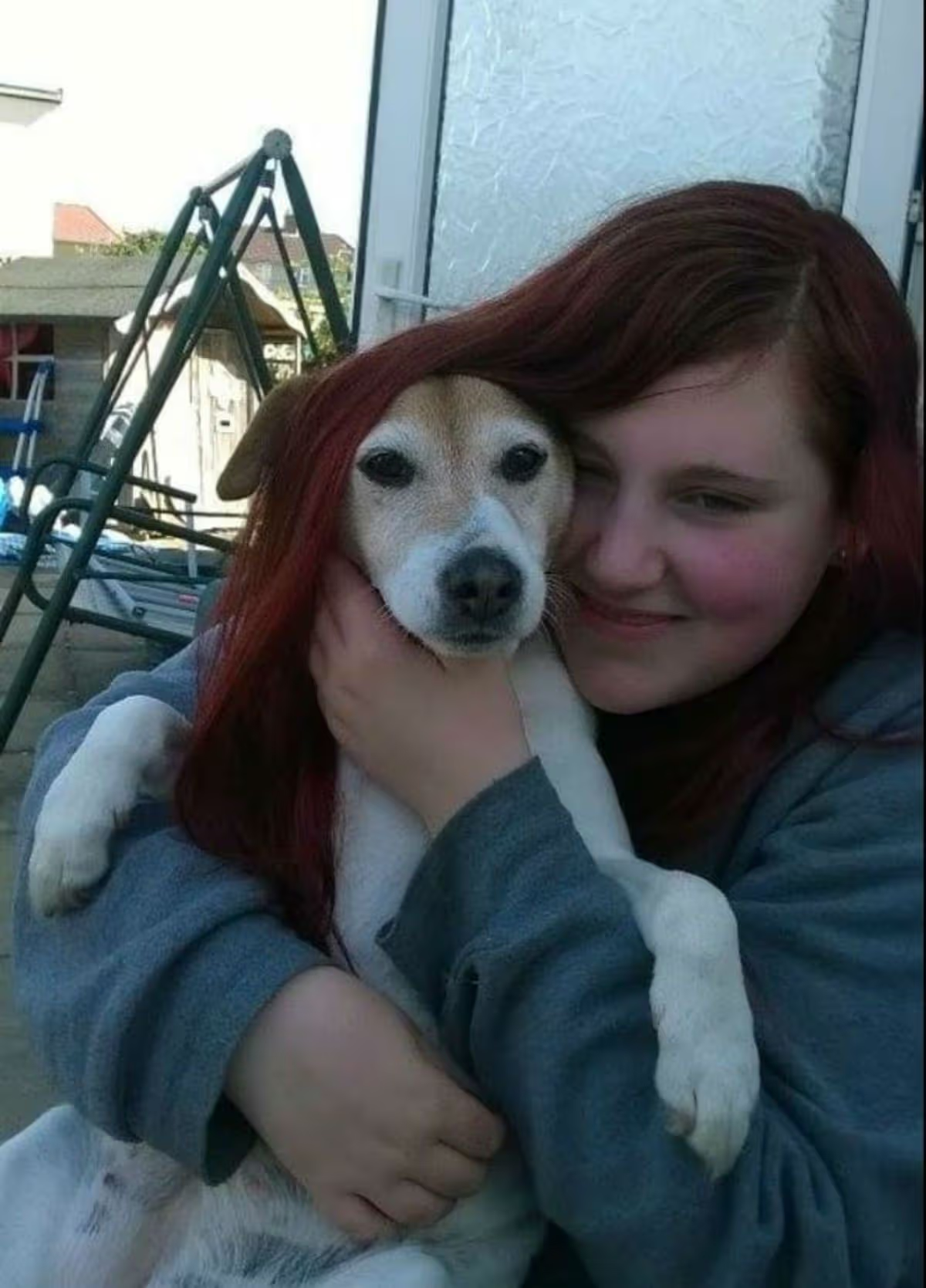
Becky Romero, from Bedminster Down, who took her own life in July 2017
Mrs A told Bristol Live that a similar story unfolded with her son this summer, some nine years later.
“There’s a lack of control that AWP have once a patient has left the area,” she said. “I didn’t realise this until he was already at Bournemouth and his social worker didn’t realise this either.
“When AWP section someone, they literally have to beg another Integrated Care Board to take them. They have made a clinical decision based on their own experience of a patient, but the new mental health team question that decision constantly – they do not take AWP’s word for anything.
“His care plan was delayed. He was detained for a week and Dorset still didn’t have all his notes. When he turned up there, they didn’t even know why he had been sectioned. They didn’t even know he is autistic.
“At his first meeting, Dorset made it clear they didn’t want him there. He was sectioned for a week and there was still no care plan in place. The staff there do not keep parents informed because they expect AWP to do, but we have no contact details for anyone in AWP, just the basic CAMHS email – it’s very distressing and confusing,” she added.
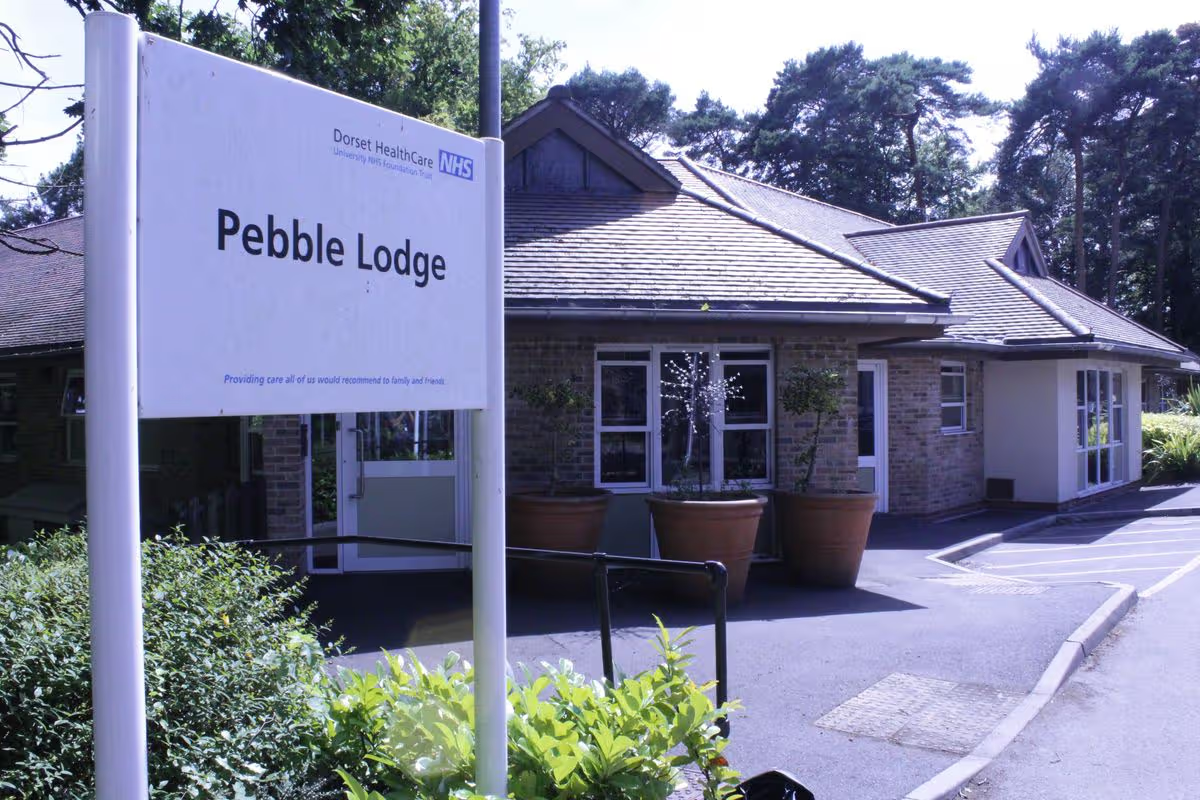
Pebble Lodge in Bournemouth
“It feels like no one is in control and we are worried that key elements of his needs will be missed because it is so messy,” she added.
“If there were Tier 4 beds in Bristol it would be completely different, and I believe a more positive outcome could be automatically expected,” she added.
The challenge of distance
Young people in mental health crisis in Bristol are sent to Bodmin in Cornwall – a five-hour, 270-mile round trip. They may also be sent to a unit in Plymouth, which is slightly closer, or Bournemouth – where Mrs A’s son ended up – which is a similar five-hour, 150 mile round trip.
As well as being transferred to a completely different mental health team, that physical distance, and time, is another huge challenge for parents and their children.
“We visited him every day for the first week, and every other day since. We have also taken friends to visit,” she said.
“It’s a two and a half or three hour drive in one direction, and seven hours in one direction on public transport. Each trip costs us about £100 in fuel and food, and that’s not including lost income. There is no financial help and we had to reduce visits to twice a week, which he isn’t happy about,” she added.
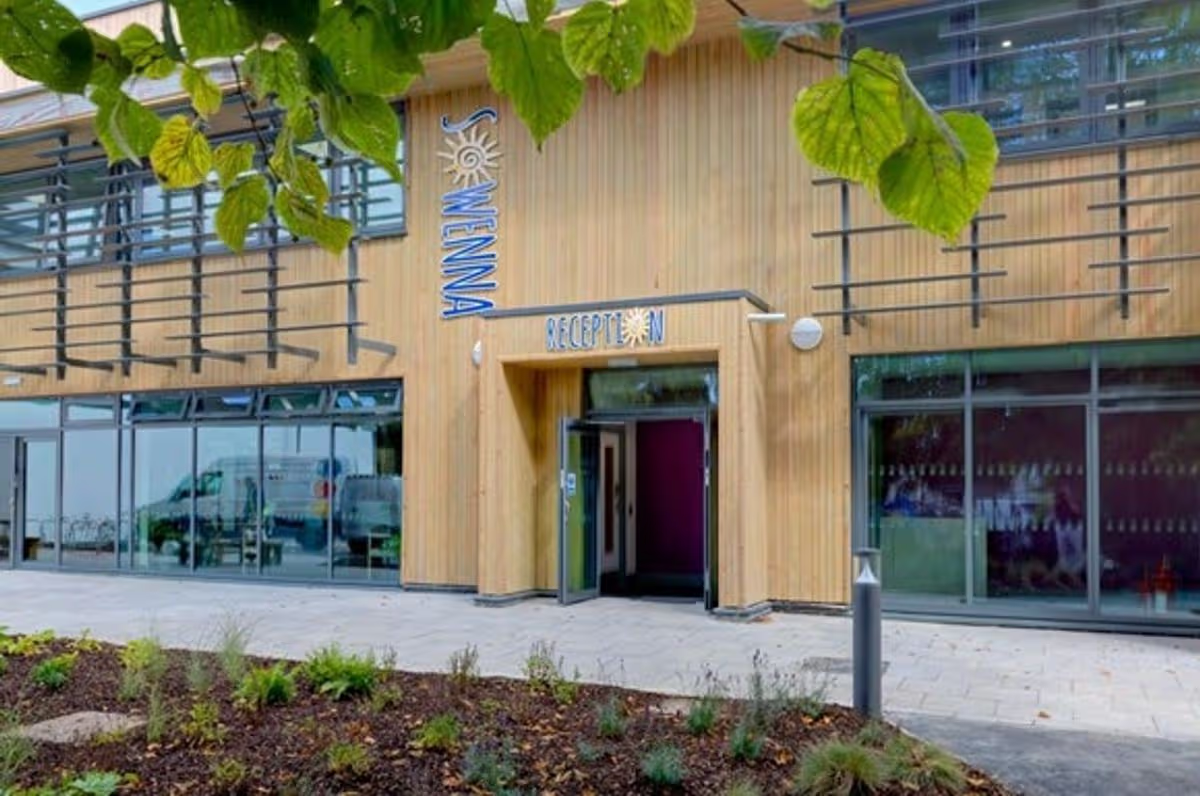
The Sowenna CAMHS unit, in Bodmin(Image: DCM)
The result is that young people from Bristol in the units in Devon, Cornwall and Dorset, end up not being visited as much as local teenagers.
“The hospital said it is unusual for parents to visit so much, and that for a lot of the kids it’s once a month on average,” Mrs A said.
“There would be lots of reasons for families not visiting regularly, but the finances will play a huge part. We have spent £2,000 visiting him in just a couple of weeks, and that was all our savings. I have lost £750 in income for unpaid time off – it’s just not sustainable,” she added.
What happened to Riverside?
The Tier 4 unit in Bristol was called Riverside, and was based at the NHS’s Frenchay Hospital campus in north Bristol. It closed in January 2024, after the death of Lucy Curtis, a 17-year-old from Almondsbury, who was found unresponsive in her room there, just after Christmas 2023.
At her inquest earlier this summer, the coroner found AWP’s actions in various aspects of her care possibly or probably contributed to her death.
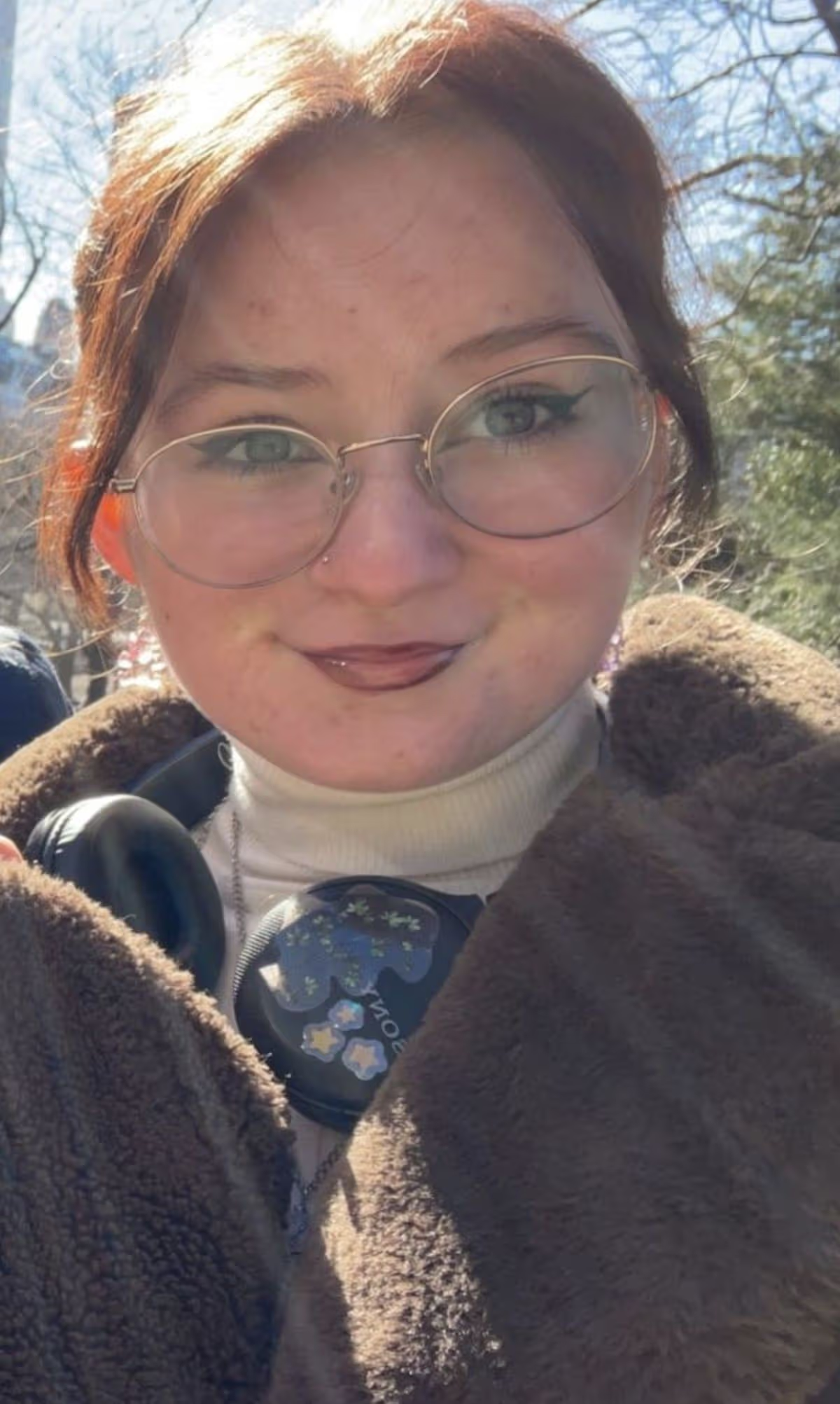
Lucy Curtis was 17 when she died on January 1, 2024, following an incident of self-harm at Riverside Adolescent Unit at Blackberry Hill Hospital(Image: Family handout)
But the coroner, Dr Peter Harrowing, opted not to make any formal recommendations about the lack of a Tier 4 unit, after hearing reassurances from senior AWP officials that the issue was being dealt with.
Bristol Live understands AWP chiefs have decided Riverside is no longer fit for purpose, and a new unit will have to be created – but little has been done to make that happen in the 2¾ years since it was suddenly closed, or in the more than three months since Lucy Curtis’ inquest.
After her inquest, Lucy Curtis’ parents told Bristol Live they wanted to see a Tier 4 replacement for Riverside, and health minister Dame Diana Johnson told Bristol Live in August that the situation was ‘appalling’.
There are still no confirmed plans for a replacement in-patient mental health unit for children and young people in the Bristol and Bath area, and it is understood that around eight to ten young people from the city are currently being treated down in Cornwall, Devon and Dorset.
What do AWP say?
Bristol Live put Mrs A’s experiences of what that means to families and young patients to AWP, and asked again what specific progress had been made on creating a new Tier 4 unit in Bristol, three months after the Avon Coroner had been reassured it was in hand.
AWP confirmed it was still the plan to open a new Tier 4 unit, and it was still working on that. The health trust apologised to parents, and said it appreciated the challenges of young people being sent so far away.
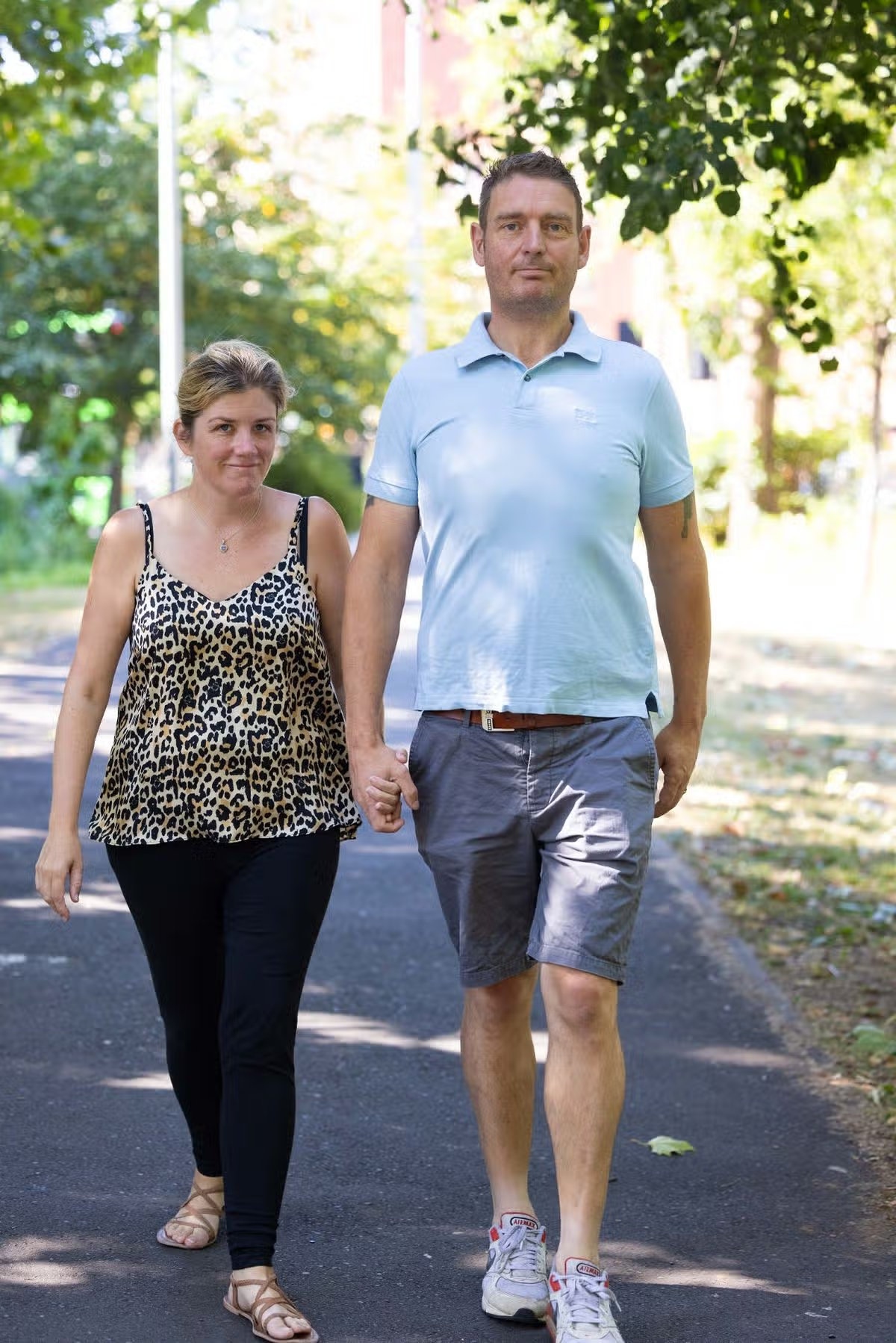
Barry and Michelle Curtis(Image: PAUL GILLIS / Reach Plc)
“We appreciate the concerns raised by young people, parents and carers about children being admitted to mental health inpatient beds far from home,” an AWP spokesperson said.
“These placements can present challenges, and we understand the impact this can have on families.
“Since the temporary closure of Riverside, we have taken steps to strengthen how care is coordinated when a young person is admitted to an alternative unit. These include improving admission planning to better involve young people and their families; working with the South West Provider Collaborative to strengthen partnership between the units across the region; and undertaking weekly reviews of all young people who are being supported in an alternative placement.
“We also ensure every young person has allocated a dedicated key worker to act as their consistent point of contact, and our community CAMHS teams remain actively involved throughout the admission to support care planning and to make sure discharge back home is as well‑prepared as possible,” he added.
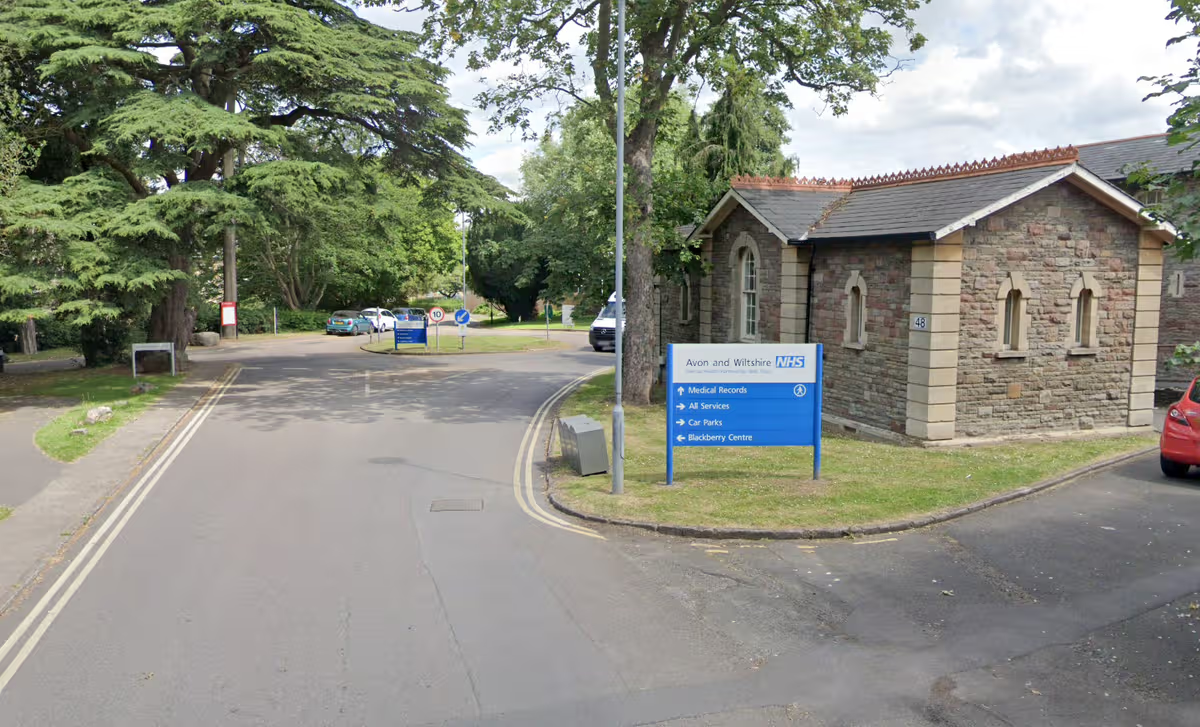
Riverside Adolescent Unit is based on the Blackberry Hill Hospital site (general site image)(Image: Google Maps)
“However, we acknowledge the frustration regarding communication and coordination between organisations, and we sincerely apologise to any family who feels their experience has fallen short of the standard they should expect,” he said.
On the lack of a Tier 4 unit since January 2024, AWP said it was still working on plans. “We are strengthening our existing local offer through our community-based crisis and intensive support service, enabling more young people to be safely supported at home, and reducing the need for hospital admission wherever possible,” said the AWP spokesperson.
“We also remain firmly committed to providing local inpatient beds for local young people and continue to work closely with our partners to progress this.
“While achieving this requires support across the wider system, we are hopeful that we will be able to share more detailed plans as this work develops.
“We have now started engagement sessions with young people and families who have experience of CAMHS inpatient services to ensure their voices shape the design and feel of a future service.
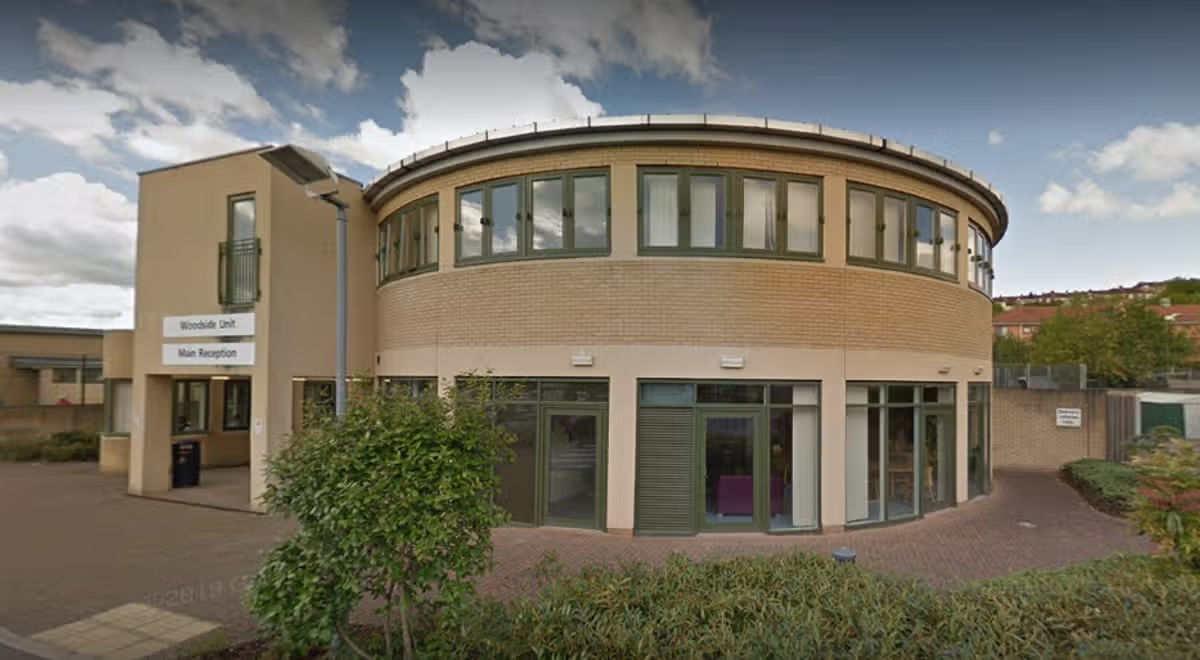
The Avon and Wiltshire Mental Health Partnership (Image: Google Maps)
“We recognise this is taking some time but are confident of creating a service that better reflects what young people and families say they need,” he added.
AWP said any parent who is concerned about the lack of joined up working when their child is sent so far away should raise them.
“We would ask parents, carers and young people who have concerns about any aspect of their care to raise them with their care team, through the Family Ambassadors service or through AWP’s formal feedback and complaints process,” he said.
“We value openness and transparency and the feedback we receive is key to addressing any concerns and assists us with making improvements. We want to reassure families that no-one will be disadvantaged in any way because of sharing their views, raising concerns, or providing feedback,” he added.
‘Gaslighting’
Mrs A described that response as ‘gaslighting’, and said in her experience AWP’s communications channels were essentially closed even to talk about their patients, let alone complain or raise concerns.
“We were told he was going to Bournemouth and we had to Google the phone number. We called them when he was on his way and they said: ‘Oh great, we are glad you called, we don’t have contact details for you’,” she said.
“We were given the name of his keyworker and he emailed us to introduce himself almost two weeks later. Our ‘family ambassador’ didn’t get in touch for a week, and we hadn’t even been told we had one or what they do. They had limited slots to meet and in the end we couldn’t.
“What we have wanted from the start is for someone to tell us what they are actually doing while he is in there because we just don’t know.
“We have had no meaningful contact with AWP since the admission. There were two meetings at Bournemouth at the start, and the second one was a ‘discharge planning meeting’, to which I said ‘how about we talk about the plan while he in here, before we start talking about discharge?’” she added.
This early desire to plan for discharge, almost immediately after the young person is first admitted, was highlighted by the coroner at Lucy Curtis’ inquest as one of the key factors that potentially contributed ultimately to her death.
The inquest heard she was first admitted to Wessex House, a Tier 4 unit in Bridgwater that also closed in 2024, and even before her treatment could get properly underway, a meeting was called to talk about when she would leave.
That was in 2023. In 2026, Mrs A said she ‘struggled to get answers’ from staff at the unit in Bournemouth because the staff ‘kept changing’. “They ring us from different phone numbers and they all use different email addresses and we just don’t know who to talk to,” she said.
“I finally secured the contact details for the consultant, more than three weeks after admission,” she added.
And Mrs A described AWP’s claims to have a complaints process as ‘an absolute joke’. She said she had experienced years of trying to get CAMHS help for her son as he grew up, before the crisis that saw him sectioned, and made a complaint three years ago. “It took them more than six months to find a staff member to investigate it,” she said.
She also made another complaint earlier this year and received a response five months later which addressed an entirely different complaint that was already resolved.
“Why would I bother complaining when you have to wait months and it doesn’t tangibly change the outcome for your own child?” she said.
“The amount of emotional labour that goes into complaining is too great, I am on my last nerve ending and nothing good comes of it,” she added.
Mrs A – like the parents of Lucy Curtis, Becky Romero and countless other parents before her – says she fears there will be a lack of support when her son is discharged.
“They don’t have the resources or training to support young people at home,” she said. “He has been under CAMHS for six years and they have done nothing. It’s an absolute joke,” she added.