
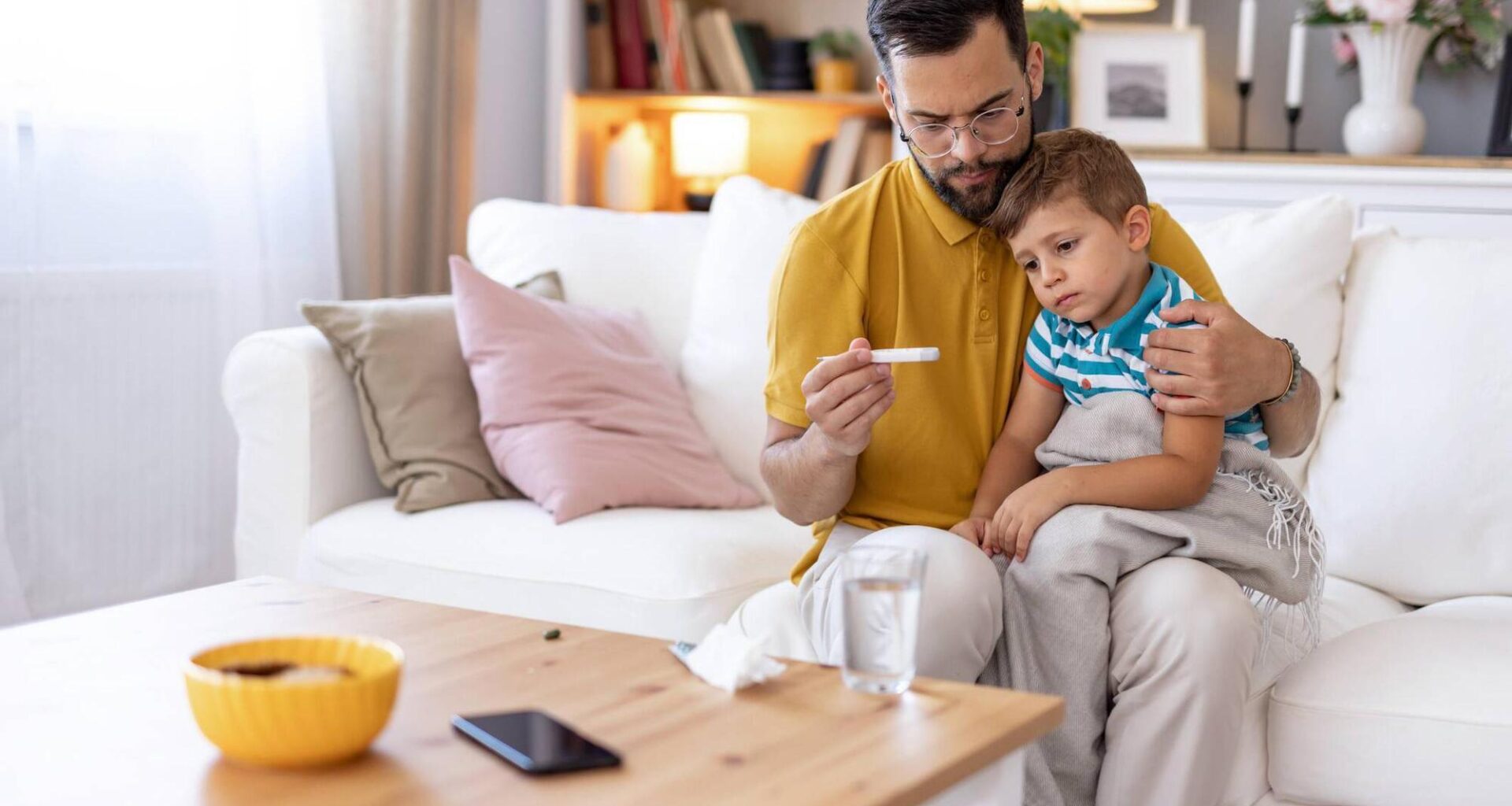
If your child is starting crèche or pre-school, get ready for the onslaught of childhood bugs. A March 2026 study involving researchers from University College London found young children will experience around 12–15 respiratory infections, two gastrointestinal illnesses and one or two rash-causing infections in the first year alone.
Ballina-based GP and infection control clinical lead with the Irish College of General Practitioners (ICGP) Scott Walkin says frequent bugs in the first year are because your child is meeting with lots of others for the first time. “Picking up frequent bugs is a rite of passage – it’s how our immune system develops.”
sore throat, sneezing, blocked/runny nose, cough
fever, tiredness, irritability or reduced appetite
Age- and weight-appropriate paracetamol or ibuprofen for pain or fever.
Saline nasal drops or spray may help a blocked nose.
Warm lemon and honey drink may soothe a cough in children over one.
Normal drinks and food as tolerated.
No cough and cold remedies for under-sixes unless GP or pharmacist advises.
Keep child home from crèche or pre-school if too unwell to participate normally or if temperature’s 38°C or above.
Consider influenza with fever, marked tiredness, aches, headache, sore throat and cough. HSE recommends the free nasal spray flu vaccine each year for two to 17-year-old children.
 Dr Scott Walkin, infection control clinical lead with the ICGP.
Walkin says this usually means viral gastroenteritis, causing vomiting and/or diarrhoea. “It spreads very easily through hands, shared surfaces, food and contact with vomit or faeces. Most children recover at home, but they can quickly become dehydrated. The main treatment is replacing fluid and watching carefully for dehydration.”
sudden vomiting, watery diarrhoea
tummy cramps, nausea, reduced appetite, tiredness
sometimes fever, headache, muscle aches.
Vomiting usually lasts one-to-two days. Diarrhoea often starts to improve within three days but can last up to seven.
Offer small, frequent sips of liquid. Oral rehydration solution can replace lost water, salts and sugar – pharmacist can recommend suitable product.
Once able, offer child’s usual foods.
Avoid fruit juice and fizzy drinks while diarrhoea is active.
Do not give young children medicines to stop diarrhoea unless doctor specifically advises.
Watch for dehydration – Much less urine, dark yellow urine; dry mouth, few or no tears, sunken eyes; unusual sleepiness, reduced responsiveness, pallor or low energy; unable to keep fluids down.
No attending school, crèche or childcare until at least 48 hours have passed since the last vomiting or diarrhoea episode.
one or both eyes red or bloodshot – if whites of eyes aren’t red, it’s not conjunctivitis
watery eyes, grittiness, irritation, mild soreness
yellow-white sticky discharge, lashes stuck together on waking
mild eyelid swelling
cold or sore-throat symptoms (viral conjunctivitis)
itching and watery eyes (allergic conjunctivitis)
pain, light sensitivity, altered vision aren’t typical and need prompt assessment.
Wash hands before and after cleaning or touching eye.
Gently remove discharge using clean cotton pad moistened with cooled boiled water.
Wipe from inner to outer corner, using separate pad for each eye.
A clean, cold flannel held over closed eye for a few minutes may soothe irritation.
Discourage rubbing – no sharing towels, pillows, face cloths.
Conjunctivitis alone isn’t a reason to exclude child from pre-school if otherwise well.
sore throat, temperature above 38C, reduced appetite, general unwellness – at first.
painful mouth ulcers a few days later – drinking may be difficult
raised red spots (sometimes blisters) on hands and feet, occasionally also on buttocks/groin
pain or itching from rash.
Age-appropriate paracetamol or ibuprofen for pain or fever.
Regular drinks – small sips through straw may be easier.
Soft, cool foods – yogurt, smoothies, mashed foods, ice cream.
No hot, spicy, acidic or citrus foods/drinks – they sting mouth ulcers.
Ask pharmacist about child-appropriate mouth-ulcer gels, sprays or mouthwashes.
Keep blisters clean with lukewarm soap and water – pat dry, no popping them.
Keep child home while they feel unwell.
itchy rash that may start on head, neck or trunk but can appear anywhere, including inside the mouth.
spots that become fluid-filled blisters and then crust over.
new crops of spots for three-to-five days
temperature above 38C, aches, poor appetite, general unwellness.
blisters usually crust after one-to-two days. Scabs generally fall off after one-to-two weeks.
Use age-appropriate paracetamol for fever, pain or discomfort.
No ibuprofen – it may increase risk of serious skin infection.
Keep fingernails short and clean – socks on hands at night may reduce scratching.
Use lukewarm baths, pat skin dry, dress child in loose cotton clothing.
Treatments for itch include oatmeal baths, calamine lotion – antihistamine if troublesome.
Regular drinks – ice pops may help with painful mouth spots.
Keep child away from school/childcare until every spot has crusted over and is dry – usually five-to-seven days after rash first appears. A child’s infectious from about two days before rash appears until all lesions are crusted and dry.

“A high fever can occur with a minor infection – and a child who’s seriously unwell may have no fever at all. How your child looks and behaves, whether they’re breathing normally, whether they’re drinking and passing urine, and whether they seem better or worse in themselves are more important than how high their temperature is.”
Use digital thermometer in the armpit for babies under four weeks. For older children, use armpit or infrared in-ear thermometer.
Most children with fever can be cared for at home.
Offer drinks regularly – and food if wanted.
Dress child comfortably – no over-wrapping or deliberately under-dressing them.
No cold baths or cold sponging – can make feverish children very uncomfortable and shivering may actually raise temperature.
Use paracetamol or ibuprofen if child’s uncomfortable, distressed or in pain – no need for medicine simply to lower a high temperature.
Check on child regularly, including at night – no waking them simply to take their temperature.