
Your support helps us to tell the story
From reproductive rights to climate change to Big Tech, The Independent is on the ground when the story is developing. Whether it’s investigating the financials of Elon Musk’s pro-Trump PAC or producing our latest documentary, ‘The A Word’, which shines a light on the American women fighting for reproductive rights, we know how important it is to parse out the facts from the messaging.
At such a critical moment in US history, we need reporters on the ground. Your donation allows us to keep sending journalists to speak to both sides of the story.
The Independent is trusted by Americans across the entire political spectrum. And unlike many other quality news outlets, we choose not to lock Americans out of our reporting and analysis with paywalls. We believe quality journalism should be available to everyone, paid for by those who can afford it.
Your support makes all the difference.Read more
A lifelong physical activity routine can help the body respond better to stress and illness in older age and lead to healthier ageing, a new study shows.
Studies probing the benefits of physical activity in older adults have, until now, mostly probed exercise’s link to death risk later in life.
But the latest research assessed how exercise is linked to a health parameter called “vitality capacity”, which is a measure of how the body remains resilient as one ages, helping one remain active and disease-free.
Researchers probed this connection in a small group of about 40 participants in Nice, France, who averaged 64 years old.
Nearly half of them had performed aerobic exercise at least three times a week for 30 years.
Their physical activity regimen included at least 2.5 hours of moderate weekly exercise.
The other 20 participants did not exercise or take part in regular sport, with no more than 75 minutes of weekly physical activity.
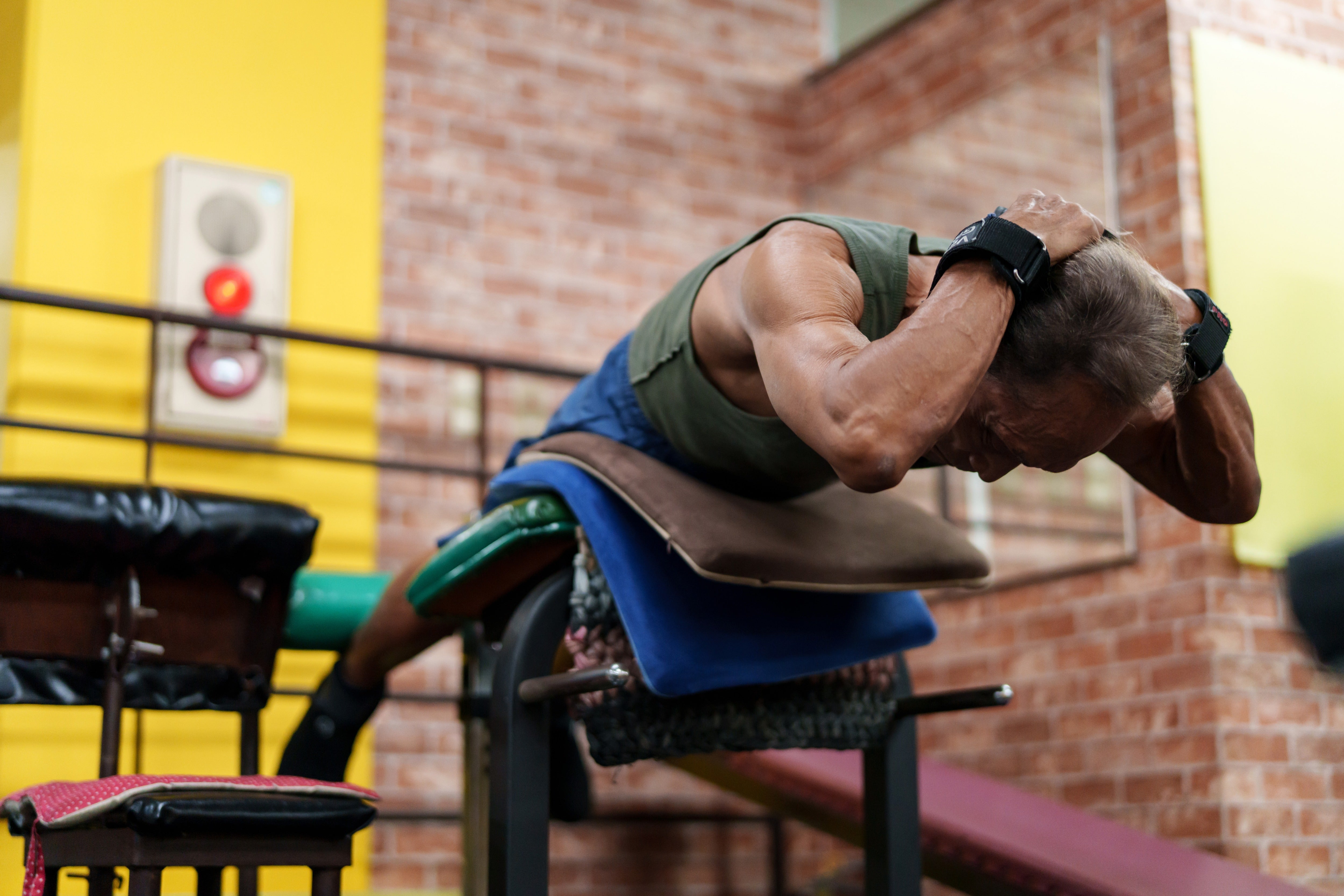 A 90-year-old bodybuilder, trains in his gym in Hiroshima, Japan (Getty Images)
Information collected from the participants included data on heart rhythm, muscle strength, blood markers, and lung function.
The data was collected via questionnaires and a wearable sensor and combined into a single “vitality score”.
This measure can be used to better understand the body’s ability to fight stress with age, also called the physiological reserve, researchers say.
It has been introduced to highlight the distinction between healthy and pathological ageing.
On comparison, researchers found that there was no particular difference in energy and metabolism or nerve and muscle function between the two groups.
There was no stark difference between the groups in terms of grip strength, knee strength, and lung function, as well as in the levels of molecules indicating inflammation.
However, specific aspects of people’s physiological reserve varied, they found.
The average blood-oxygen saturation of the exercising group was 96.8 per cent, compared with 94.8 per cent in the inactive group, scientists found.
“Vitality capacity was higher in lifelong active participants,” scientists wrote in the study published in the journal GeroScience.
It also decreased as one aged, but not in the same way for people who remained active and those who didn’t, the study found.
“Lifelong aerobic physical activity is associated with higher vitality capacity in older adults, particularly within the immune and stress response domain,” scientists wrote.
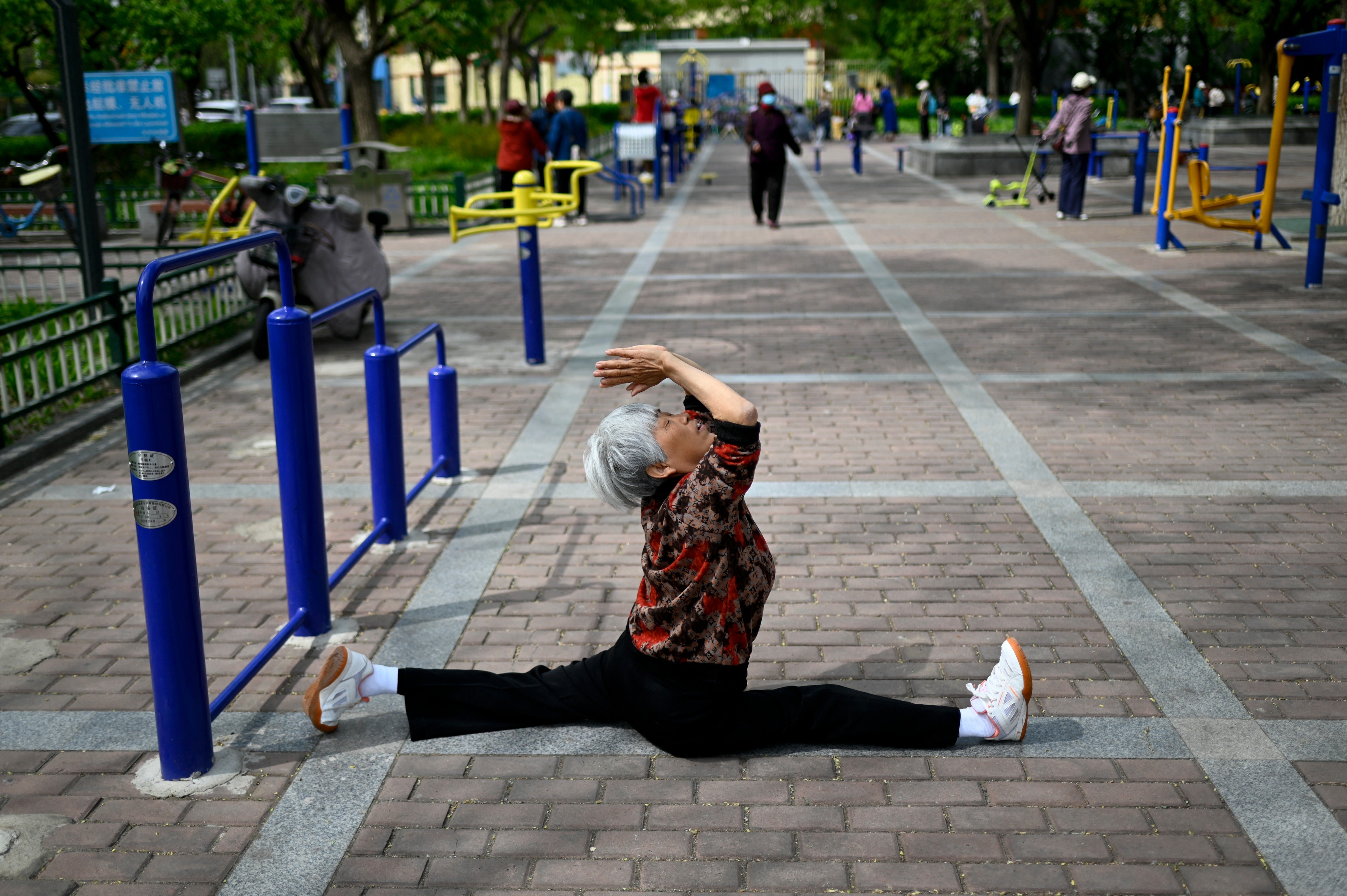 An elderly woman exercise at a public garden along a road in Beijing (AFP via Getty Images)
The findings, according to researchers, highlight the strong link between physical activity and physiological reserve.
They also reinforce the relevance of studying lifelong aerobic physical activity in healthy ageing, they say.
Citing some limitations of the research, scientists said the study was small and exploratory, in a predominantly healthy, older, and white participant group.
They call for further studies to validate the use of “vitality score” as a measure in clinical tests.
The study also could not reveal the best type of amount of exercise needed to produce the same results.