
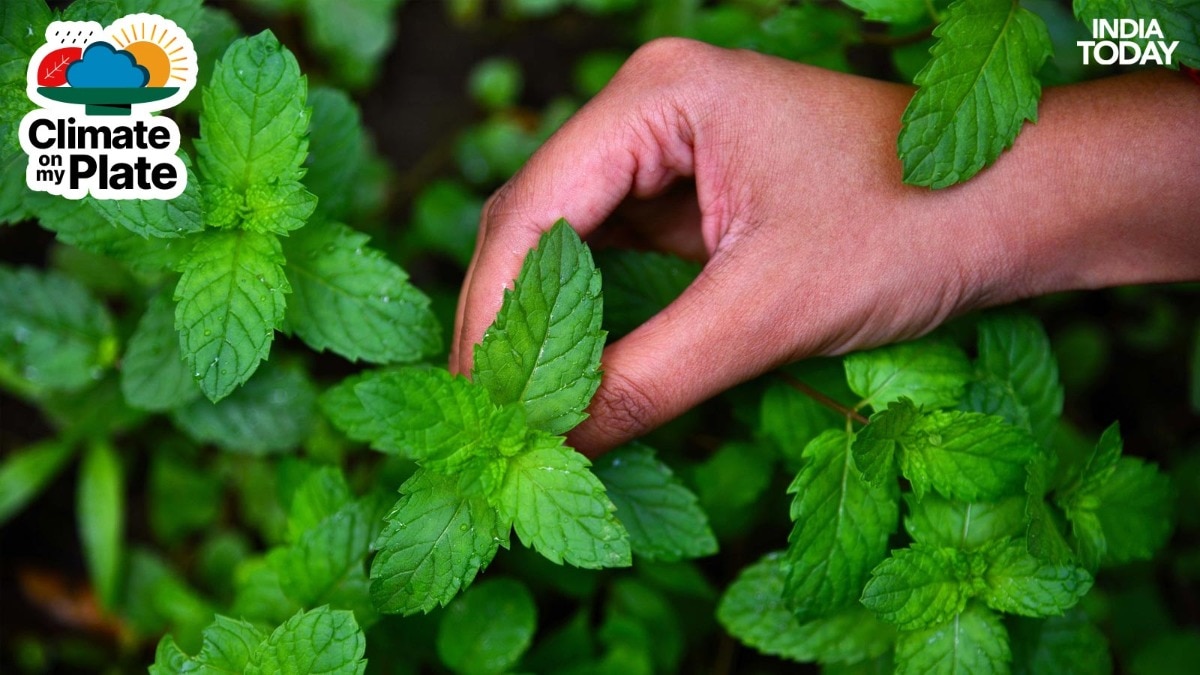
 For generations, Indians have turned to plants growing in their courtyards, farms, forests and mountains for remedies, ingredients and traditional healthcare.
Tulsi is a familiar name, perhaps the most familiar of them all.
The small green plant sits in countless Indian homes and is used in traditional preparations, while its leaves and essential oil also have applications in food, pharmaceuticals and cosmetics.
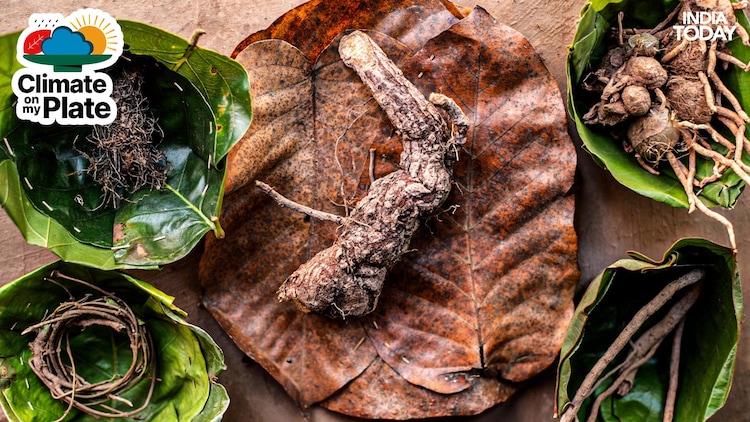
An assortment of India’s medicines harvested from medicinal plants is pictured. (Photo: Getty)
The plant is now cultivated widely in India, but climate variability is making its future increasingly uncertain.
An Indian Council of Agricultural Research (ICAR) publication in 2026 noted that climate variability and intensive cultivation have aggravated pest problems in basil, affecting foliage, growth and essential-oil yields.
Tulsi, however, is only the tip of the iceberg.
India is home to around 15,000 medicinal plant species, according to the government, of which about 8,000 are used in Indian systems of medicine and folk medicine.
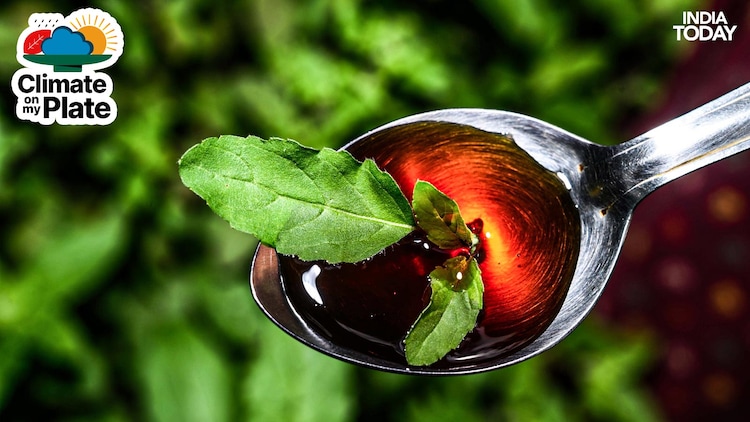
Tulsi leaves and honey is a combination used to treat sore throat and cough. (Photo: Getty)
Nearly 70% of India’s medicinal and aromatic plants are found in the Western and Eastern Ghats, the Himalayas and the Aravallis.
That makes India’s medicinal plant wealth particularly vulnerable to changes in the climate and the ecosystems where these plants grow.
WHEN HEAT CHANGES MORE THAN WHERE A PLANT GROWS
Climate change is largely threatening these plants, influencing them from the inside and dictating whether a medicinal plant survives or withers away.
Temperature, rainfall, drought, humidity, carbon dioxide and other environmental conditions can affect plant growth and the production of secondary metabolites, which are chemical compounds plants produce that can contribute to their defence and other biological functions.
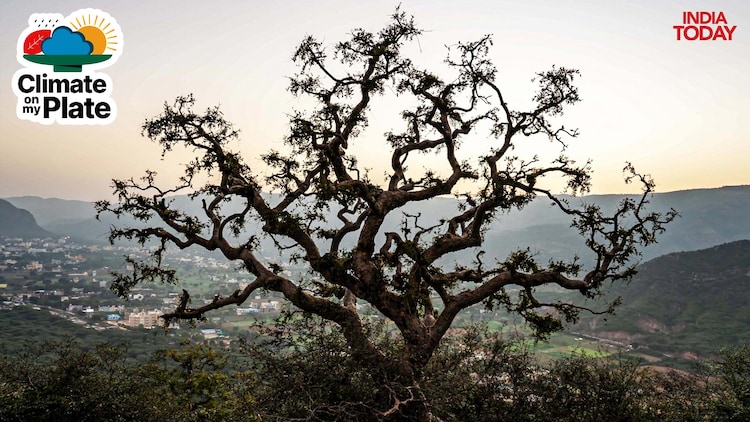
Silhouette of Gnarled Indian Frankincense or Salai Guggul Tree is seen. (Photo: Getty)
A 2025 study of medicinal plants found that environmental stress can alter the production of these compounds, with heat, drought, changing water availability and elevated carbon dioxide producing different effects depending on the plant and the type of compound involved.
That does not mean climate change automatically makes a medicinal plant ineffective. Rather, scientists are still trying to understand how changing conditions could affect the quantity and composition of important plant compounds.
For medicinal plants, that uncertainty still carries a fatal risk.
FROM ASHWAGANDHA TO THE HIMALAYAS
Consider ashwagandha, one of India’s best-known medicinal plants and a major ingredient in the country’s traditional medicine sector. The plant’s roots are used in traditional preparations, while cultivation has expanded beyond its historical growing regions.
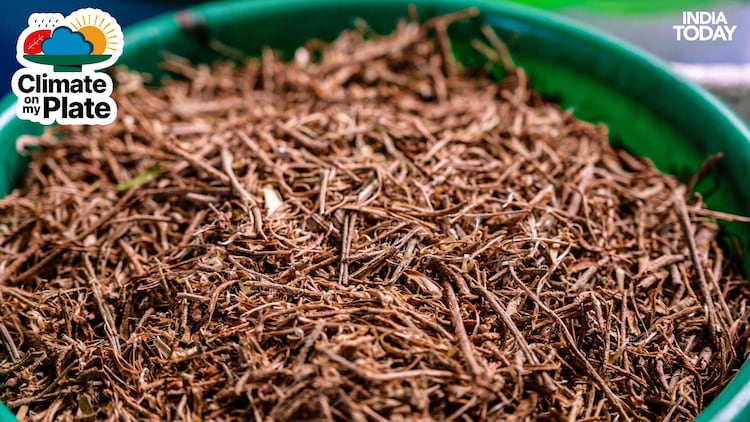
A close-up image of dried Ashwagandha is seen. (Photo: Getty)
Then there is guggul, a resin-producing plant found in India’s dry regions, and Himalayan plants such as jatamansi and kutki, which grow in much more specialised environments.
The Ministry of Ayush’s medicinal plant database lists tulsi, ashwagandha, guggul, jatamansi and kutki among India’s medicinal plants.
The Himalayan species present a different problem altogether as their habitats are closely linked to altitude and local climate.
A recent review, covering 367 medicinal plant species, found that climate change has been associated with shifts in suitable habitats and geographical ranges for many species. It also highlighted high-altitude plants such as jatamansi as particularly important climate-sensitive species.
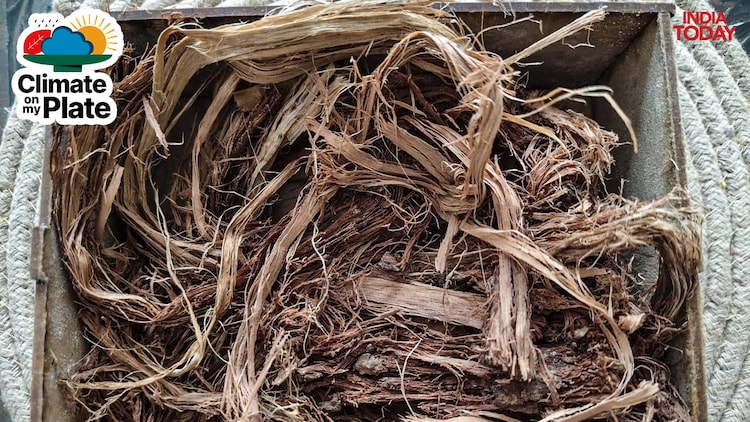
Jatamansi, also known as Indian spikenard, is seen inside a box made of jute. (Photo: Getty)
INDIA’S MEDICINE CABINET NEEDS PROTECTION
There is another complication: medicinal plants are not all neatly grown on farms.
Many have traditionally been collected from the wild, making them dependent on healthy forests, grasslands and mountain ecosystems. Climate change is therefore arriving alongside habitat loss, overharvesting and changing land use.
India already has programmes aimed at conserving medicinal plants both in their natural habitats and through cultivation outside those habitats. The National Medicinal Plants Board supports conservation, cultivation, research and livelihood-related initiatives.
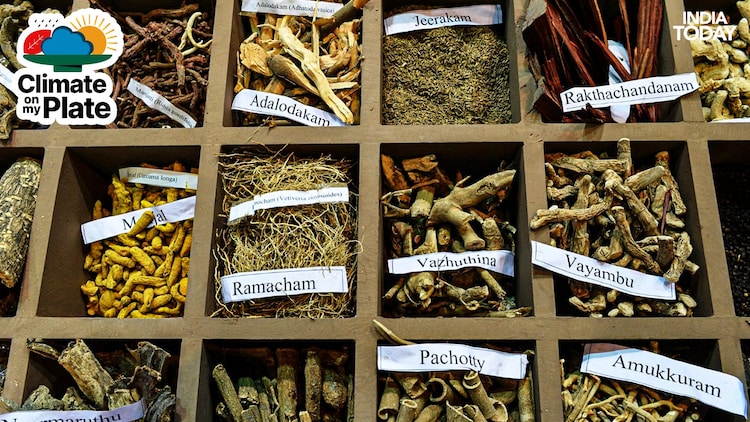
A number of medicinal herbs and plants are put on display along with labels at an event. (Photo: Getty)
The challenge is to make sure that the plants growing in India’s forests and fields today do not become harder to find tomorrow.
Because climate change is not only changing what India can grow on its farms.
It may also be changing the natural medicine cabinet that has grown alongside its people for centuries.
#climateonmyplate
– Ends
Published On:
Sep 23, 2026 08:30 IST