
Now we interrupt this furore to bring you some football.
What was described last week by the FAI chief executive as a ‘storm’ has swirled to Kosovo where their own politics continues to manifest in a public backlash.
Severe prison sentences handed down to four leading former political figures, including ex-president Hasim Thaci, by a court in The Hague has triggered an outpouring of sympathy.
Huge banners are visible around the old city of Pristina, a collective anguish that the heroes of the liberation front during Kosovo’s war of independence in 1999 ought to escape legacy punishments.
Nightly demonstrations have been held since the war crimes verdicts last week, the epicentre of the Mother Theresa Square heaving with up to 20,000 native declaring an injustice.
Yesterday, just an hour after Ireland’s press conference at the nearby stadium, it was the turn of schoolchildren to make a stand, shouting and cheering in unison about the icons their parents adored.
While Kosovo is railing against historical political machinations, Ireland’s energies are immersed in a current struggle.
No other nation has sympathised with the stricken Palestinian population in a sporting context than Ireland.
No other football organisation sought the expulsion of Israeli and club and country teams from Uefa and Fifa competitions than Ireland.
None, either, have refused the offer of an away ticket allocation for this Sunday’s first meeting of two, held in the neutral territory of Debrecen in Hungary.
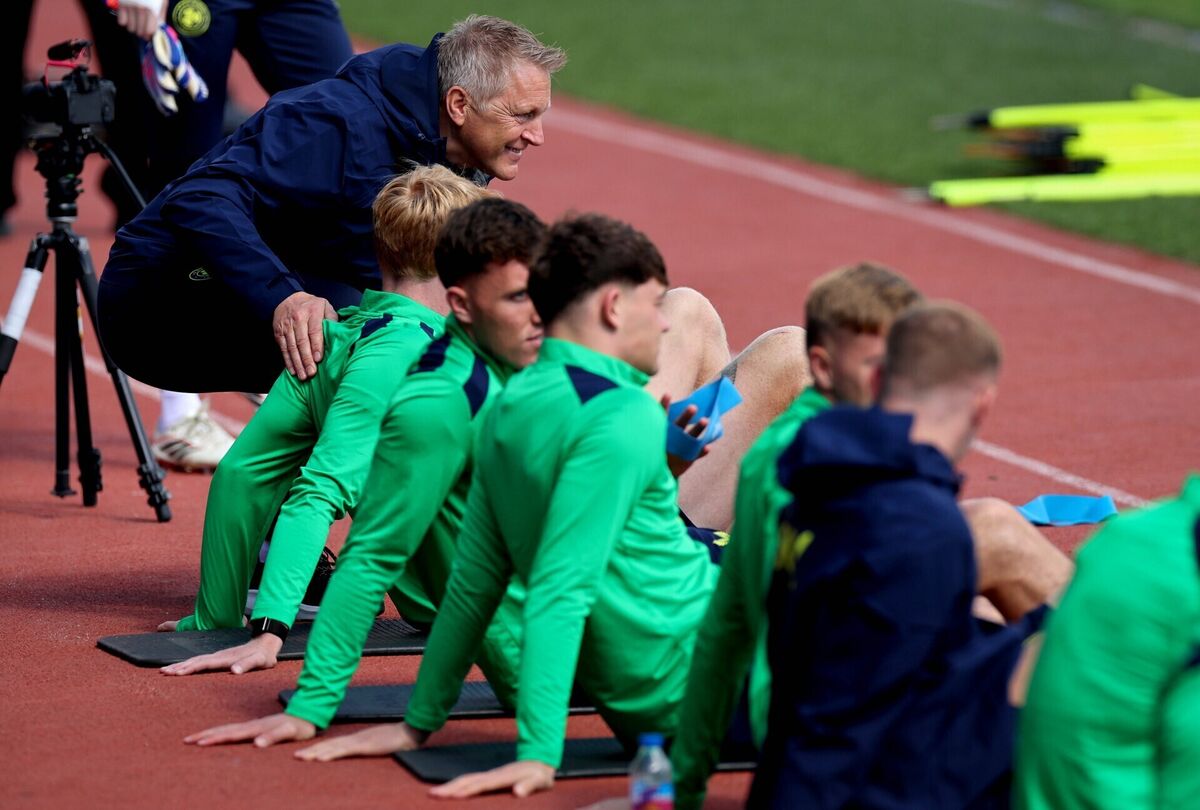 Irish players warm up in Debrecen. Pic: Ryan Byrne/Inpho
The welter of feeling that these matches against a nation found by a United Nations investigation to have committed genocide in Gaza shouldn’t proceed at all isn’t lost on the camp.
Players were cocooned inside their Castleknock Hotel base on Monday when a group of protesters broke through fences to name them all through a megaphone. Some from the Stop The Game movement even managed to gain access to the hotel’s foyer.
Irish-born players like Dara O’Shea will be aware through their families the depth of anger about sharing a pitch with players who under Israeli law, must be conscripted into the IDF army.
One of the manager Heimir Hallgrímsson’s first messages when he assembled his players on Sunday was to advise them of avoiding social media.
O’Shea was the first player to face the media since early summer, owing to the FAI scrubbing their traditional early press duties for a window.
The injury-enforced absence of Nathan Collins resulted in O’Shea assuming captaincy duties and he performed those admirably while flanking his manager.
He’s dealing with a story that has magnified to global attention, especially since Hallgrímsson was accused by the Israeli FA on Monday of “stupidity, ignorance and hypocrisy” by highlighting the genocidal shame.
Despite pleas from home, including an open letter from 160 fellow athletes, to ‘do the right thing’, there’s no appetite among the squad to boycott the Israel fixtures.
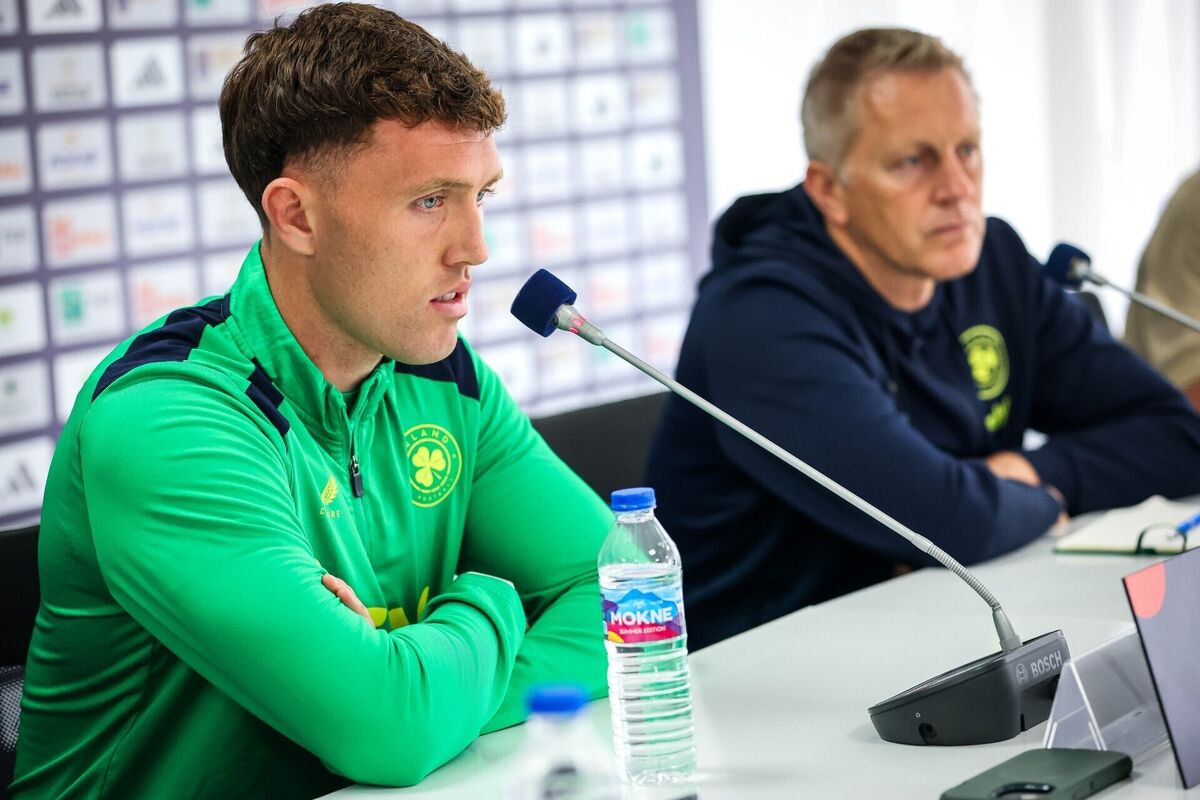 Dara O’Shea faced the media on Wednesday. Pic: Ryan Byrne/Inpho
Once this Kosovo opener is complete, O’Shea intends gathering his colleagues to decide how they can most appropriately convey their message of solidarity with Palestine.
Dispensing with the customary pre-match handshakes is considered a minimum gesture.
There was minor amusement among the squad when local reports emerged that Israeli players are unwilling to swap jerseys afterwards. As if Irish players would consider seeking out such an item for their collection.
“I’m aware of consequences not to play the games but that decision should never be made by the players,” Ipswich Town defender O’Shea said about the morals of fulfilling the fixtures.
“Whatever decision is made by the people higher up, that’s the decision. Us players have been speaking to the association for quite a while on this. This has been ongoing.
“It’s a really unusual thing for us as players to deal with. To have the noise following it and surrounding us, it’s not something you’re ever prepared for.
“But us as players we totally understand the situation, the noise and the feelings as well.
“When you get called upon, we come and represent our country.”
Hallgrímsson and O’Shea were doing the talking at the stadium, whereas FAI president Parul Cooke declined the opportunity to speak about an episode that’ll only peak over the next 11 days with four games. The only ‘home’ fixture, against Austria on Thursday week, is certain to be subject to further demonstrations.
“The few days of build-up in Dublin were different circumstances and atmosphere than previous,” the Icelander explained about the restrictions adopted on security grounds.
“Regarding social media, to keep focus, it wasn’t a request but we talked about that in our first welcome meeting.
“Not only because of focus but needing to recover and rest with four matches and seven flights.
“We need all the time we can get so just limit all the screen time for rest and recovery.”