
Wednesday 23 September 2026 4:16 pm
 The product contains cow hide and fish scales for its collagen.
The founder of a collagen company has lost a battle over a £3.6bn tax bill after a judge ruled his product could not be classified as food and therefore cannot claim VAT exemption.
Tony Sanguinetti founded Minerva Research Labs in London in 2009 after he “became slightly obsessed with finding a way to reverse the signs of ageing”.
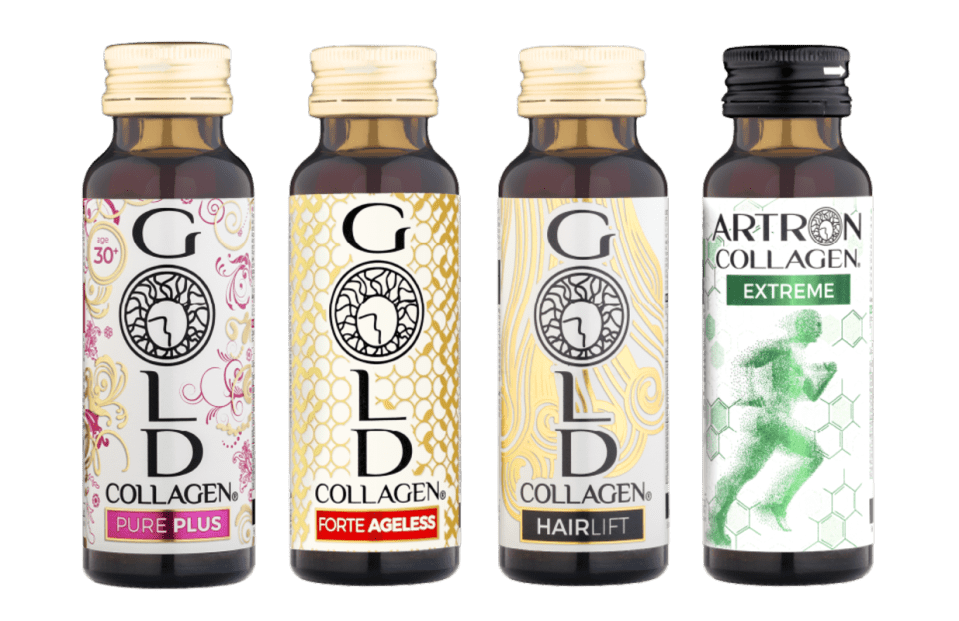
Sanguinetti then travelled to Japan, where collagen drinks were on sale that same year, and began to research and test how to produce collagen-based drinks in Europe, creating his first product, Gold Collagen Pure, in 2011, made from cow hides and sardine scales, which he launched in the UK later that year.
The wellness mogul imported his first commercial batch of the drink from Japan to the UK, and the First Tier Tax Tribunal in London said he “was anxious about getting them through customs, as there was no equivalent product in the UK.” The ruling stated that he accepted the customs code given to him, and Minerva paid VAT at the standard rate.
Gold Collagen Pure is understood to be the UK’s best-selling collagen drink and the company has grown to generate annual revenues of £16m.
 Tony Sanguinetti founded Minerva Research Labs in London in 2009
The entrepreneur was later advised by HMRC that his VAT classification was incorrect, and in 2022 Minerva declared the firm had paid too much VAT from January 2018 to January 2022, on the basis that the products were food and should have been zero-rated for VAT.
The company told the Tribunal the product provided “the perfect blend of nutritional ingredients to act as a building block for great skin, great hair, functional joints and muscles”.
Read more
Addison Lee founder defeated in £20m non-dom tax dispute
Tribunal judge Anne Redston said “it is plain that the main purpose of food is to nourish the body, and the ingredients provided by the products are thus a factor which we give significant weight”, but ultimately rejected Minerva’s arguments, emphasising that a product being edible and possessing nutritional value does not mean it should automatically be classed as a food under UK tax law.
“I find it unreasonable that consumers conscious about their health, seeking food with a special function (i.e support their joints) need to be penalised with an extra 20 per cent VAT, meanwhile, many foods high in fat, cholesterol, sugar or other nasties and health risks, like some ultra-processed foods, are not penalised,” Sanguinetti told City AM.
“The ruling effectively means that when a food product supports the joints, bones, skin, hair, hormones, energy, or vitality like our products, and those benefits are transparently and lawfully communicated through its packaging and marketing, consumers must pay an extra 20% VAT to purchase it,” he added.
Case illustrates ‘uncertain’ VAT on wellness products
James Austen, partner at law firm Collyer and Bristow, representing Minerva in the case, told City AM that Minerva “is naturally disappointed by the Tribunal’s decision.”
“Significantly, HMRC and the Tribunal accepted that Minerva’s collagen products are tasty, provide significant nutritional value, contain substantial protein, and genuinely nourish the body. But the Tribunal decided that the products’ VAT treatment should turn on their marketing and the Tribunal’s views about why consumers purchase them,” he said.
Austen added the case “illustrates the uncertain and unsatisfactory VAT treatment of products like Minerva’s in the UK marketplace. This appeal raises important issues, with implications well beyond Minerva’s products. We are carefully considering the Tribunal’s reasoning and our client’s options for an appeal.”
“We welcome the First-tier Tribunal’s decision that Minerva’s products are not food and therefore standard rated for VAT purposes,” an HMRC spokesperson said.
Read more
British tycoons raise the alarm over state of UK economy
Similarly tagged content:
Sections
Categories
People & Organisations
Related Topics