
We need your consent to load this EBU contentWe use EBU to manage extra content that can set cookies on your device and collect data about your activity. Please review their details and accept them to load the content.Manage Preferences
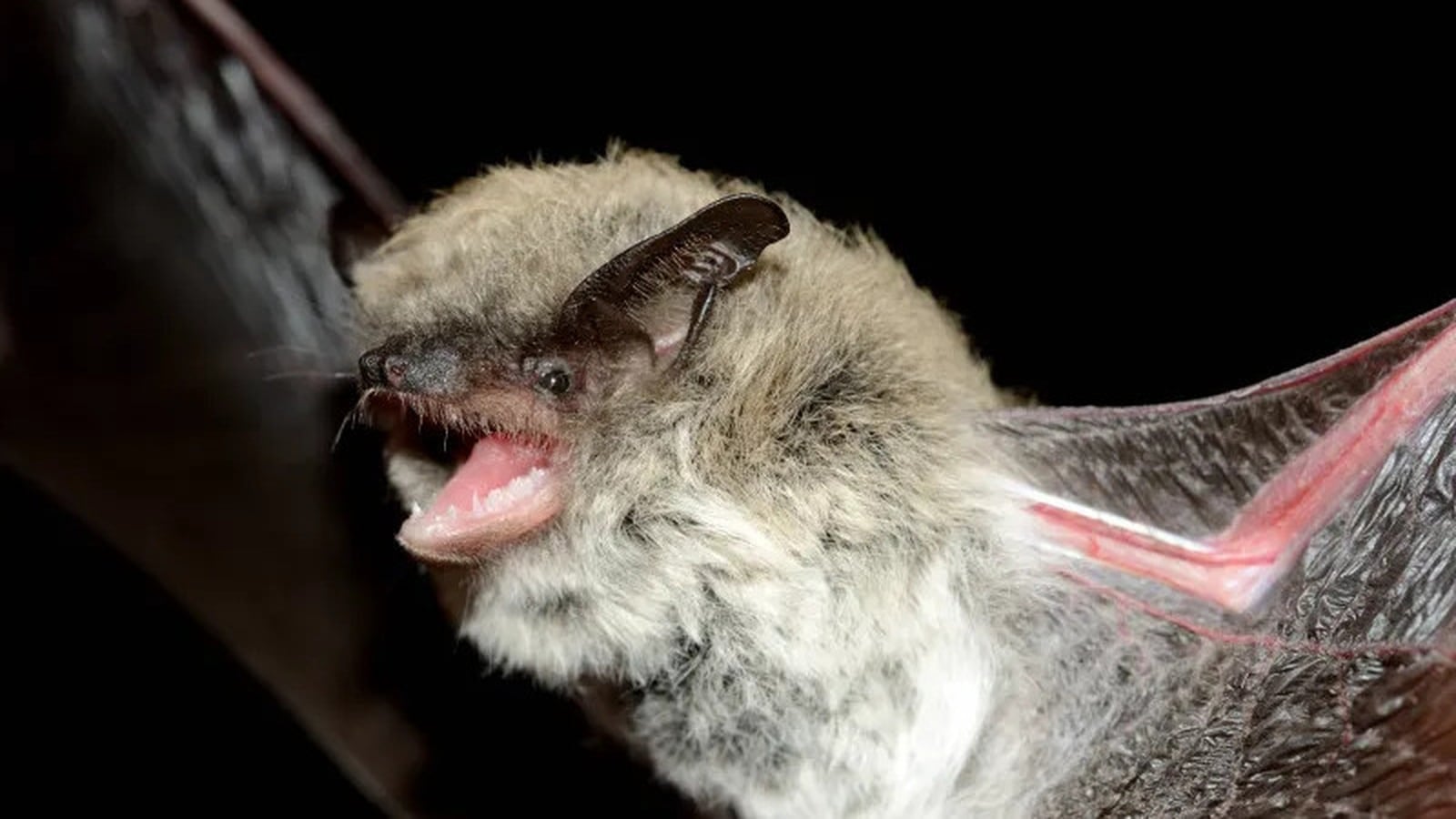
An international team of scientists, including Czech experts, has written a new evolutionary history of bats. The most extensive genetic and palaeontological study of bats to date, published on Wednesday in the journal *Nature*, has revealed that the only flying mammals originated 65 million years ago in Europe – not in Africa, as had previously been assumed. Furthermore, the research findings help to explain their exceptional longevity and high resistance to infectious diseases.
Bats account for almost a fifth of all living mammal species and play a vital role in maintaining healthy ecosystems, as they pollinate plants and consume vast numbers of harmful insects. For decades, scientists believed that bats had originally evolved in Asia, Africa or North America. However, a groundbreaking study by the international Bat1K consortium refutes these assumptions.
Czech scientists also made a significant contribution to the research. Marek Uvizl and Petr Benda work at the Faculty of Science, Charles University, and also at the National Museum in Prague. The team of authors was further complemented by Peter Vallo from the Institute of Vertebrate Biology of the Czech Academy of Sciences in Brno. Together with other experts from 64 countries, they analysed the largest dataset to date comprising 103 genomes representing all 21 known extant bat families and linked them to 44 fossil specimens from around the world.
The findings showed that bats first appeared in Europe around 65 million years ago and spread from there, via Africa, to the rest of the world. This also means that the first bats began to evolve very soon after the extinction of the dinosaurs, when a niche was left vacant in the ecosystems following their disappearance.
The first bat on Earth
For the first time in history, scientists have succeeded in reconstructing the genetic code of the common ancestor of all modern bats. They discovered that the ability to fly actively and to use echolocation – that is, to navigate using ultrasonic echoes – evolved in bats almost simultaneously at the very beginning of their evolution. It is precisely this combination of traits that has ensured bats’ enormous evolutionary success.
“It’s brilliant that, thanks to the efforts of so many people, we’ve managed to combine modern DNA sequencing methods with the study of fossil finds, thereby unravelling the complex evolutionary history of bats and their unique characteristics,” says co-author Marek Uvizl, describing the significance of the study.
The key to human health and longevity
As well as their ability to fly, bats are characterised by an unusual resistance to severe viral infections. This poses a significant threat to humans, as diseases that bats can withstand without much difficulty – but which are fatal to humans – are easily transmitted within their colonies. Indeed, it is from these flying mammals that a whole range of diseases plaguing humanity today have been transmitted to humans – SARS, Marburg, Nipah, Hendra, and presumably also SARS-CoV-2 and Ebola.
Scientists have discovered why bat viruses are so deadly to humans. It’s linked to flight (in Czech)
Furthermore, despite their very low body weight, bats live to an exceptionally old age. The newly created genetic map provides scientists, for the first time, with precise guidance on how to identify the specific sections of DNA responsible for both of these unique characteristics. The results of this research may therefore prove of fundamental importance to human medicine in the future, particularly in the study of the mechanisms of ageing and the fight against infectious diseases.
An article written by Tomáš Karlík (CT), initially published on 23 September 2026, 17:00 (CEST)