


Want to bookmark your favourite articles and stories to read or reference later? Start your Independent Membership today.
Already a member?
Log in
A paper published this week in the British Journal of Sports Medicine found that upping your walking speed could reduce your risk of premature death and heart disease.
By this logic, if you’re short on time and can’t reach the fabled – but scientifically arbitrary – 10,000 steps per day, adding extra pep to your step could help you draw similar health benefits from a lower daily step total.
“The article published this week essentially says that someone who is doing 10,000 steps is almost going to get the same benefit as someone who is doing 7,000 steps with more intent,” says independent sport and exercise scientist Dr Ash Cox.
What this doesn’t mean is that we should aim to move less each day. Instead, for better health, we should maximise our daily movement and weave a little extra intensity into our daily activities; think walking briskly from A to B, or taking the stairs at a canter. The goal is finding ways to move more, and more intentionally, that work with our busy lifestyles.
The benefits of increasing your walking speed
Dr Cox has seen this approach put into action, and to good effect, through his work.
“When I used to look after patients who were waiting for gastric bands, and they were given physical activity advice to lose weight, it started as simply as parking on the other side of the supermarket car park and walking to the door with some intent.
“I think the key point of all of this is that dedicated exercise is such a small part of someone’s day, and it’s a part which has to be engineered and squeezed in. But actually the biggest health wins come from habitual physical activity – putting more movement into your life on a daily basis and going about it with more intent.”
This latest paper echoes several existing studies. Previous research supported the idea that cadence, or the number of steps you take per minute, is critical for dictating the benefits you gain from your daily steps.
“All of the research in this area suggests that most of the benefits [from walking] accumulate at a moderate or higher intensity,” walking expert Dr Elroy Aguiar previously told me.
I think the key point of all of this is that dedicated exercise is such a small part of someone’s day … Actually the biggest health wins come from habitual physical activity
Dr Ash Cox, sports scientist
Moderate intensity roughly correlates to 100 steps per minute, he adds, with most people’s brisk pace sitting at roughly 110.
Read more: What your walking speed reveals about your risk of heart disease and dementia
“If you wanted to bump the walk up to a vigorous intensity, you could walk at around 130 steps per minute or walk up a steep incline,” Dr Aguiar says. “If you move within that range or slightly above, you can shift gears and get more benefit from the activity you’re doing.”
Surefire signs your walk has upgraded to a moderate-intensity activity include your heart rate raising, your breathing becoming faster and a prickling of sweat forming on your forehead. But why do we want to achieve this, and why is it better for our health than a saunter?
“[Higher intensity physical activity] is by far the most time-efficient form of activity for achieving health benefits,” says leading exercise researcher Professor Emmanuel Stamatakis.
“It is the ‘physiological language’ the body best understands – the extra effort acts as a signal for the body to make adaptations and improvements in, say, how the heart functions or how the body absorbs and transports oxygen to the muscles. For these beneficial health adaptations to happen, the body needs to be pushed regularly, even if it is for a short period of time.
“Essentially, we are talking about a basic athletic training principle. The adaptations represent the body’s preparations for the next time the same physical challenge is present. That’s why we want to harness the power of vigorous-intensity activity.”
Read more: Expert coach shares five kettlebell workouts to get you in ‘the shape of your life’
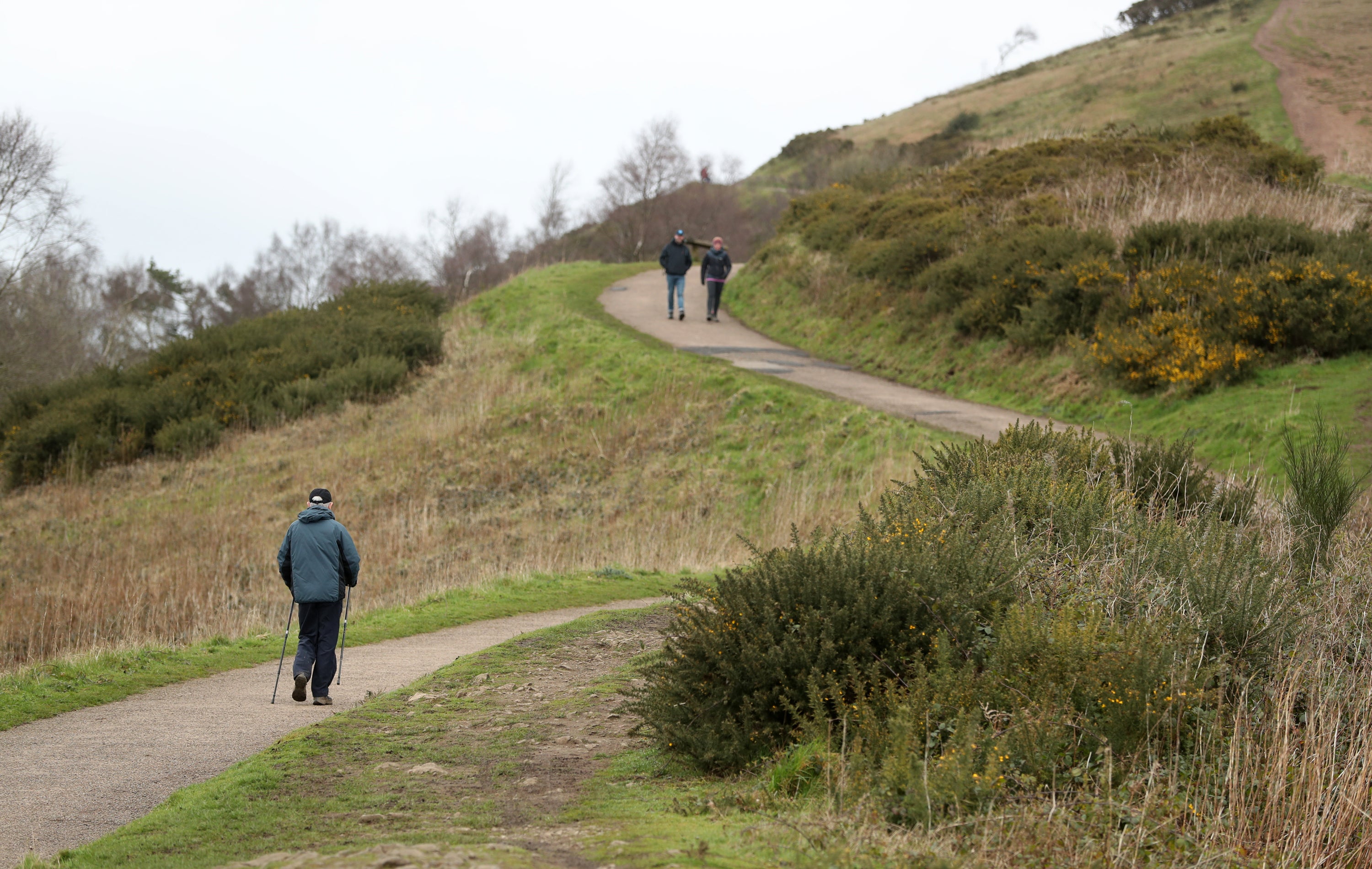 Moving with more intent, or speed, can increase the health benefits on offer (David Davies/PA)
How to improve your health by walking faster
The 30-minute Japanese walking method is one popular way to build blocks of faster walking into your day. It stems from a study published in the Mayo Clinic Proceedings journal in 2007, designed to find out whether higher-intensity walking intervals could improve fitness and blood pressure in middle-aged and older people.
Long story short: it can, proving capable of protecting against “age-associated increases in blood pressure and decreases in thigh muscle strength and peak aerobic capacity”.
How to try the ‘Japanese walking’ method
Complete the sequence below five times without any breaks:
Three minutes of walking at a low intensity (a relaxed pace) Three minutes of walking at a high intensity (a brisk pace)
However, your walking intervals don’t have to be so set in stone. You could simply pick a couple of lampposts on the street, or benches in the park, and inject a bit of pace while walking between the two during your standard stroll.
The magic doesn’t lie in the exact formula above. It is great, but it is simply a means to an end. And that end is moving more, moving more intentionally, and doing it daily. That is where better health lies.
Read more: How to start strength training and see results at any age, according to a top muscle growth expert