
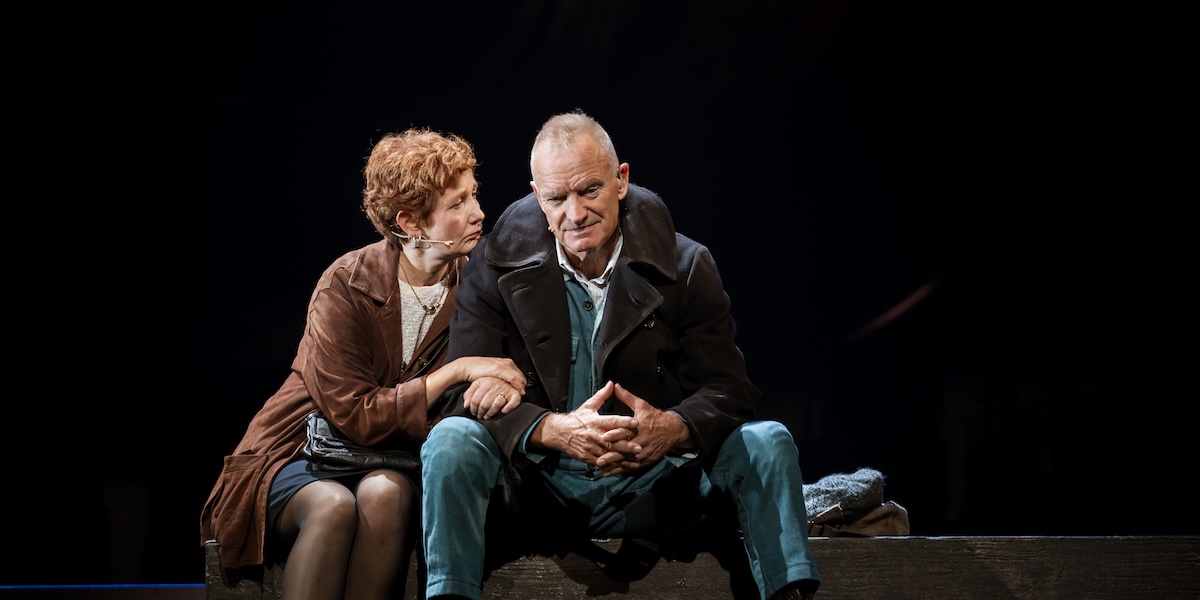
Read our review of The Last Ship, also starring Sting, now in performances at Theatre Royal Drury Lane to 3 October.
Sting is clearly deeply attached to his musical about the closure of the shipyards in his native Newcastle. So much so that, 16 years after it first appeared Stateside, he’s starring in a new world tour in a bid to set it afloat one more time, despite some creaky past voyages.
On this one he’s joined by none other than Shaggy, he of 90s chart-topping fame (who collaborated with Sting on a 2018 album), and here somewhat implausibly cast in the role of a Wallsend ferryman, a rather ethereal presence who could as easily transport people across the Styx as the Tyne. You’ll be relieved – or perhaps slightly disappointed – to learn he doesn’t attempt a Geordie accent (“They call me Mr Boombastic, pet”), and there are some enjoyable nods to reggae woven into his main theme “Island of Souls”.
He also regularly eavesdrops on the cast of characters involved with the shipyard, which is facing that all-too-familiar 1980s fate of a sharp-suited Tory homing into view talking about free markets. Chief among them is Sting’s gruff foreman Jackie White, a man “as hard as iron plates”, who’s overseeing the building of the yard’s rather ironically named final ship, Utopia. He’s supported by loving wife Peggy (Jackie Morrison) and union leader Billy (Joe Caffrey), who’s determined the lads have one more chance to prove their mettle before the tidal wave of capitalism washes them away.
Meanwhile local bar owner Meg (Frances McNamee) is visited by old flame Gideon (Declan Bennett), who’s returned after 17 years at sea to discover their teenage fling had consequences in the form of fiery teen Ellen (Hannah Richardson). But the shipyard’s heir apparent Freddy (Matt Beveridge) would like to come up with what he euphemistically terms a “practical arrangement” with Meg for himself.
If it sounds rather convoluted and disjointed, that’s because it is. Despite playwright Barney Norris being brought in to rework the book, which already has three other credits on it, it still feels misshapen, and the story never really finds the through-line or dramatic momentum it needs. Characters aren’t adequately established, so it takes time to get emotionally invested, and in some cases the stereotyping is so crass it’s hard to take them seriously (see Cassiopeia Berkeley-Agyepong’s blue-suited minister Baroness Tynedale).
However, as mentioned this is clearly a passion project, and there’s something very moving about seeing Sting pay such loving homage to his own father and grandfather, who both worked in shipbuilding themselves. I too hail from the North East, and it’s heartening to see this oft-neglected but beautiful corner of our island given such warm focus on the West End stage (yes, granted, Billy Elliot does that too).
Although there aren’t any earworms to match the megahits of his time with The Police, the music has a haunting, rhythmic quality typical of Sting’s later solo work, with standout numbers including the title theme and “All this Time” (which actually hails from 1991). McNamee also does fine work with “August Winds”, an ode to watching boats return from the sea.
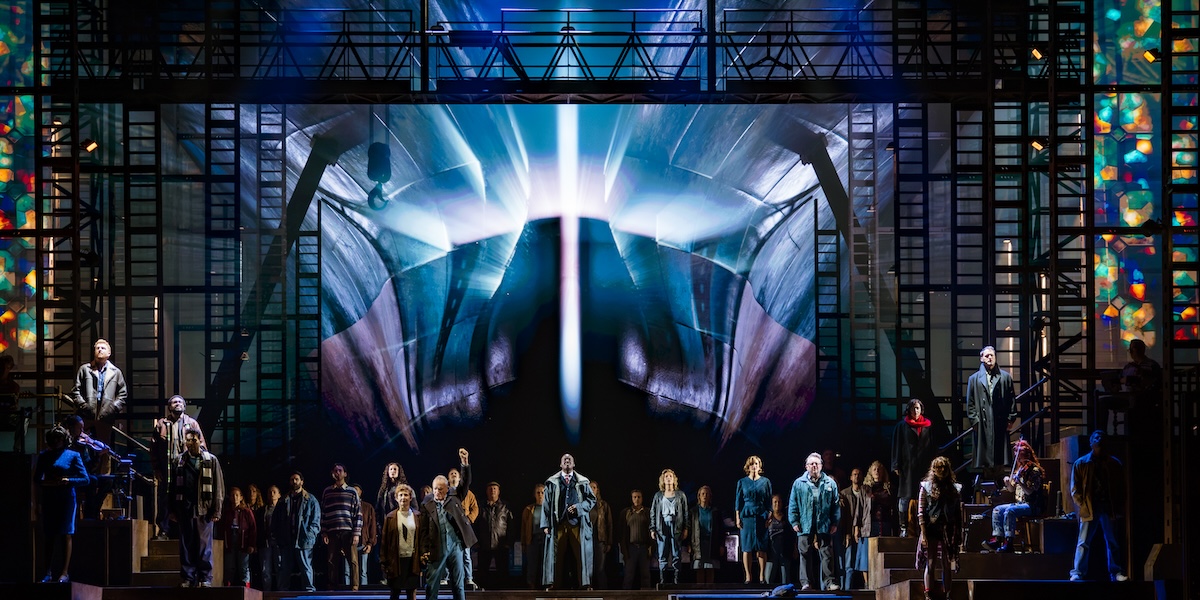
Leo Warner’s production at the cavernous Theatre Royal Drury Lane plays out against an expansive projected backdrop from video designer Benjamin Pearcy (nicely augmented by set designer Jenny Melville’s ladders and girders), which features the towering hull of the Utopia. It’s an awesome, ghostly presence that comes suddenly to life in the closing moments, which are a defiant hymn to the power of community. Like the dockyards it celebrates, The Last Ship may not be the most efficient of operations, but there’s no doubting the heart behind it.
The Last Ship is at Theatre Royal Drury Lane to 3 October. Book The Last Ship tickets on LondonTheatre.co.uk
Photo credit: The Last Ship (Photos by Nienke de Groot)