
Running a small business is a juggling act that often involves making the most of scant resources. The budget simply isn’t there to pay for outside help with tasks such as marketing, so it gets done when time and money permit.
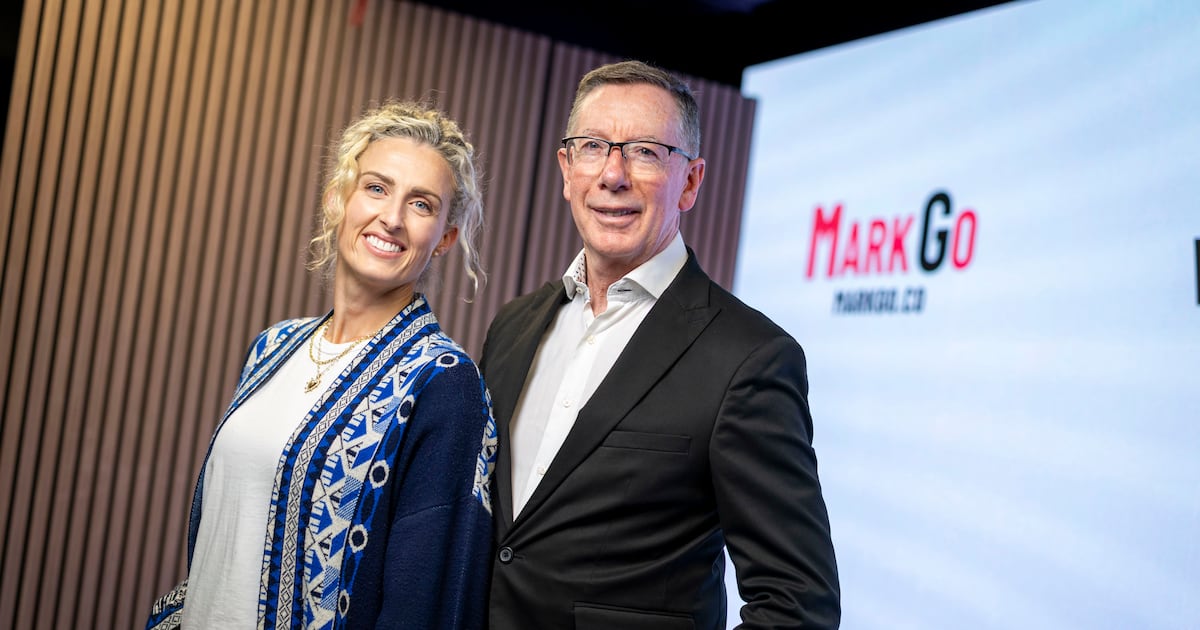
The problem with such “random acts of marketing” is that they seldom deliver results, according to Sharon Mooney, co-founder with Peter McPartlin of MarkGo, a newly launched AI-based marketing strategy platform aimed at SMEs.
“We are regularly told that SMEs represent the backbone of the domestic economy, yet when it comes to marketing, they are among the most underserved businesses in the country,” Mooney says.
“Large consultancies or agencies are out of their reach because they can’t afford the fees which can run to €20,000 to €25,000 for a marketing strategy alone. In most cases they probably don’t need a full-time marketing person in-house either. What they need is an effective way of marketing their business that gives them a good return on the money they spend.”
AI has been the real game changer for this start-up, as it has enabled the company to provide big agency marketing support to SMEs at a competitive price. “Our model has been trained on verified data to pick up prompts, and that’s fine as far as it goes,” Mooney says. “What brings our service to the next level is that while we use AI for speed and scale, we have human oversight. Every plan we design is reviewed by a specialist with deep-sector marketing experience. Otherwise it’s no different than just using an agent like ChatGPT.
“A lot of companies have become quite comfortable using AI, but AI only gives you a certain amount of intelligence,” Mooney adds. “It doesn’t provide the nuances needed to understand customers and channels. That requires human intelligence and human strategists.”
Mooney has spent her career in senior roles across advertising, marketing and corporate communications, and in 2022 she cofounded the Dublin-based B2B brand agency Hyphen. McPartlin is a seasoned marketing and communications executive who has headed up the radio stations Today FM and TXFM, and the creative agency MediaCom.
“Over the years we’d both seen the same problem over and over again,” Mooney says. “Brilliant small businesses with real ambition that had little or no access to the strategic marketing guidance that could help them grow.”
In the co-founders’ experience, small companies tended to focus on tactics, not strategy, and spent money ad hoc on whatever looked like a good promotional channel in the moment. “The problem was there was no thread connecting any of it and little clarity around how to differentiate themselves from their competitors,” Mooney says. “Around 60 per cent of SME marketing spend brings no measurable return. That’s not a small leak, that’s most of the budget doing nothing.”
Before setting up MarkGo McPartlin had cofounded the Indie List, a marketplace for digital, advertising and creative professionals.
“We found that a significant volume of requests were coming from SMEs who were almost always seeking short-term tactical help rather than strategic direction,” he says.
“They needed someone to fix a problem now or next week and were not thinking about why the problem kept recurring. We set out to help this underserved market by answering a specific question: could AI, applied with genuine marketing expertise, make professional-grade strategic thinking accessible to any SME at a price they could actually afford and fast enough to be commercially relevant?
“Almost every existing AI-powered marketing service or tool operates at the execution level: generating content, finessing advertising briefs, optimising digital ads and producing images,” he adds.
“This might help businesses do marketing faster, but using execution tools without strategic direction simply results in more of the wrong activity, faster. MarkGo helps businesses decide what marketing to do in the first place and why. That distinction is fundamental. We address the decision that has to come before any of these other AI tools are deployed.”
Onboarding at MarkGo starts with the business owner completing a 15-minute online questionnaire covering product, competitors, audience, commercial goals, current activity and budget.
The company’s proprietary agentic architecture then crunches the brief, and depending on which package a company opts for, it produces a report that covers areas such as competitive positioning, customer profiles, marketing channel plans, budget allocations and key metrics.
This is then reviewed by a marketing expert and delivered to the client within 48 hours along with a 90-day action plan broken down by week.
MarkGo is aiming to make its service accessible to all SMEs and has pitched its starter package at €495. This includes market analysis, competitor review and target customer profiling.
For those with deeper pockets, there are two higher packages: Growth at €1,995, which has extras such as budgeting, KPIs and channel strategy; and Scale, which is more collaborative and priced according to what a business wants from the engagement.
MarkGo was a year in the making and self-funded to the tune of around €40,000 in hard cash. This was mainly spent on hiring the technical expertise to build the platform. The company employs four and has an additional oversight panel of five sector experts.
MarkGo is now looking to raise €150,000 to expand the team and start marketing itself following a successful Beta trial with 25 potential customers. The company’s initial focus is Ireland, followed by Britain and western Europe within the next three years.
“The hardest part has been getting business owners to appreciate the importance and value of having a marketing strategy and a clear plan in the first place,” McPartlin says. “Understandably, they are so busy managing and firefighting that strategy maybe sits in the ‘not urgent pile’ and never gets done. Ironically, this lack of a strategy is usually what’s causing half of the fires in the first place.
“SMEs often think that marketing strategy is something for bigger enterprises and not for them,” he adds. “But really, it’s just clarity around four questions: who we’re for, what we stand for, where we show up, and how we’ll know it’s working.”