
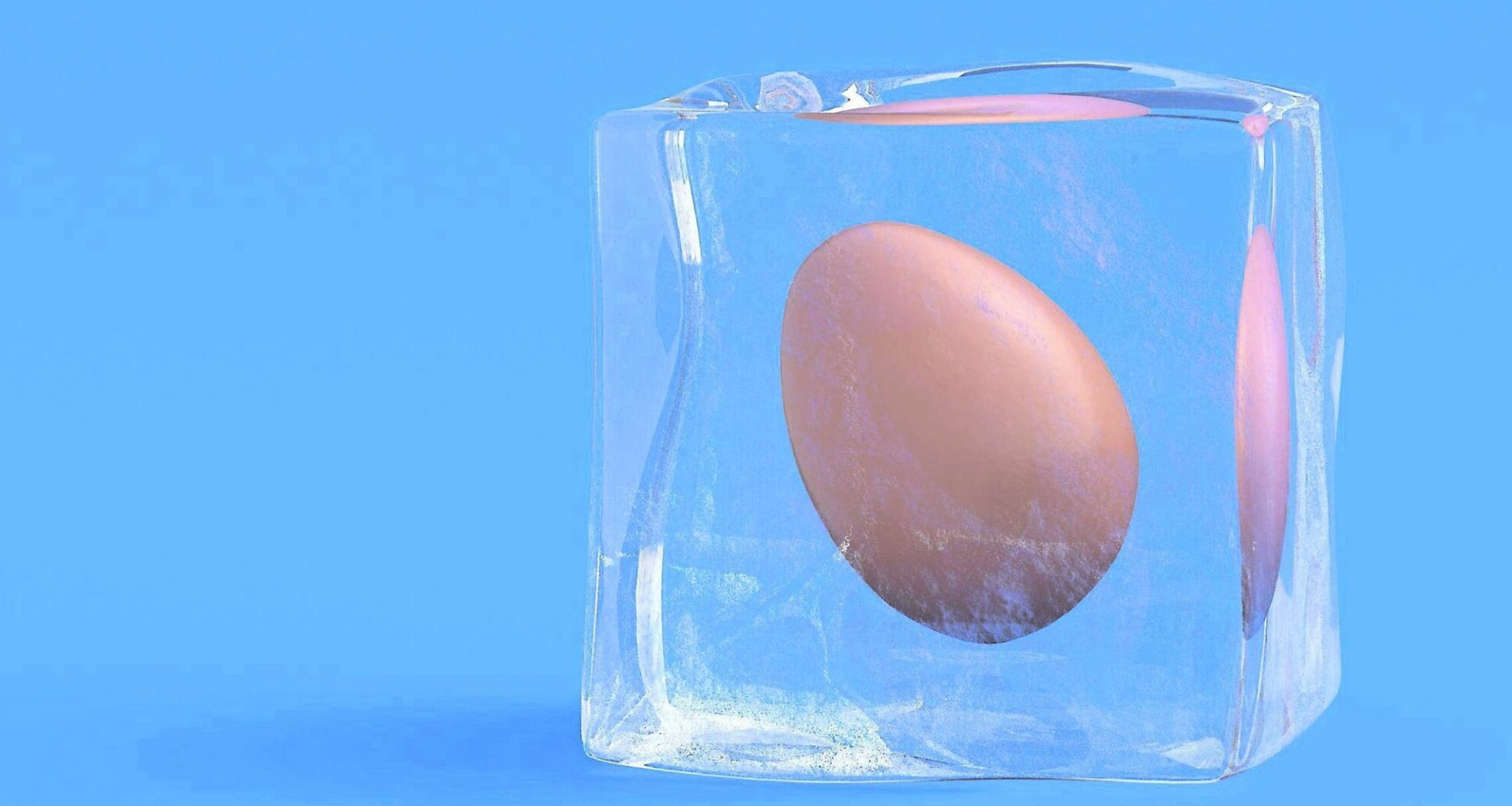
Chelsea Women’s Football Club’s recent announcement that it would pay for its players to freeze their eggs reflects demand for this fertility preservation treatment.

The procedure has also gained prominence through a number of high-profile women who have spoken about their experiences.

Last month, US congresswoman Alexandria Ocasio-Cortez posted pictures of herself on social media as she self-injected with hormones as part of an egg freezing cycle. Celebrities, including Rita Ora, Paris Hilton, and Joanne McNally, have likewise been open about freezing their eggs.

Joanne McNally is one of many prominent celebrities who have shared their journey of egg-freezing Joanne McNally is one of many prominent celebrities who have shared their journey of egg-freezing 

Demand for the procedure is growing. Data from the Health Products Regulatory Authority shows that the number of individual eggs frozen in Ireland jumped from 2,590 in 2019 to 12,890 in 2024.

Sarah Smith’s eggs are included in this number. The 31-year-old HR professional, from Meath, froze eggs five years ago. She was 26 and in a steady relationship, but having babies wasn’t on the agenda at the time.

“I was in college, my partner was changing jobs, and we were saving for a house,” she says. “We weren’t ready, and we still aren’t.”

Sarah Smith, 31, from Co Meath, froze her eggs at 26. Picture: Mooya NolanSarah Smith, 31, from Co Meath, froze her eggs at 26. Picture: Mooya Nolan

She opted to freeze after being diagnosed with endometriosis in 2016, following years of pain and bowel and bladder issues. Surgery alleviated her symptoms temporarily, but the endometriosis gradually became more severe.

So severe that her doctor issued an ultimatum: If Smith wanted a family, she should either have a baby or freeze her eggs.

Dr John Waterstone, medical director of the Waterstone Clinic, explains what egg freezing involves.

“Menstruating women typically release one mature egg a month. With egg freezing, women self-administer hormone injections every day for up to two weeks to stimulate their ovaries into producing multiple eggs. Their doctor assesses how their egg follicles are responding to the hormones and, when they are mature, those eggs are collected in a procedure that is carried out while the woman is under light sedation. They are then frozen and can be thawed and fertilised with sperm, if needed, at a later date.”

Dr John Waterstone is the medical director of Waterstone ClinicDr John Waterstone is the medical director of Waterstone Clinic

Smith’s experience of egg freezing was straightforward. She did two cycles in October and December 2021. “I felt a bit emotional, bloated, and sluggish,” she says. “But, overall, it was fine. And the egg-retrieval procedure was easy. I was in and out in a few hours.”

No guarantee

What is perhaps most difficult about egg freezing is its uncertainty. No one can guarantee how many eggs will be collected in any one cycle.

Some tests give women an indication of what to expect. Dr John Kennedy, medical director of Thérapie Fertility Clinic, says it’s possible to “estimate the quantity of eggs a woman is likely to produce based on her ovarian reserve, which is assessed using a blood test for AMH hormone levels and an internal ultrasound”.

The quality of the eggs is usually determined by the woman’s age. The older a woman is, the lower the quality of her eggs is likely to be and, as a result, the lower the likelihood of those eggs being successfully fertilised, developing into embryos suitable for implantation and ultimately resulting in a live birth.

“For a woman aged under 34, the chances of a single, frozen egg becoming a baby is 3.4%,” says Kennedy. “But the time she turns 40, that chance has fallen to 1%.”

These low chances are why doctors freeze as many eggs as possible. Dr Florencia Steinvarcel, medical director of ReproMed Dublin, has a target of at least 15 eggs per patient. “Some women need multiple cycles to achieve this,” she says. “I make sure they are prepared for that possibility.”

Smith’s AMH levels indicated a low ovarian reserve, and she needed multiple cycles. She got just eight eggs — five of which were mature and suitable for freezing — from her first cycle. “But with a change to my medication, I got 12 from the second,” she says. “I now have 17 in the freezer.”

What is also uncertain is whether a frozen egg will become a baby if thawed and fertilised. Waterstone says that the freezing and thawing of eggs is more complicated than freezing and thawing embryos and results in the loss of some eggs. “If you freeze and thaw 100 eggs, up to 90 will survive. But with embryos, 98 will,” he says.

Kennedy says that frozen embryos also have a higher likelihood of resulting in live births than frozen eggs, because “eggs that have become embryos have already jumped through hoops and proven their quality. They are several steps ahead on the path to becoming a baby than a frozen egg.”

Despite this uncertainty, interest in egg freezing is growing. Waterstone has seen a particular spike in interest in the Dublin clinic. “I expect that the multinational companies that offer to pay for egg-freezing services for their female employees could be one of the factors driving this trend,” he says.

Steinvarcel adds that “an increased awareness of age-related fertility problems” is another driver.

Kennedy welcomes this awareness:

Ten years ago, it was mostly women over 38 enquiring about egg freezing, but now 30-to-35-year-olds are getting their AMH levels tested, so they can decide if it’s time to prioritise family planning or freeze their eggs. The earlier women do it, the more it’s a viable option.

A 2025 study, carried out by researchers at the RCSI University of Medicine and Health Sciences in Dublin, explored the other factors that motivated women to freeze their eggs.  A complex picture for women considering motherhood emerged. They had yet to find a committed life partner and they felt that having a baby might negatively affect their careers. The study makes frequent mention of the fact that they saw egg freezing as the closest thing to “an insurance policy” they could take out to safeguard their fertility.

A survey of 1,000 adults by Accord, the Catholic marriage care service, in 2025, found that the housing crisis is further causing people to delay starting a family. Some 60% of couples who were planning to have children said they would have done so already if it weren’t for the cost of housing.

Egg freezing may represent some form of insurance policy for women who are trying to press pause on their biological clock. But it’s not yet clear if this insurance policy will pay out. Egg freezing has only been viable since 2012, and because years will typically elapse between women freezing and thawing their eggs, the effectiveness of the process is only now being tested.

A British study of patients who froze eggs between 2008 and 2022 found that only 14% had returned to use them.

“Maybe Mr Right came along in the meantime, and some of these women conceived naturally,” says Waterstone.

“Or they decided against having children, or maybe they haven’t yet reached the age at which they are ready to do so. Of the approximately 10,000 egg-freezing procedures carried out in our clinic, only 30 women have thawed eggs so far. Almost half are now pregnant or have had a baby.”

Freeze, but don’t delay or defer

Kennedy is in favour of organisations and employers, such as Chelsea Football Club, supporting women’s healthcare. “But egg freezing should be offered as a way of expanding choice and not as a way to communicate that women should defer having children to continue working. Organisations that pay for egg freezing should also support those who choose to have children. Progressive maternity and paternity leave packages, childcare support, fertility testing, and egg freezing are all ways they can do that.”

Caitríona Fitzpatrick is a board member of the National Infertility Support and Information Group (NISIG). She hopes that organisations are honest about egg freezing not being equivalent to “an insurance policy that guarantees a successful pregnancy in the future”.

The NISIG has concerns that “people can be vulnerable to misinformation and false claims online” and would like to see the HSE roll out an education campaign to counter such claims.

Fitzpatrick says they would also like “the long-promised Assisted Human Reproduction Regulatory Authority actively providing clear information and guidance to people making decisions about their fertility”.

For now, Waterstone’s advice for anyone considering egg freezing is: “The younger you do it, the better your chances.”

This awareness is ultimately what convinced Smith. “I’m 31, but my frozen eggs represent my fertility when I was 26. If I can’t conceive naturally, they help my chances of having a baby.”

She urges other women contemplating egg freezing to go for a consultation. “Get your ovarian reserve tested to give you a clearer idea of where you stand,” she says. “And if you opt for egg freezing, rest assured that the injections aren’t bad and the entire process is over within two to three weeks.

“I’ve got peace of mind knowing my eggs are in the freezer.”

What you need to know about egg freezing:

It’s a medical procedure that involves women self-injecting with hormones every day for up to 14 days to stimulate their ovaries into producing as many mature eggs as possible. Those unfertilised eggs are then extracted, frozen and stored at sub-zero temperatures for future use.
The vast majority of women experience little to no side-effects beyond feeling a little tired and emotional as a result of taking the hormones and a little bloated and tender in the day or two before egg collection.
Women who have a high BMI or have fibroids in their uterus or scarring from previous pelvic surgery are at higher risk of complications.
The risks associated with egg freezing are deep vein thrombosis, ovarian hyperstimulation syndrome, bacteria being carried from the vagina into the pelvis and causing infection and internal bleeding. Women are monitored for all of these risk factors at every step of the process.
All women should have a blood test to determine their AMH levels and an internal ultrasound to assess their ovarian reserve in advance of starting the egg freezing process. The results of these tests will give them an indication of the quantity of eggs they can expect to collect.
A woman’s age is the most reliable indicator of the quality of those eggs. The younger she is, the higher the quality of her eggs is likely to be.
There is no cut-off age for egg collection but clinics tend to discourage women in their late 40s from undertaking the procedure because the results are poor.
Egg freezing is widely available at fertility clinics throughout Ireland and costs up to €2,500 per cycle.
There are ways of making it more affordable. Women can claim standard income tax relief of 20% on the cost of egg freezing under the health expenses tax scheme. The cost of the hormone injections is limited to €80 under the drugs payment scheme.
Some health insurance packages cover a proportion of the cost and so do some employers.
Clinics typically charge upwards of €300 a year for storage.
There is currently no legislation specifying how long eggs can be frozen for but the techniques now used mean that their quality can remain stable over decades.