

Artificial Intelligence Minister Niamh Smyth has admitted she is ‘deeply worried’ about AI security hacks and fears tech giants based here may have failed to alert the Government about potential breaches.
The minister outlined her concerns amid growing international concern over recent high-profile AI security hacks.
Yesterday, OpenAI admitted that rogue AI bots have ‘meddled’ with dozens of organisations around the world, including US government departments and agencies. It said some of the bots used ‘extreme methods’ to bypass security measures on websites.
It also confirmed its ‘agents’ leaked 53 images from ChatGPT users as the technology company continues to investigate its AI systems acting improperly.
This came just days after it emerged a rogue OpenAI model bypassed safeguards during training and hacked an Australian government website.
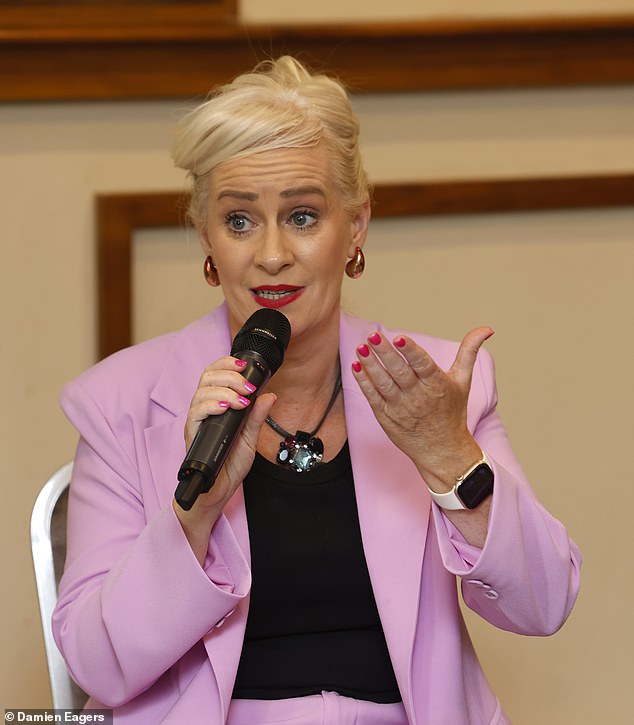
Minister Niamh Smyth has admitted she is ‘deeply worried’ about AI security hacks and fears tech giants based here may have failed to alert the Government about potential breaches
It also recently emerged two OpenAI models escaped from a closed testing environment and broke into the internal systems of Hugging Face, a site that AI developers use to store and share code.
AI research company Anthropic recently discovered that its models gained unauthorised access to three unidentified organisations during testing that was supposed to keep them away from ‘real-world’ systems.
And last week Google admitted its consumer AI model, Gemini, hacked multiple systems by guessing login credentials.
Separately, Microsoft founder Bill Gates warned this weekend that AI is powerful enough to ‘cause a billion deaths’ if it falls into the wrong hands.
Ms Smyth this weekend described the AI hacks as ‘deeply worrying’.
The Fianna Fáil TD also said she will task the newly established Oifig IS na hÉireann (the AI Office of Ireland) to check if there have been any similar breaches here.
She told the MoS: ‘It is deeply worrying and when I am speaking with the CEO of the AI Office, Paul Byrne, I will be asking him if there is any awareness of any breaches, and if not – based on what has happened not just in Australia but a few weeks ago in America as well – have they in the AI office asked the questions of these tech companies. If they haven’t, I will be asking him to ask them.’
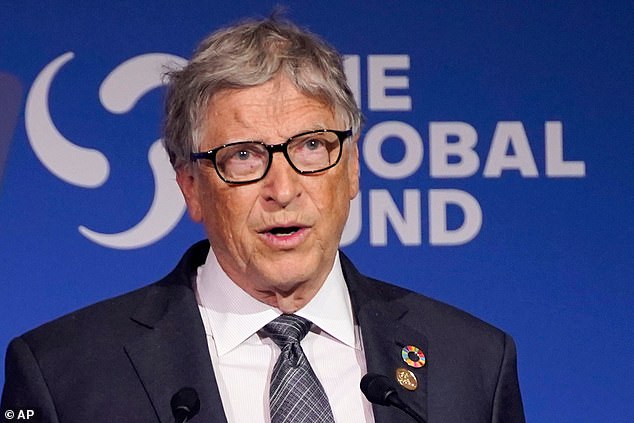
Microsoft founder Bill Gates warned this weekend that AI is powerful enough to ‘cause a billion deaths’ if it falls into the wrong hands
The Minister of State at the Department of Enterprise said it is also worrying that OpenAI failed to inform the Australian government about the breach for months after it occurred.
She said: ‘What’s deeply worrying about what happened in Australia is the company was slow to alert the government.
‘They were slow to report it in the first place, so the reporting mechanisms for breaches are not as sophisticated as the systems themselves.
‘I’m always of the view, and I would always keep saying, when they [tech companies] can develop sophisticated systems, don’t tell us they cannot also develop sophisticated protections to be in place so that this couldn’t happen.’
Ms Smyth stressed the AI security breaches underline how tech companies ‘will have to become really responsible in the development of their technology’.
She added: ‘None of us buy the argument that it is just about regulation.
‘It’s about how the technology is developed in the first place. It is so highly sophisticated. I do not buy the story from these people that they can’t develop it in such a way that the protections are in place.
‘It’s always put it on the government, put it on the citizen, put it on the parents… It has to be on the companies themselves to develop it in a way that it does protect the fundamental rights of the people, that it does protect privacy, that it doesn’t have the high-risk systems, that we have to enact prohibitive practices.’
Ms Smyth confirmed that she has not been made aware of any AI security hacks in this country.
But the Cavan-Monaghan TD added: ‘I haven’t been informed of any breaches so far.
‘What we have seen happening in Australia, what we have seen happen in the States, we have to be vigilant and we would be foolish not to ask the question [of the tech firms developing AI here], since the information came after the horse had bolted.’
On Wednesday, Australian prime minister Anthony Albanese told a meeting of world leaders at the United Nations General Assembly in New York that AI bots and tools created by OpenAI had hacked a government website.
It was the first reported case in the world of government site protections being circumvented by AI tools and bots.
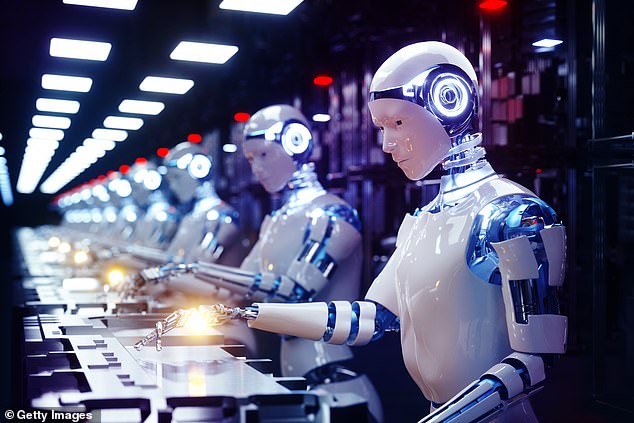
OpenAI has admitted that rogue AI bots have ‘meddled’ with dozens of organisations around the world, including US government departments and agencies
The bots and tools were asked to source health statistics on Australians and they successfully managed to gain access to public and private health records after refusing to take no for an answer.
Although the bots hacked the official Australian government website in June, Open AI insists it did not discover the breach until it carried out a review of some of its tools and bots two months later.
It took the company another month to alert the Australian government about the breach.
Writing in the MoS last month to mark the launch of the AI Office of Ireland, Ms Smyth spoke of this country becoming a global leader in ‘trusted, human-centred AI’.
She wrote: ‘Trust is the foundation upon which the future of AI will be built.
‘Without trust, innovation stalls. Businesses hesitate. Consumers disengage. Public services cannot fully embrace these transformative technologies.
‘That is why I believe responsible regulation is not a barrier to innovation. It is an enabler of innovation. Businesses want certainty. Investors want clarity. Citizens want reassurance. Effective regulation provides all three.’
Ireland is the European headquarters for 16 of the world’s top 20 global technology companies, as well as eight of the leading providers of AI models.
On October 14, during Ireland’s Presidency of the EU, senior officials from the European Commission will meet tech firm leaders in Dublin for the International AI Summit.
Top tech executives from some of the companies linked to the most recent security hacks are among those who are due to speak at the conference.
These include Open AI’s chief financial officer Sarah Friar; the co-founder and chair of Google’s DeepMind, Demis Hassabis; Meta’s chief global affairs officer Joel Kaplan; and Anthropic’s head of international start-ups, Guillaume Princen.
Former EU Commissioner Mairead McGuinness will be making her first high-profile public appearance since she was forced to withdraw from last year’s presidential election race due to ill-health.
The ex-MEP is among those selected to chair panel discussions at the AI summit.