
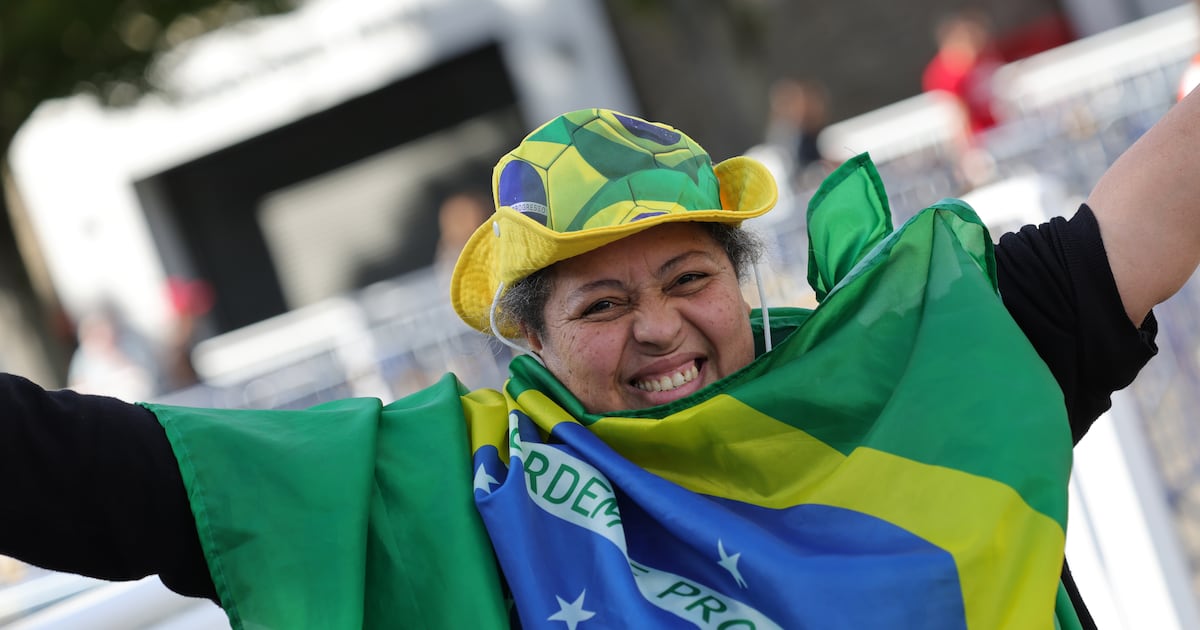
Thousands of Brazilians travelled from across Ireland to Dublin on Sunday to cast their ballots in Brazil’s presidential election first round, with voting at the Royal Dublin Society (RDS) beginning at 8am.
“[It] doesn’t matter how long I spend away from Brazil, my roots are there. I want everyone to be well and I still feel I belong,” said Renato da Cunha Melo, who has lived in Ireland for 11 years with his wife, Andrea Carla Soares.
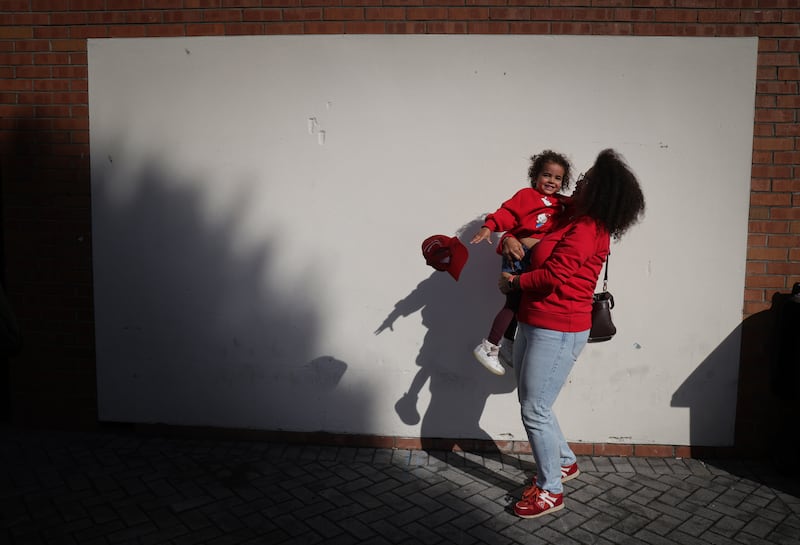 Saruana Martins and her daughter Ella Beary at the RDS Dublin as members of the Brazilian community in Ireland voted in their country’s presidential election. Photo: Bryan O’Brien / The Irish Times
“It was living abroad that made me see Brazil more clearly and it was living here in Ireland that made me learn more about politics, social programmes and support for vulnerable people and immigrants,” Soares said.
For many Brazilians, election day is called “celebration of democracy” and this year, the political polarisation that has divided Brazil crossed the Atlantic.
Families could be seen chanting the names of their candidates, carrying flags and wearing the colours of their preferred candidates. Some even brought their pets dressed for the occasion.
“My Brazilian identity abroad is also expressed through my vote. Despite living in Ireland, the people I love most are there, and today Brazil is a divided country,” said Saruana Martins, who has lived in Dublin for seven years and came to vote with her young daughter Ella.
Nearby, Cenira Fernandes (65) was praying outside the RDS for her candidate to win.
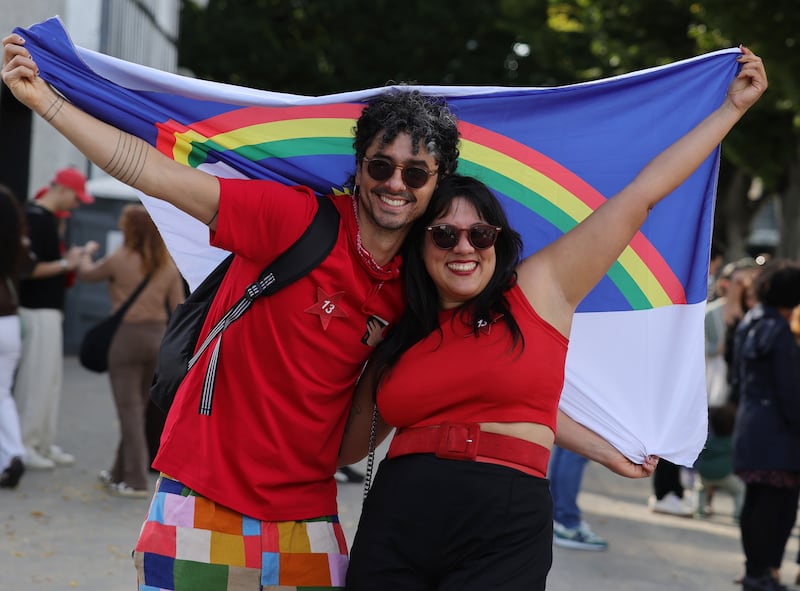 Renato da Cunha Melo and Andrea Carla Soares at the RDS Dublin as members of the Brazilian community living in Ireland voted electronically in Brazil’s presidential election. Photograph: Bryan O’Brien/The Irish Times
 Members of the Brazilian community living in Ireland gathered to cast their ballots at the RDS. Photo: Bryan O’Brien / The Irish Times
“Brazil needs change. My life is good here in Europe and I want that for Brazil too,” she said.
Brazil’s ambassador to Ireland, Flávio Macieira, said the engagement of the community had grown significantly. The embassy estimates that about 80,000 Brazilians live in Ireland, and 16,794 are registered to vote here. According to Brazil’s superior electoral court, the number of registered Brazilian voters in Ireland has risen by 41 per cent since the last presidential election. In 2018, there were just 2,111 registered voters, meaning the electorate has grown almost sevenfold in eight years.
The election pits president Luiz Inácio Lula da Silva against senator Flávio Bolsonaro, son of former president Jair Bolsonaro, who is serving a 27-year prison sentence after being convicted over a plot to overturn the 2022 election.
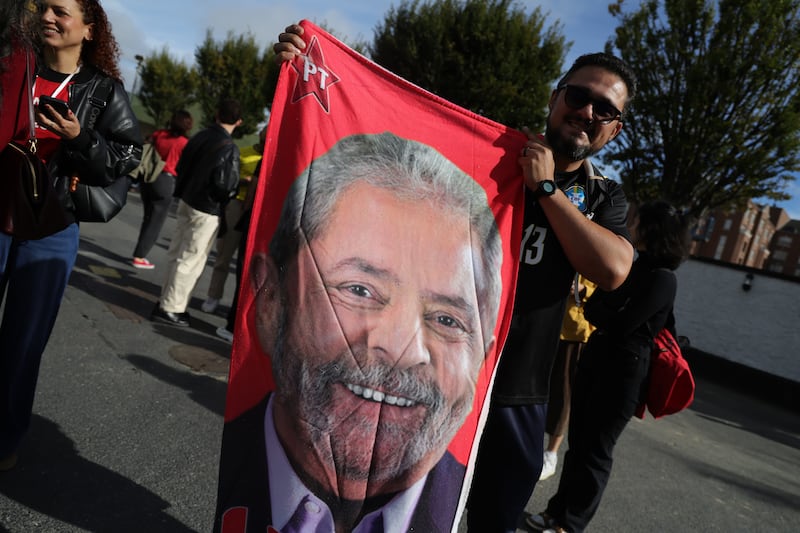 Leo Barros holds a flag with Brazilian president Luiz Inácio Lula da Silva on it at the RDS in Dublin on Sunday. Photograph: Bryan O’Brien/The Irish Times
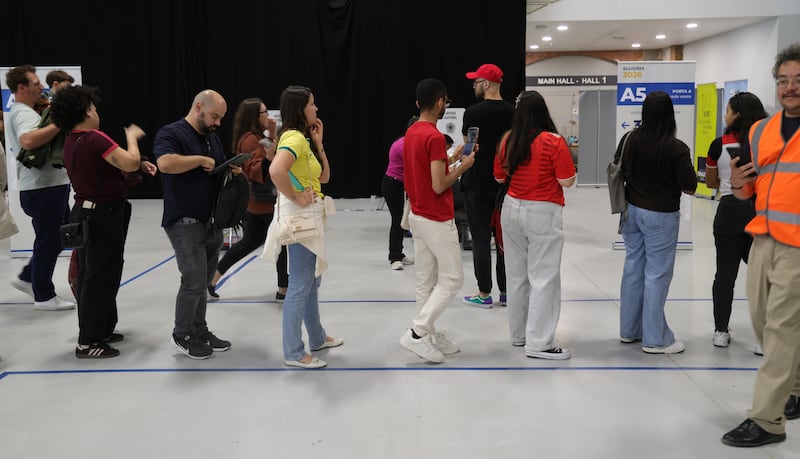 People line up to vote electronically in the Brazilian presidential election at the RDS in Dublin on Sunday. Photograph: Bryan O’Brien/The Irish Times
The latest Datafolha poll, published on Saturday, put Lula on 45 per cent of valid votes and Flávio Bolsonaro on 42 per cent. If no candidate wins more than half of the valid votes, a second round will be held on October 25th.
The campaign has been marked by deep political divisions, concerns over the economy and crime, and tensions with the United States.
Seeking a fourth term at 80 years old, Lula warned Washington against interfering, while the White House denied any intention to do so.
Meanwhile, 80 international observers arrived this week to follow the election.
Presenting Brazil as an independent country, Lula supports multilateralism and stronger connections with Europe, China and South America. His political story includes spending a year and seven months in prison on corruption charges before his convictions were cancelled by Brazil’s supreme federal court, opening the way for him to return to politics and win the presidency in 2022. Trying to secure his re-election in the final days, Lula announced several new measures: increasing the income tax exemption, adjusting social welfare payments for low-income families, creating programmes to help people negotiate their debts, banning sports-betting apps nationwide and offering free weight-loss injections through the public health system.
Flávio Bolsonaro (45) defends his father’s conservative and tough-on-crime ideas. However, his father’s legacy is still marked by how his government handled the Covid-19 pandemic, a period when the elder Bolsonaro repeatedly called the disease a “minor flu”.
While Flávio relies heavily on his father’s loyal voters, he tries to distance himself from the negative image of the previous government, even though he promises to pardon his father and others convicted for the coup plot.
Flávio also tried to get closer to Washington during president Donald Trump’s administration, meeting him at the White House in May and receiving public praise from him.
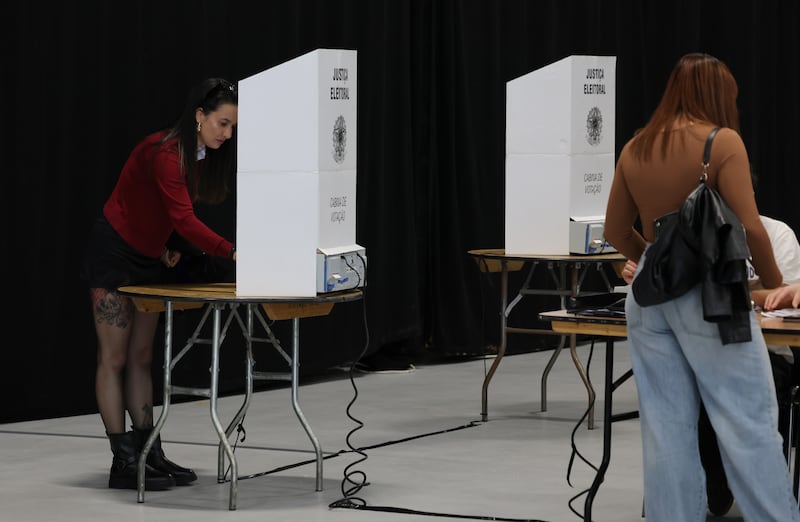 Brazilians living in Ireland cast their ballots electronically at the RDS in Dublin on Sunday. Photograph: Bryan O’Brien/The Irish Times
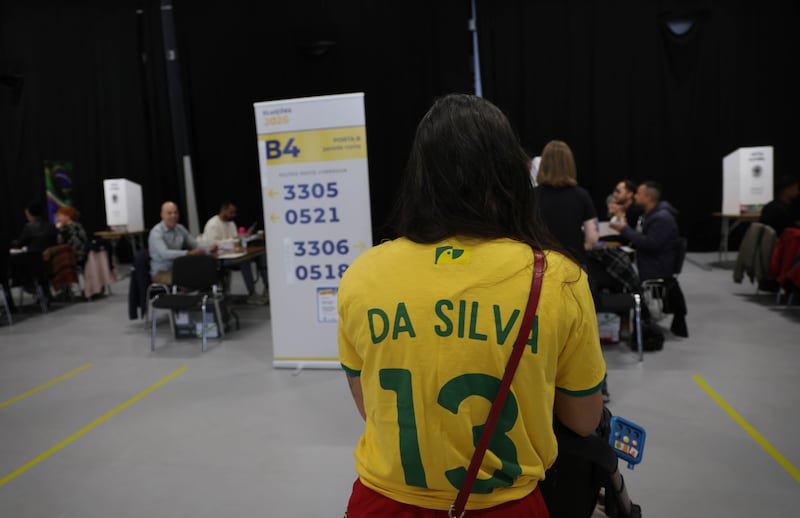 Members of the Brazilian community living in Ireland vote in theor country’s presidential election at the RDS. Photo: Bryan O’Brien / The Irish Times
For voters in Ireland, however, the election was also about maintaining a connection with a country many had left years ago.
Soares summed up the feeling among voters on both sides of the political divide.
“This election will determine the future of Latin America,” she said.