
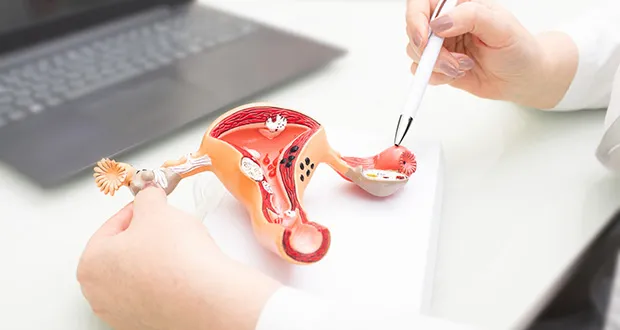
A new research breakthrough at the University of Galway could deliver next generation therapies for ovarian cancer precisely where it is needed, writes Michael McHale
The development of a new specialist implant could transform the way doctors treat one of the deadliest forms of female cancers, researchers believe.
Every year in Ireland around 400 women receive a diagnosis of ovarian cancer, with 300 women dying from the disease here annually. That makes it the fourth leading cause of cancer death in women in Ireland, after lung, breast, and colorectal cancer.
Finding new precision medicines to better treat the tumour has proved challenging. However, a recent breakthrough by scientists in the University of Galway gives hope that, in the future, more women can be saved from the worst effects of the devastating disease.
Together with colleagues from the University of Minnesota, Massachusetts Institute of Technology (MIT) and the Wyss Institute, the research team developed a flexible, porous implant which is designed to sit inside the peritoneal cavity – the space surrounding the abdominal organs in a woman’s body where ovarian cancer predominantly occurs.
The device is designed to connect to an external port through the skin, so it can be replenished with therapeutic agents as often as needed, without requiring further surgery.
The project was carried out by a team at CÚRAM, the Research Ireland Centre for Medical Devices based at the University of Galway.
Dr Aoibhín Sheedy, PhD graduate with CÚRAM at University of Galway
“One of the most frustrating aspects of treating ovarian cancer is that we know localised delivery of therapy works better, but the tools we’ve had until now weren’t built for the job,” said CÚRAM PhD graduate and lead researcher Dr Aoibhín Sheedy.
“We designed this implant with ovarian cancer patients in mind. We wanted an implant that can deliver living cell therapies repeatedly, reliably, and with real precision to the tumour site.”
Ovarian cancer is often diagnosed at late stages, as symptoms such as bloating, pain and pelvic pressure are non-specific and can be overlooked. Treatment often involves surgery to remove as much of the tumour as possible, but currently targeted treatment and effective methods of detecting reoccurrence of the disease are impossible. There is a critical need for new therapeutic approaches for ovarian cancer.
The device is designed to connect to an external port through the skin, so it can be replenished with therapeutic agents as often as needed
The implant is made from a flexible biomaterial that conforms naturally to the body’s internal contours. Its porous membrane allows therapeutic cargo to diffuse gently and evenly into the surrounding tissue, reducing the risk of mechanical complications.
A key feature of the implant is its monitoring capability.
By applying gentle suction through the same external port, a sample of fluid can be drawn from inside the peritoneal cavity during treatment, without any additional procedure.

Dr Eimear Dolan, Associate Professor in Biomedical Engineering at University of Galway
“What excites us most is the two-way nature of this approach,” said University of Galway associate professor in biomedical engineering Dr Eimear Dolan.
“It doesn’t just deliver living cell therapies – it lets us create a picture of what’s happening inside the peritoneal space.
“Clinicians could use this to track how the immune cells are performing, whether the tumour is responding, and then adapt treatment accordingly. That kind of real-time intelligence is something we’ve never had access to before in this setting.”
The team have designed this implant to deliver living cell therapies, the most challenging type of therapy to delivery, but it could be used to deliver a range of cell or non-cell-based therapies.
In preclinical studies, the implant remained fully functional for up to 70 days with zero implant-related complications and showed significantly greater control of the tumour over time, compared to conventional treatments.
“The tricky part about working with novel therapies, such as immunotherapies, in the setting of ovarian cancer is that repeated delivery is done with outdated materials that are not designed for this setting,” said co-senior author and associate professor in medicine at the University of Minnesota, Dr Martin Felices.
“It is also very difficult to sample through these systems. The delivery system, created by Dr Dolan’s laboratory, allows for safer repeated delivery of cellular and biologic therapies in the context of the peritoneal cavity. It also allows us to sample the effects of those therapies in the tumour microenvironment in real-time, which is extremely exciting.”
The researchers envision that the implant would be put in place during initial surgery that patients undergo to remove as much tumour tissue as possible, allowing it to then address any residual disease in the weeks and months that follow.
The ultimate aim would be to leave the implant in long-term, to allow for local monitoring of disease recurrence and early retreatment if required.
“This work represents a shift in how we think about treating ovarian cancer,” said University of Minnesota professor of gynaecologic oncology Melissa Gellar.
“It brings therapy directly to the disease site while simultaneously learning from the tumour microenvironment in real time which provides important insight to guide precision care.”
The research was recently published in the journal Device.
While further studies are needed before this approach reaches clinical trials, the team of engineers and clinicians believe its versatile design could ultimately benefit patients with other peritoneal cancers, including gastric, colorectal, and pancreatic disease.
Dr Dolan, in collaboration with Prof Gellar, is also exploring the translatability and commercial opportunity of this technology through the ARC Hub for HealthTech.
The hub is a research initiative co-funded by the Government of Ireland and European Union via the ERDF Northern and Western Regional Programme 2021-2027, and hosted by the University of Galway, in partnership with Atlantic Technological University and the RCSI University of Medicine and Health Sciences. 