
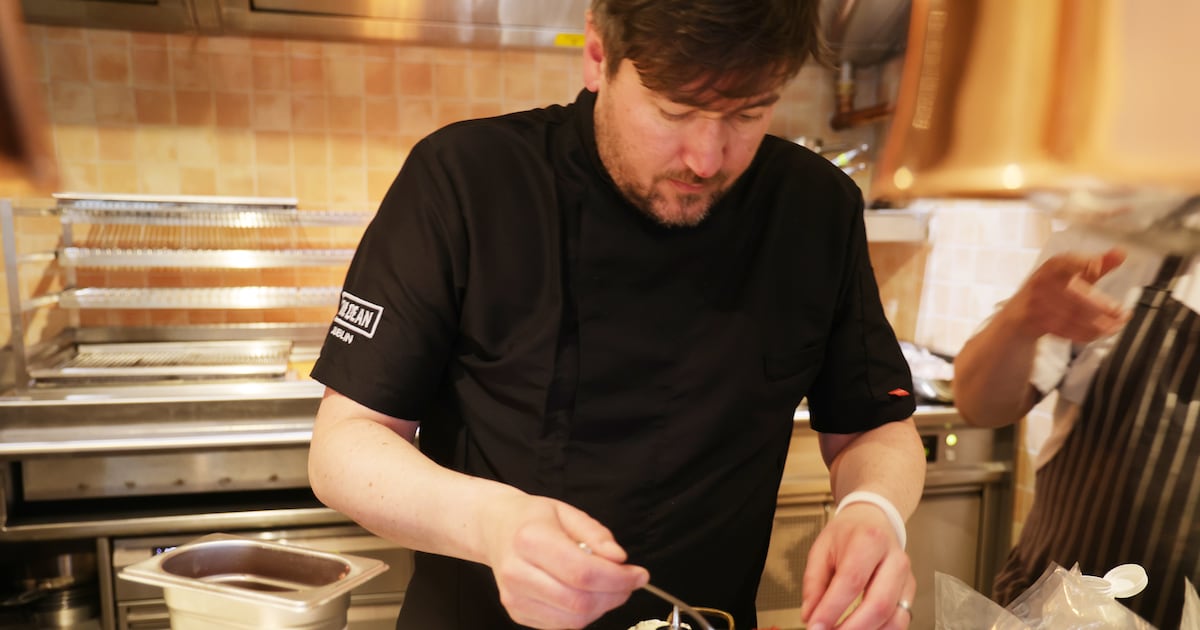
“You would be amazed how good the produce is a 15-minute drive up the M50,″ says Ross Bryans, executive chef of the Dean group, speaking ahead of the opening of its newest restaurant, Banba.
Nestled inside a Georgian townhouse on Harcourt Street, Banba is one of the latest additions to the Dublin restaurant scene and promises to serve seasonal plates with a focus on Irish ingredients.
One dish exemplifying this approach for Bryans is the Archer’s Farm – in Rush, Co Dublin – gem salad, served with “blue talls goat curd” and preserved strawberry vinaigrette (€12).
“I created a dish specifically for this restaurant where I have taken three farms that are relatively quite close to each other,” says Bryans.
“So I use baby gem salad from Archer’s, beautiful cress and leaves from McCormack’s (in Co Meath) and then I got some strawberries back in May from Kelly’s (in Co Meath) and they were kind of yellow-green just before they were ripened, so I had them picked and I preserved them.”
What does preserved pre-ripened strawberry taste like?
“It tastes almost like a savoury strawberry because it hasn’t had the sugars develop inside yet,” says the chef.
Opening this Friday, October 16th, the hotel restaurant hopes to attract a wide range of clientele beyond guests staying at The Dean.
Entering the restaurant, diners are greeted by a kitchen island rather than a bar. The room itself is decorated with neutrals – natural woods and warm, earthy colours used judiciously where colour is deployed. Think amber banquettes, earthy-red chairs and warm lighting.
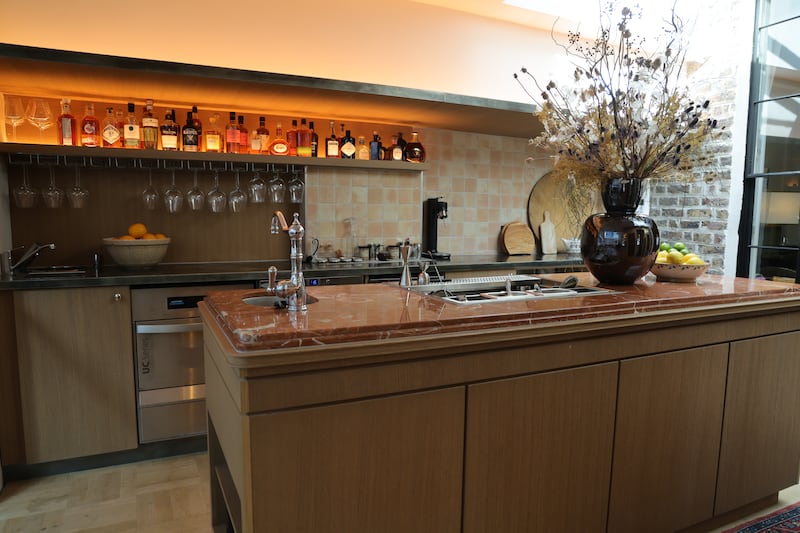 The decor at Banba Restaurant in Dublin is neutral and warm. Photograph: Bryan O’Brien/The Irish Times
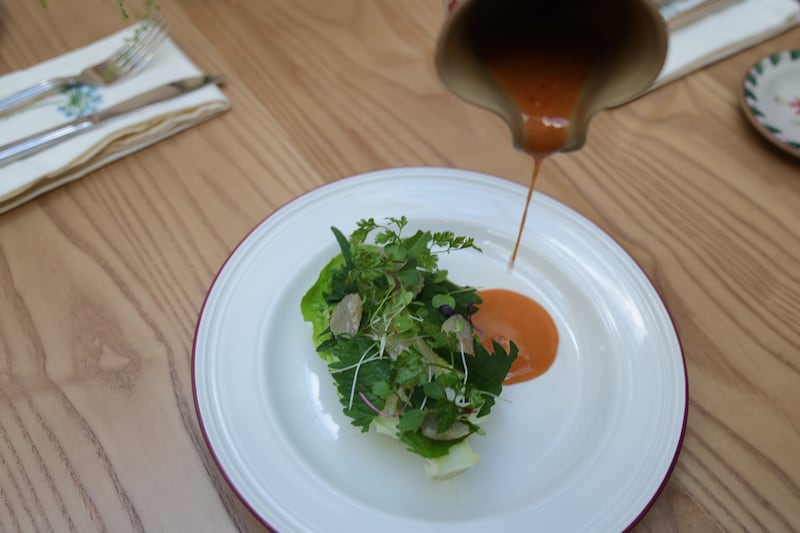 Chef Ross Bryans works on a green salad with whipped goats cheese wrapped in baby gem lettuce with pickled strawberry. Photograph: Bryan O’Brien/The Irish Times
There is also an emphasis on Irish-made details, such as the extensive suite of Nicholas Mosse pottery, artwork by Irish artists and underlit jars of pickles, creating a pantry-style feel.
“The decor itself, we wanted it to feel like you are going to somebody’s home,” says Bryans. “The lounge is very relaxing with the open fireplace, the bar itself looks like a kitchen counter in somebody’s home when you walk in.
“When you go to somebody’s house, you don’t go there to have the same meal twice, so we want to rotate the menu. At least one or two dishes every two weeks to keep things relevant and really work with the growers and the seasons.
“We might have four seasons in a year, but for a good product you can have a couple of different seasons within a season, so we really wanted to tap into that part of it.”
Kicking off the seasonal menu is chicken liver foie gras parfait, spiced apple chutney, Killahora apples and ice wine, which is priced at €14 for a starter. There’s a vegetarian main in the form of roasted cauliflower served with nuts, seeds and gremolata. Another vegetarian option is roasted pumpkin with a spiced honey glaze, both priced at €14.
Other mains on the menu are the pork chop tomahawk, charcutière sauce and creamy scallion mash for €35. Meanwhile, the wild clams, sweetcorn, mushrooms and Madeira Velouté is priced at €24.
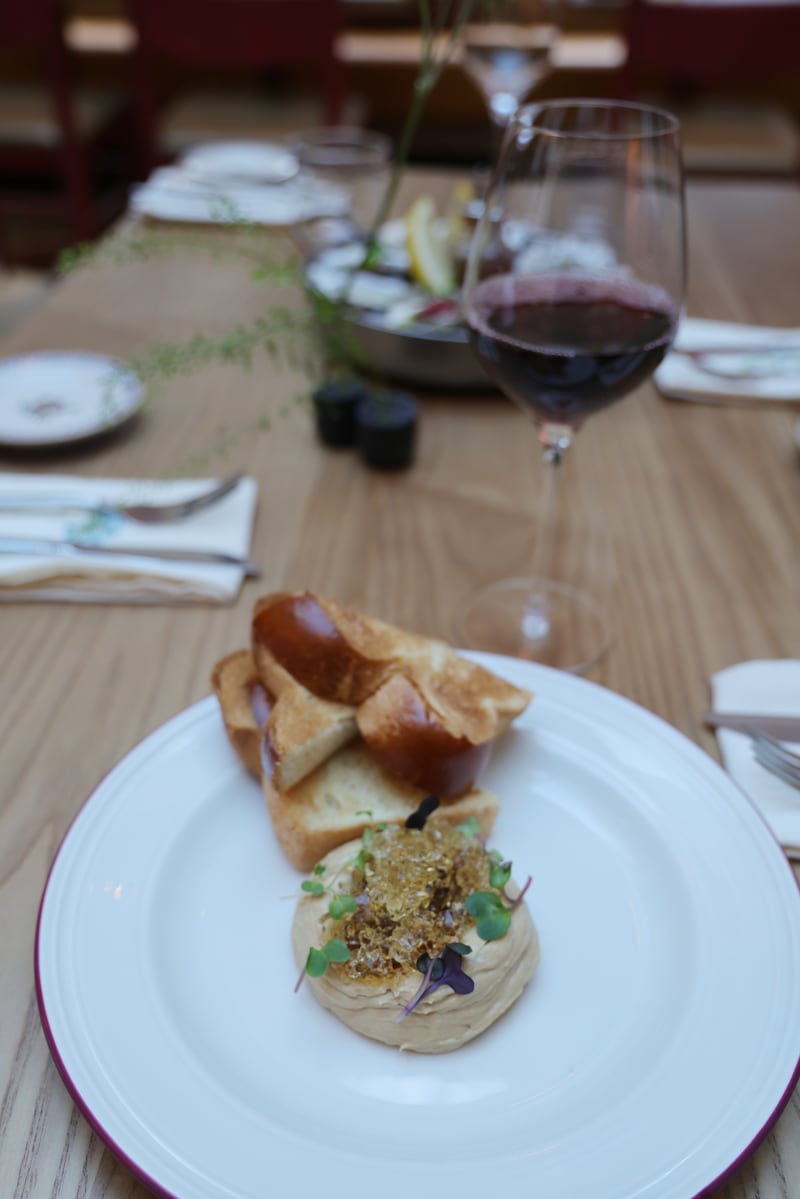 Chicken liver parfait kicks off the seasonal menu at Banba on Harcourt Street in Dublin. Photograph: Bryan O’Brien/The Irish Times
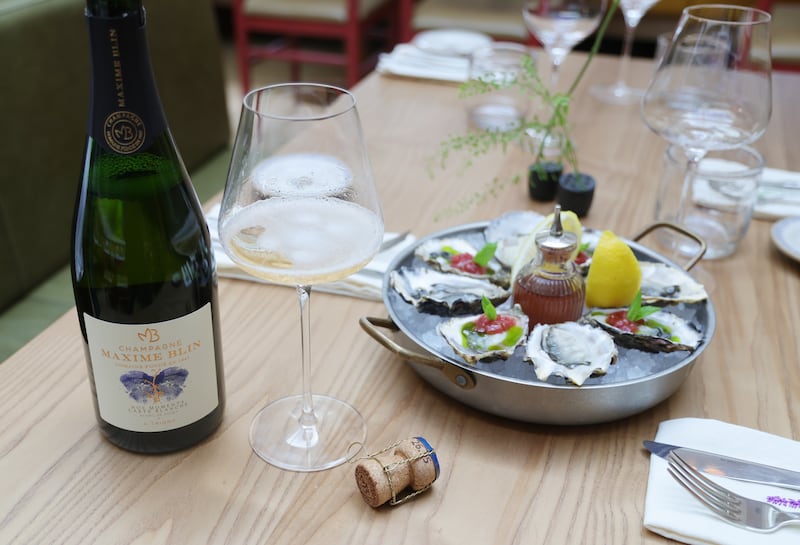 Oysters paired with champagne at Banba. Photograph: Bryan O’Brien/The Irish Times
“Every season’s change is always welcomed by a chef,” he adds. “I don’t know a chef who wouldn’t welcome it or say otherwise. We have that opportunity to really mix around and play with the produce, not only in a food aspect but also with the drinks.”
Drinks operator for the Dean group is Fergus O’Leary, who says the design of the restaurant’s kitchen island influenced the cocktail menu.
“That bar shaped the style of drinks that we needed to produce,” he says. “I remember when I saw the plans, I was scratching my head like, ‘How am I going to produce a top-class cocktail menu from this?’. But it actually made me rethink how I would normally make a cocktail menu.
“So pretty much 90 per cent of our prep is done before the shift. Everything is bottled, pre-batched, ready to go, and carbonated so you can literally just pick up a bottle and pour the full cocktail over the ice.”
Necessity has led to the creation of multiple in-house brews, such as a line-up of homemade sodas including the Banba Cola.
“I’m really proud of that one,” says O’Leary.
“We have made our own Coca-Cola using a couple of different spices and herbs. We are using figs, perilla, cinnamon, vanilla, some smoked oak and then we balance it with some citric acid and some saline solution. Some caramel as well.”
All cocktails have been made with at least one Irish ingredient, be it the liquor or the aromatics.
“We are using Valentia Island Vermouth in our espresso martini, which is a little bit different,” he says. “We are using Móinéir fruit wines – all three of them as a blend for a New York sour where you have a red wine float up at the top of the cocktail.
“The first page of the wine menu is going to feature Irish winemakers; some in Ireland and some abroad. We will actually have a map of Ireland highlighting where these people are from just to highlight how many cool, amazing winemakers there are from Ireland in all these other countries. You would be blown away.”
Among the Irish winemakers are David Llewellyn of Lusca Wine from Lusk, Co Dublin, Andrew Eakin and Naomi Murtagh’s Château Puynard in Bordeaux, and the Horgan family of Leeuwin Estate in Western Australia.
The restaurant might have a clear line on produce, seasonality and Irishness, but where does the name come from?
“Banba comes from the Irish word Banbha, it’s a mythological Irish woman,” says O’Leary.
Bryans adds: “She was the goddess of the fertility of the land.
“From a food perspective, we want to make sure we are sourcing the best Irish products possible. So we spent a lot of time working with these producers to really showcase the beautiful products that are available in Ireland.”
Banba will open for service on Friday, October 16th. For further information go to banbadublin.com.