
When approaching a new Tinderbox production, under its artistic director Patrick J O’Reilly, it’s usually best to expect the unexpected.
In 2024 he removed Federico Garcia Lorca’s play Yerma from the steamy heat and exotic passion of southern Spain and relocated it among a gaggle of tipsy christening-party guests in the car park of a Co Louth hotel.
Earlier this year he reworked George Orwell’s political allegory Animal Farm into a fiery debate on propaganda and freedom of speech, using as his mouthpiece a group of feisty female protesters banged up in a detention cell.
In 2023 he called upon dazzling gaming technology to pitch Eugène Ionesco’s absurdist play Rhinoceros into an unsettling, neon-lit virtual environment peopled by a community of automaton-type avatars. His new take was named that year’s best revival of a play at the UK Theatre Awards.
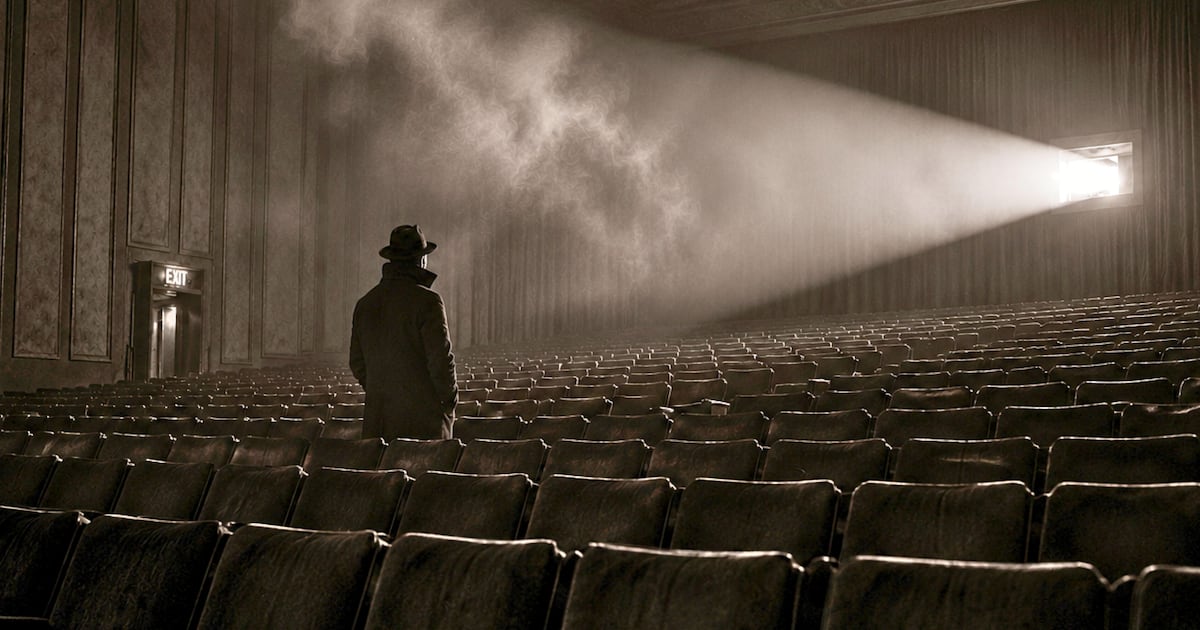
O’Reilly is now in the process of immersing himself and his cast in a cinematic revival of a 20th-century American classic, calling on the world of the movies as an escape route, a refuge, a retreat for its troubled central character, Tom Wingfield, played here by Thomas Galashan.
In his magnificent memory play The Glass Menagerie, Tennessee Williams created Tom as a thinly veiled version of himself. As the audience settles into an alternative reality, cocooned inside the safety and darkness of the performance space, on stage Tom’s regular trips to the cinema disguise the brooding demons bedevilling his claustrophobic home life, with his mercurial mother, Amanda (Úna Kavanagh), his introverted, physically frail sister, Laura (Louise Parker), and her precious collection of small glass animals.
O’Reilly did his professional training at the Jacques Lecoq International Theatre School in Paris. Its distinctive style of carefully calibrated physical theatre exerts itself, time after time, in his work. He recently stepped into the rehearsal room at the Mac in Belfast, where Tinderbox is the resident company, fresh and re-energised after completing a two-week intensive training programme at Lecoq’s new premises in the historic French walled city of Avignon.
“Being back at Lecoq these past couple of weeks has given me the final piece in my professional jigsaw,” O’Reilly says. “I hadn’t been there for 14 years, so to do the whole two-year training again, in just 10 days, alongside former alumni from all over the world, has been incredible. It’s given me the official accreditation to teach Lecoq technique, which kind of closes the circle for me.
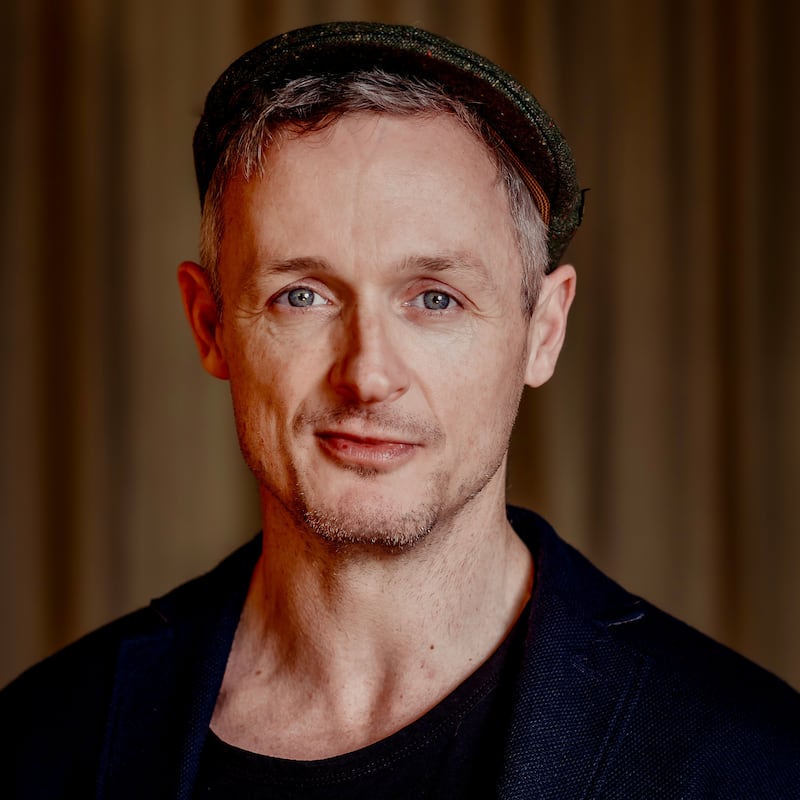 Tinderbox: Patrick J O’Reilly
“Under the same tutors as before, we did tragedy, comedy, melodrama, clowning … all the things you do in the course of your training. Then they ask you why you do it. What’s your motivation? It’s like you lay all the secrets of your art on the floor and question your own motives, your decisions, your performance choices. Essentially, you confront yourself. It reinvigorated me.
“On the first day I stood up in the room and confessed, ‘J’ai perdu mon feu – I’ve lost my fire.’ That’s why I’m here. And they said, okay, we have to help you find it again. I told them, ‘Je suis fatigué – I’m tired.’
“And so I was, tired of doing of two shows a year, four-week rehearsals for 10-day runs. I’d lost the spark. I was thinking that I’m 45 years old now. What do my next 20 years look like? And then they took me on an adventure.
“It was as though my career didn’t exist inside the school; it didn’t matter. We were being returned to our creative roots. I had a few moments of breakthrough, when I said, ‘Yes, this is the fire, this is the theatre, this is the thing that’s transformative.’
“They are brutal in their honesty. You’re sitting on benches, barefoot, and then you begin the voyage, the cataclysm, in silence. You perform a complete theatrical experience, alone and behind a mask.
“At the end you remove the mask and ask yourself what has changed. The answer is, I’ve changed. Getting back to those roots, silently, deep inside your own head … it was terrifying – but magic.”
Filled with new resolve and artistic determination, O’Reilly has returned home to The Glass Menagerie, a play he describes as incredible, complex and breathtaking.
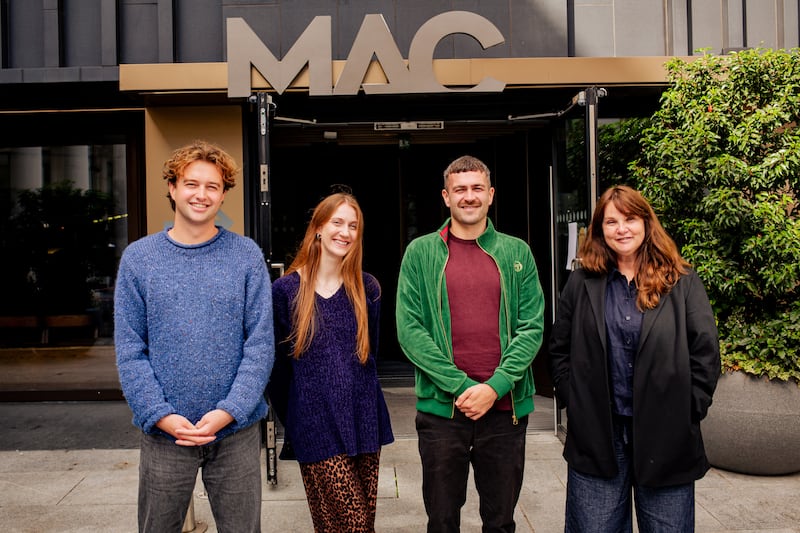 The Glass Menagerie: cast members Jacob Baird, Louise Parker, Thomas Galashan and Úna Kavanagh. Photograph: Lost Lens Caps
Drawing on his rediscovered techniques of rhythms and movement, introspection and questioning, he is encouraging his characters to focus their performances on the four natural elements: earth, wind, water and fire. Amanda is fire, Tom is wind, Laura is water and Jim, Tom’s ambitious friend (Jacob Baird), who offers Laura a brief moment of release, is earth.
The Lecoq mantra is all about the mechanics of movement, what they call the “tout bouge”, the “everything moves”. Its poetic discourse in theatre-making is all about movement.
O’Reilly explains how this philosophy works in practice.
“With Amanda we’re playing a lot with fire. One moment she’s explosive, she’s got sparks; the next she’s ash, then she’s flames. We’re using poetic metaphors and objects to look at the physicality of each character’s development.
“I’ve brought back with me a realisation that each movement has to be clear; each decision has to be clear. Every movement has a beginning, a middle and an end, and it’s my job as a theatremaker to make the performers see and achieve those beginnings, middles and ends.”
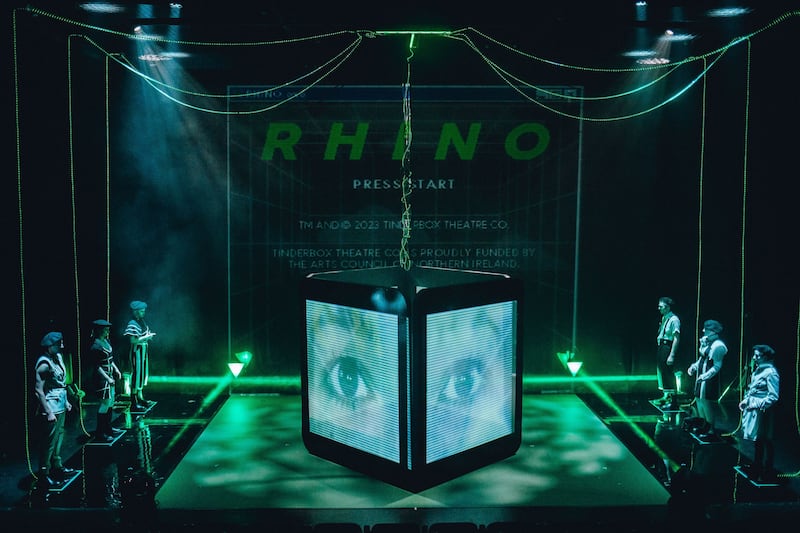 Tinderbox: Rhino, based on Rhinoceros by Eugène Ionesco
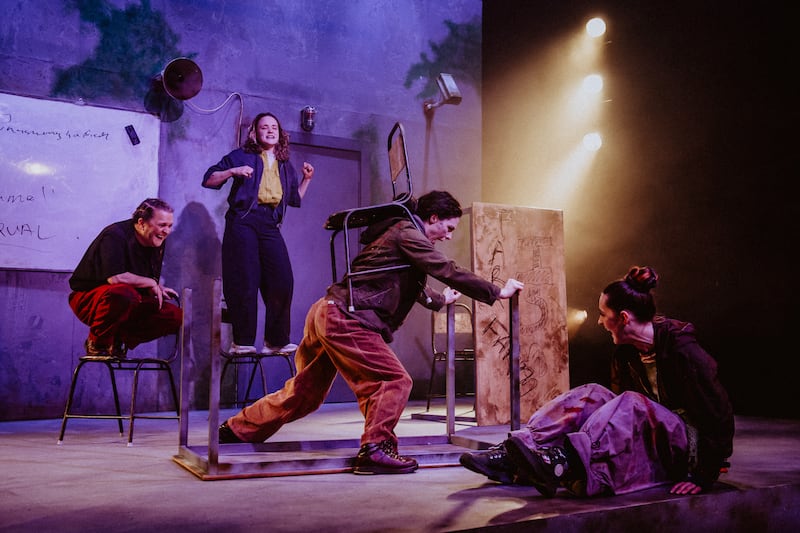 Tinderbox: Jo Donnelly, Susan Hoffman, Clare McMahon and Caitriona McFeely in Animal Farm. Photograph: Carrie Davenport
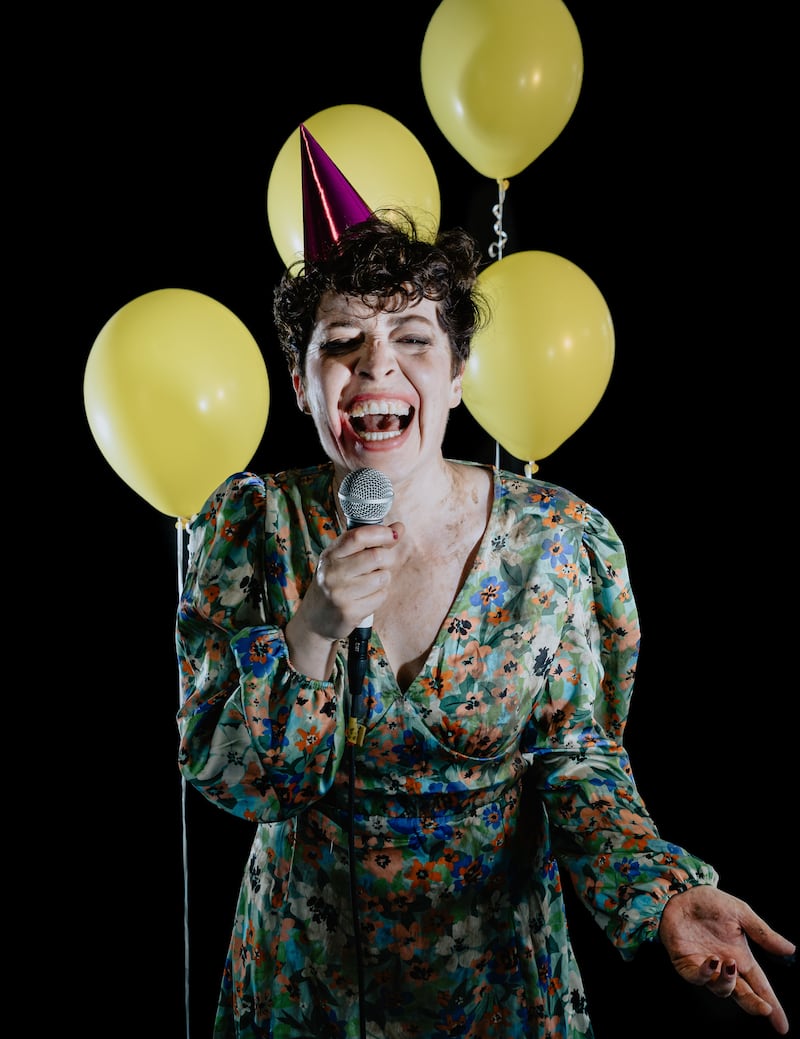 Tinderbox: Caoimhe Farren in Yerma. Photograph: Lost Lens Caps
When he was developing ideas for reviving and revising Yerma, O’Reilly was disarmingly frank about the parallels between the christening-party scenario and the chaotic family get-togethers he had experienced while growing up in the Co Louth borderlands.
Once again he’s bringing a sharp sense of personal identity to his choice and treatment of The Glass Menagerie.
“I love doing memory plays: The Man Who Fell to Pieces [which he wrote], The Upside Down House, even Ubu, with its flashbacks and looking to the past,” he says.
“I find with Tennessee Williams, and especially with this play, it is obviously semi-autobiographical. You can feel it in the room. As a queer writer, you can feel his need to leave his mother and his sister, Rosa. He just couldn’t stay.
“I can see lots of parallels and similarities with being a young, queer man, needing to leave a very small town, leaving a family behind, fleeing the nest.
“But how do we look back on those memories? How do we reconcile any differences of remorse or shame or regret? That became very much a centre point for choosing the play.
“To be very honest, in the current financial climate we have to do a classic play in a contemporary way so that we can bring in the audiences. But then that gives us the freedom to do new or lesser-known work in the next part of our programme.”
We don’t need tricksy effects or a complicated set when you have a play like this, with such multilayered lives and characters
Director and cast are revelling in the textual and dramaturgical perfection of Williams’s play, which they will perform at Belfast International Arts Festival exactly as it is on the page, starkly and simply, without special effects or script changes.
Through Paul Keogan’s staging and lighting, the audience will be brought directly into the world of 1940s American movies. As in those old black-and-white films, a live pianist will be on stage, in the shape of the composer Daniel Quigley, whose score incorporates a motif for the glass menagerie, mixed in with sounds from the American movie playbook and snatches of southern smooth jazz.
“The reason I chose the prism of the movies is that there is such an importance in Tom’s need to escape his life through film,” O’Reilly says. “When I read and reread the play, I felt it needs a second space that is poetic. It’s not realism. Tennessee Williams very much gives you the invitation to be poetic and symbolic and to play with memory in a way that doesn’t feel limited.
“It’s all in there but interpreted through a different lens. The idea of editing memory is, for me, really interesting, especially the memories we choose.
“Tom’s escapism, his need to move into fantasy, can only last for so long until reality catches up, and he is only able to look at his reality through the lens of film.
“We don’t need tricksy effects or a complicated set when you have a play like this, with such multilayered lives and characters.
“Amanda is the driving force, the fire. She’s a struggling single mother, abandoned by her husband and in danger of loving her children to death. Tom’s perspective is about the conflict of desperately wanting to leave and be free, while being pulled back by the family. When they release him, he has to go.
[ ‘We can all see you’: Gillian Anderson addresses ‘distracting’ fans in front rowOpens in new window ]
“Laura is all about water, seeing the world through the clear glass of her miniature menagerie, drowning under the suffocating love of her mother. Jim, the gentleman caller, is earth. He is rooted; his branches are extending throughout the space. He is the light that the family are looking towards.
“I think that Tennessee Williams has done an incredible job in enabling us to have sympathy and compassion and frustration and anger and hope for every family member.
“If those characters had had the ability to articulate their feelings, it would have been a very different play. So it has been a very beautiful and moving journey thus far, in exploring the physicality of the world of the play and then allowing the exquisite text to be the thing that drives that world.”
The Glass Menagerie is at the Mac, as part of Belfast International Arts Festival, from Tuesday, October 20th, until Tuesday, October 27th. The festival begins on Wednesday, October 14th, and runs until Sunday, November 8th