
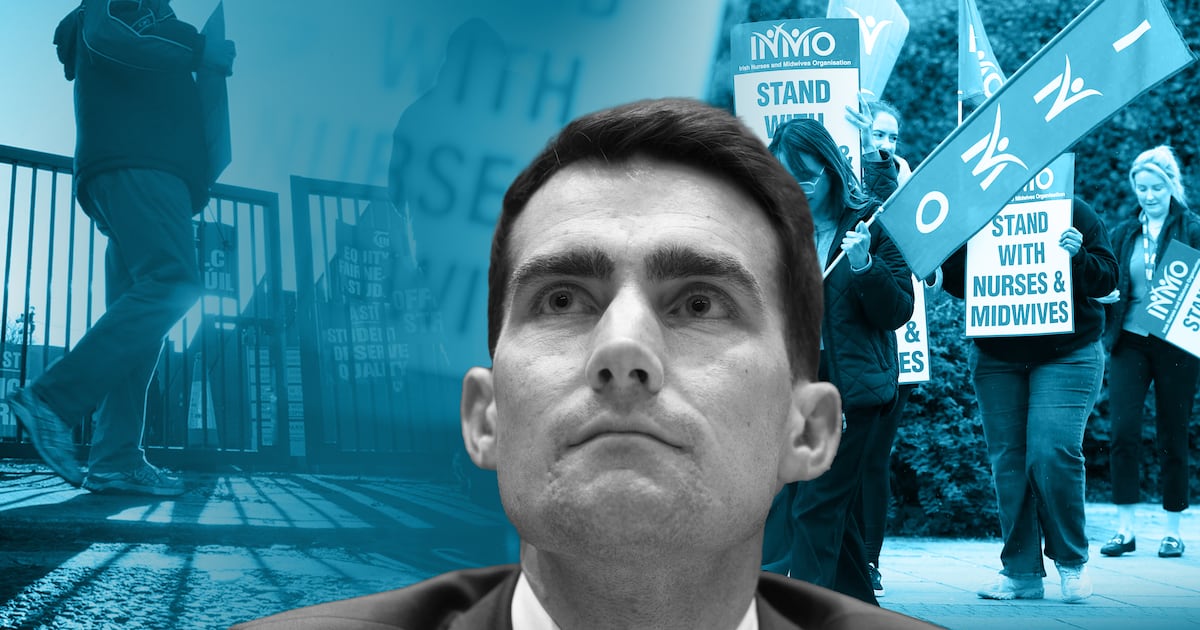
Renewed efforts by Government to get trade unions into talks on a new public sector pay deal have been dismissed as “too little, too late,” by the general secretary of the largest union involved in the dispute.
More than 300,000 public-sector workers are set to participate in the one-day work stoppage scheduled for Wednesday, with another scheduled for Wednesday 21st. Unions representing the workers want pay issues to be dealt with first as part of any engagement. The last public-sector pay deal expired in June.
General secretary of Fórsa trade union Kevin Callinan said the union side was already looking beyond tomorrow’s strike: “We’re as much focussed on next week’s strike as tomorrow’s and, indeed, beyond that.”
Speaking at lunchtime, Minister for Public Expenditure Jack Chambers criticised union leaders, saying that “strike action should be a last report, not a first resort”.
He said that the Government was willing to agree pay increases for public servants but that the “only way we can deliver this if trade union leaders get around the table”.
“The public pay and pensions bill has grown by over €12 billion in a six year period … The last pay agreement delivered over 9 per cent for public sector workers,” he said.
“The public will see such levels of disruption because the trade union leaders won’t negotiate,” he said, appealing to union leaders to “reflect on this and not put the country through this”.
Asked about suggestions that the Government might appoint an independent mediator, Chambers said he was “open to wider suggestions to move forward”.
In a statement early on Tuesday afternoon, the Government had said it was “available” to “immediately enter intensive talks” at the Workplace Relations Commission (WRC) and Chambers subsequently said this is where he would like to see talks take place.
After a briefing by Chambers and discussion among Ministers at this morning’s Cabinet meeting, the Government said that at a “time of great uncertainty”, the best way “to reduce uncertainty for public servants is for public service unions and associations to enter talks to reach a clear agreement on public service pay”.
Callinan dismissed claims in the Government statement and by Chambers that pay increases over the past six years had broadly matched inflation with lower paid workers receiving increases above it.
[ Q&A: Who is going on strike on Wednesday and why?Opens in new window ]
“Between 2019 and 2025,” it said, “public servants received pay increases of 22.5 per cent, broadly matching considerable price increases over the period. The lowest-paid public servants saw increases of 36 per cent over the same period, significantly ahead of inflation. The most recent agreement, the Public Service Agreement 2024-2026, delivered cumulative pay improvements of 9.6 per cent against inflation of 6.6 per cent.”
Responding, Callinan, who also chairs the public sector committee of the Irish Congress of Trade Unions said Chambers and the government side were “cherry picking figures”.
“If he wants to do that we can identify figures that show clearly the pay of civil servants has fallen behind not just inflation but the workforce generally and the broader economy by a long margin.”
Chambers earlier said the planned strike was “really unfair” on the public. He and other senior Coalition figures, including Taoiseach Micheál Martin, expressed concern about the impact it would have on the members of the public as key services are disrupted.
Efforts by the Government in the wake of the budget, including a letter by Chambers to union leaders on Monday calling for an “intensive process of engagement as soon as possible”, had been swiftly rebuffed.
Chambers said in his letter that the provision of €1.2 billion for public-sector pay in the budget was “significant” and “pay issues can and should be discussed as a priority alongside other matters as part of the pay talks”.
The unions promptly rejected the contention that the figure provided a basis for progress and have accused the Government of contributing to the dispute reaching this point by taking so long to start preliminary talks on a new pay deal when the previous one expired in June.
[ Who is affected by the public sector strike and can it be averted?Opens in new window ]
The Taoiseach separately outlined measures in the budget for workers including income tax cuts, expansion of public-service worker numbers, a planned cut in the cost of childcare and supports for people with disabilities.
“That’s a very strong platform upon which to build in terms of public-service pay negotiations.
[ The blue-green smoothie ruling the country has no plan and even less passionOpens in new window ]
“My real concern is the disruption that will be caused to many people, particularly patients and those who were expecting operations and procedures and so on like that, and indeed, in terms of school days being lost.”