
Main points Employees are seeking a new public sector deal, with trade unions arguing that pay terms must be agreed before other issues are addressedHundreds of striking health workers are out at University Hospital Galway and the Mater hospitalMost colleges, schools and universities are closed Thousands of medical appointments have been cancelled but emergency departments remain open as do GPs and pharmacistsCourt services have been curtailed, Leinster House is closed and many local authority services are all set to be disrupted ‘Onus’ is on unions to take next step to ensure ‘deal is done’, says Minister for Higher Education James LawlessAnother work stoppage is planned for Wednesday 21stKey Reads Q&A: What services will be affected by the public sector strike and what will be closed?John McManus: Why we must have this performative strike by public sector workersPodcast: What is the strike about and why it hasn’t been averted?
Katie Mellett – 7 minutes ago
Richard Boyd Barrett joins Fórsa picket line in Dún Laoghaire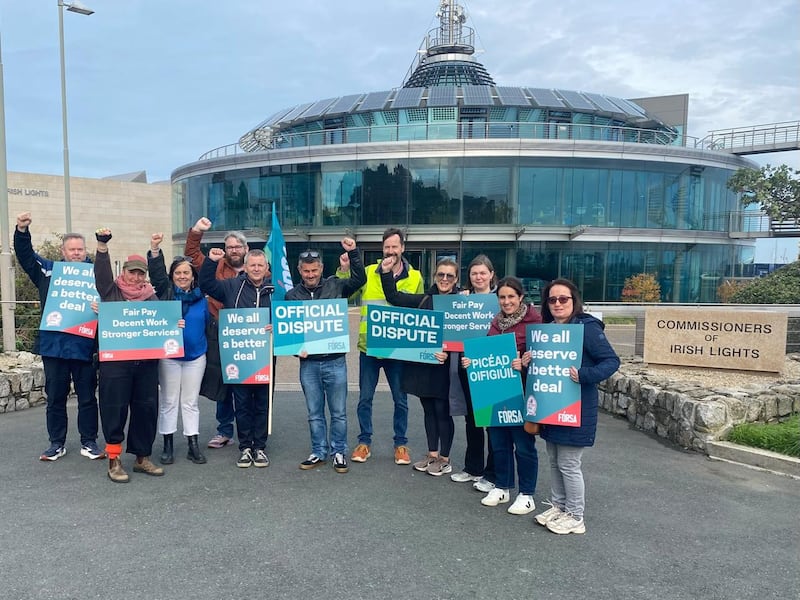 People Before Profit-Solidarity TD Richard Boyd Barrett joins the Fórsa picket outside the Irish Lights building in Dún Laoghaire. Photograph: Emmett Malone
At the Fórsa picket outside the Irish Lights building at Dún Laoghaire harbour, civil engineering technician Colin Ball sounds slightly exasperated that the public service pay dispute has come to him and his colleagues picketing from early morning, reports Work Correspondent Emmet Malone.
Workers from admin, procurement, facilities management and diverse array of other roles stand close by and nod in agreement as he suggests “they [the Government] have had a long time to sort this”.
“They’ve have months but they haven’t really done anything so we’re just standing here, supporting each other, trying to get a better deal,” he says as drivers of buses and cars beep their horns in support of the strikers while passing by.
Asked about the suggestion by James Lawless earlier on Wednesday morning that public servants tend to be better paid than their private sector counterparts, Ball seems surprised.
“I don’t think that’s fair to be honest. But the issue is that the agreement expired in June, and they’ve had plenty of time to sort a new one out. The rate of inflation’s gone up so much but our pay hasn’t gone up. That’s why we are here.”
People Before Profit-Solidarity TD Richard Boyd Barrett joined the Fórsa picket outside the Irish Lights building in Dún Laoghaire.
Katie Mellett – 12 minutes ago
‘The work isn’t the problem, it’s the pay, we want fair pay’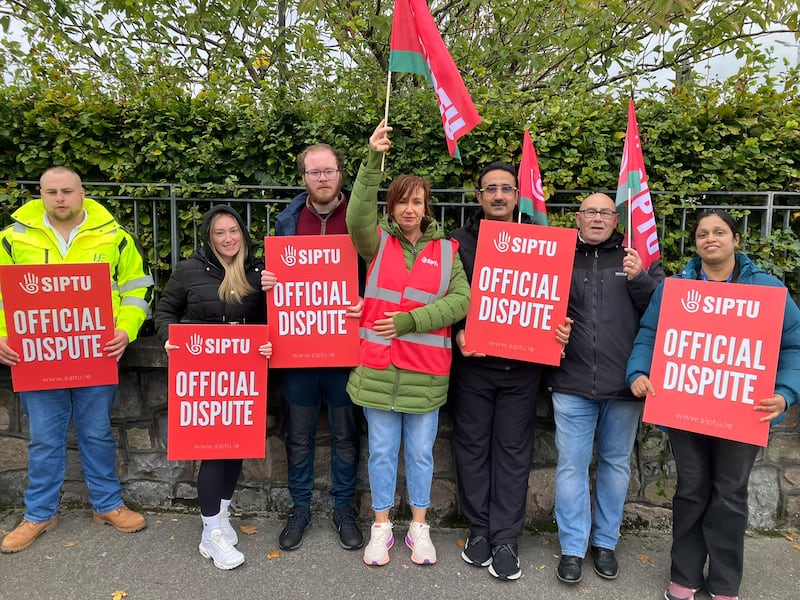 Martina Burke (in the middle holding flag) a healthcare assistant in the Emergency Department of University Hospital Galway, with Siptu colleagues on the picket at UHG. Photograph: Dara Bradley
Martina Burke, a healthcare assistant at one of the country’s busiest emergency departments at University Hospital Galway, has a 40-kilometre commute to work in Galway City from her home in Kilmaine, Co Mayo, reports Dara Bradley.
A mother of adult children, like hundreds of workers on the picket line at UHG, she’s feeling the pinch of higher fuel prices and the cost-of-living crisis.
“I work three long days. I’m up in the morning at half five; not home ‘til quarter past nine. It’s a long day. It’s busy in the ED. It’s hard work. But the work isn’t the problem, it’s the pay. We want fair pay,” she says.
A rep with trade union Siptu for 20 years, this is Burke’s second strike and she feels the public is backing the industrial action.
“People who filter through the hospital see the hard work we do. The public are very supportive of us,” says Burke, who adds that workers agreed cover in the wards and ED to “make it safe” for patients during the strike.
“Our message to the Government is sit down, talk and listen to the unions. We don’t want to be here today, no one does. We had a 95 per cent vote to strike, which was overwhelming – it means everyone wants the same thing.
“If they don’t sit down with us, we will 100 per cent be back here again next week,” says Burke.
Katie Mellett – 16 minutes ago
Irish Dental Association strike for first time since 1922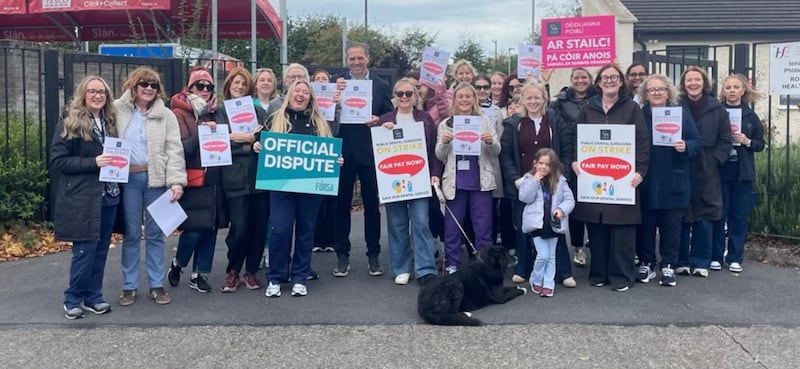 Public dentists picketing outside the Roselawn health centre in Blanchardstown, Dublin. Photograph: Shauna Bowers
Fintan Hourihan, chief executive of the Irish Dental Association (IDA), said the protest was about more than just pay but also about supporting the service to meet the needs of its special care patients as a group of public dentists picket outside the Roselawn health centre in Blanchardstown, Dublin.
Wednesday marked the first ever strike action by members of the IDA since it was founded in 1922, reports Health Correspondent Shauna Bowers.
Katie Mellett – 21 minutes ago
‘Whatever you’re earning doesn’t feel like enough these days’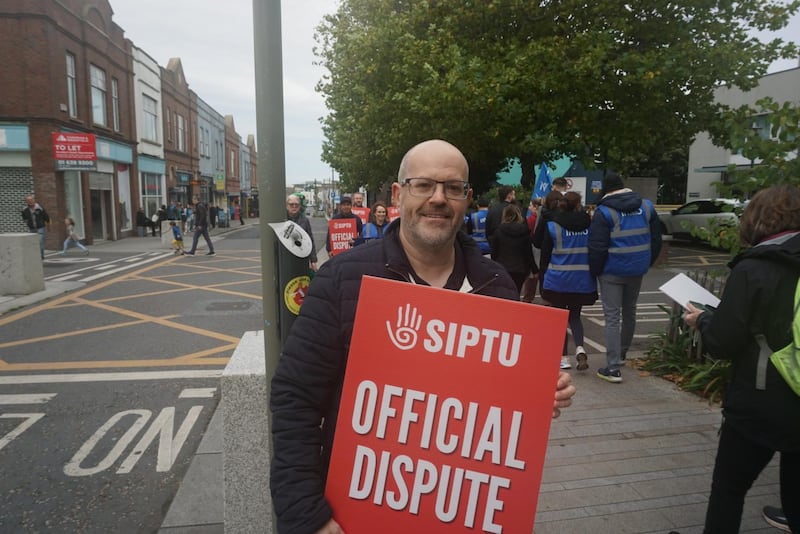 Conor Carroll is a porter at St Michael’s Hospital in Dún Laoghaire and says Wednesday’s strike is all about wages and the increased cost of getting by. Photograph: Emmet Malone
Conor Carroll, a porter at St Michael’s Hospital in Dún Laoghaire, says Wednesday’s strike is all about wages and the increased cost of getting by, reports Work Correspondent Emmet Malone.
“We’re just out looking for fair play,” he says, as he pickets alongside colleagues from Fórsa, the Medical Laboratory Scientists Association and the Irish Nurses and Midwives Organisation at the hospital gates on the town’s main street this morning.
“It’s just about the cost of living. Every time you go to the supermarket you feel it,” he says, gesturing towards the Tesco shopping centre across the road.
“Everything’s gone up, even the cost of eating, and whatever you’re earning doesn’t feel like enough these days.
The hospital, he says, is a good place work, a community operation where “everyone gets on”. And it has good to him since he switched from bar work eight years ago to be around more for his then young children.
“Management are good, they are always helpful with rosters when you need it,” he says, explaining that he commutes from Lucan and tries to work shifts that allow him do a school run.
“I have no complaints, really, except that my pay hasn’t gone up,” he says, “and everything else has.”
Katie Mellett – 24 minutes ago
‘Everyone is feeling’ the impact of inflation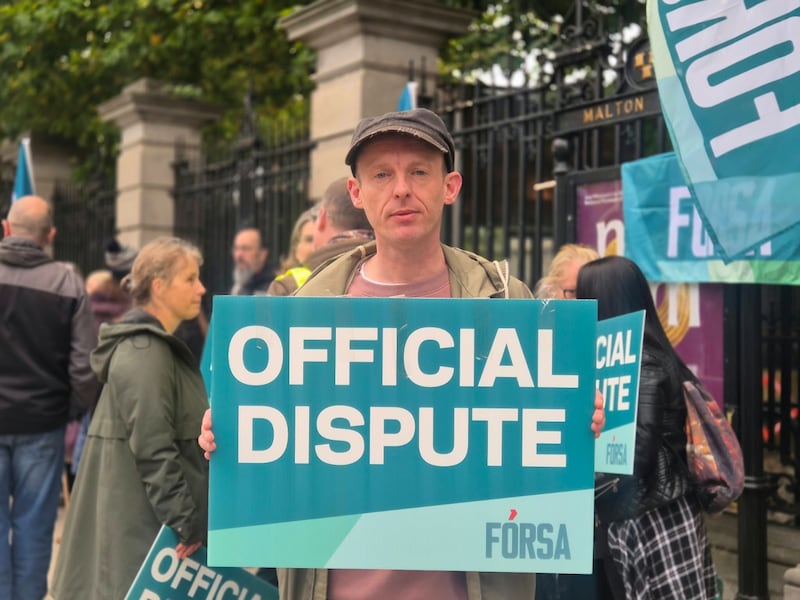 Jason Dee, a visitor service officer at Dublin Castle, described the strike as “very necessary”. Photograph: Órla Ryan
Jason Dee, a visitor service officer at Dublin Castle, described the strike as “very necessary,” reports Órla Ryan.
“There should be a natural transition from when a pay deal expires into the next deal,” he said, referring to the fact the Public Service Agreement 2024–2026 expired in June and a new deal has not yet been reached.
Dee said “everyone is feeling” the impact of inflation, especially lower paid workers.
He said the strike is “an inconvenience to people and to tourists and to everybody, so I think it’s in everyone’s interest that it’s resolved”.
Katie Mellett – 57 minutes ago
Strikers in Dún Laoghaire hope second day of action will not be necessary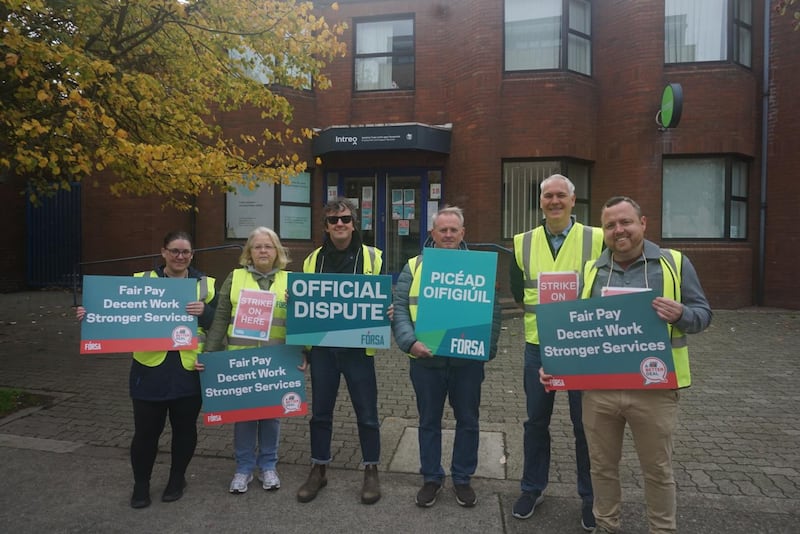
At Dún Laoghaire’s Intreo Office on Cumberland Street, staff who are used to dealing with other people’s employment issues were outside having to explain to the occasional service user that they are having some of their own, reports Emmet Malone.
“We’ve had a few people along this morning, and when they’ve seen us and they’ve asked a couple of questions about why we are striking,” said Lyndsay McGlynn, the centres manager, as she stands with a handful of her co-workers. “But we’ve had no negative feedback. It’s been very understanding and supportive.”
She said she wants to see talks between the unions and hopes the industrial action can be sorted out before the second scheduled one-day stoppage next Wednesday.
Asked if it should have been sorted out before today, with Minister for Public Expenditure Jack Chambers having effectively said last night pay could be dealt with up front, she says the comments came too late.
“It’s something that came out the day before the strike, the night before it, I think it should have happened a lot earlier.
“I do hope that in the next little while it will get resolved. Hopefully, we don’t have to do another strike date next Wednesday.
“But people are very united, all of us here and across all the grades, you saw over 90 per cent voting for the strike everywhere.
“Missing two days’ wages would be a big commitment for all of us but we are doing it because the wages need to be increased, particularly for those on the lower pay.
“We are very united and I do think if it continues people will be determined enough to see it through.”
Katie Mellett – 1 hour ago
Workers ‘haven’t had a decent pay rise in forever’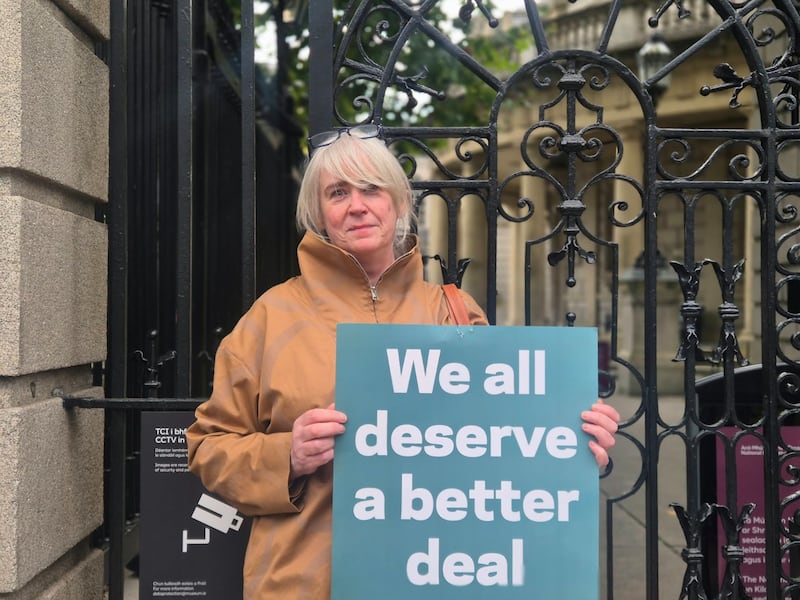 Lisa Walsh McAuley, a visitor and security officer at the National Museum, said workers “haven’t had a decent pay rise in forever”. Photograph: Órla Ryan
Lisa Walsh McAuley, a visitor and security officer at the National Museum, said workers “haven’t had a decent pay rise in forever”, reports Órla Ryan.
“I don’t see anything in my pay packet. I really don’t because they give with one hand and they take with the other.”
Walsh McAuley said she deals with thousands of people every week in her role and, like many workers in the public sector, has been “double jobbing” – ie, doing extra work that does not fall under her role.
“It seems as if this Government wants to push us as far as we can possibly go. We have role creep in our jobs. Some of us are double jobbing, and that’s taking a toll.”
She called on Jack Chambers and other members of the Government to help workers who have been badly impacted by the cost of living.
“Jack seems to be the kind of person – and I can understand where he’s coming from because of his position – that he has to guard the money. But we have a pot there already. How big does he want this pot to be? It has to be spent somewhere … Either start giving something back or just watch out for the next election because I ain’t happy.”
Walsh McAuley said she hopes the issue is resolved soon, but “we’ll be here next week, if needs be”.
Katie Mellett – 1 hour ago
Government ‘should have engaged with workers earlier’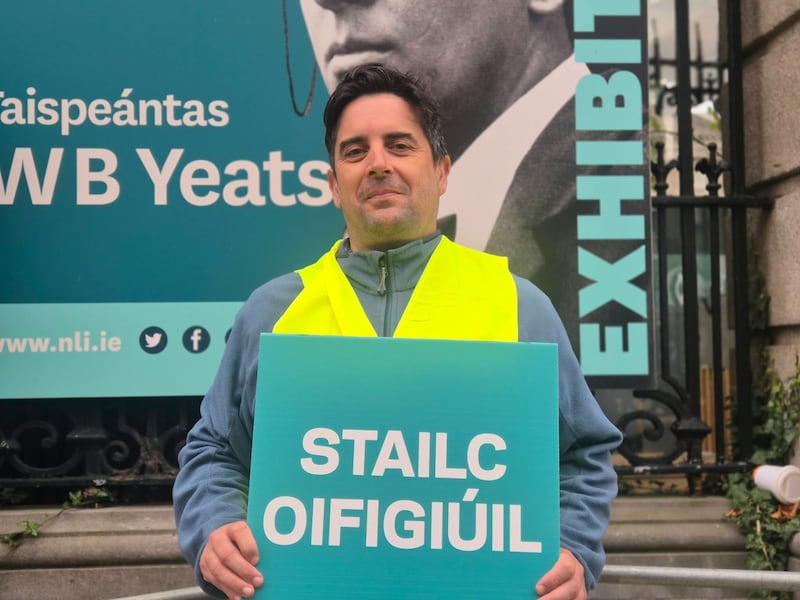 Brian Rice, digitisation programme manager at the National Library, said comments by Minister for Public Expenditure Jack Chambers came too little, too late. Photograph: Órla Ryan
Workers from some of Dublin’s best-known cultural institutions and tourist attractions have called on the Government to engage with trade unions to avoid further strike action, reports Órla Ryan.
Brian Rice, digitisation programme manager at the National Library, said comments by Minister for Public Expenditure Jack Chambers – who on Tuesday night told RTÉ’s Prime Time that pay can “absolutely” be the starting point for negotiations – came too little, too late.
“The Government had the opportunity to engage earlier; they didn’t take it, and now we’re out because of that,” Rice said.
“They should have engaged with workers earlier on this, and I think it’s time to sit down now and it’s time to listen to what workers have to say rather than just arrive at a fait accompli, and to come to some agreement that both parties are happy with.”
Rice said workers are struggling with the cost of inflation and “pay really needs to catch up with where prices have gone”.
“There’s lots of levels of pay in the Library, and I think we’d like to see the lower paid helped more, so they’re proportionally lifted up higher because it is much tougher for them.”
Katie Mellett – 1 hour ago
Murphy expects to be back on picket line next Wednesday
Fine Gael TD Barry Ward has warned: “If people are not sitting down around the table, this won’t be resolved,” reports Vivienne Clarke.
There had been “a concerted attempt” by Government in recent weeks to get people around the table to talk about it, he told RTÉ Radio’s Today with David McCullagh show.
“That hasn’t happened because of preconditions that have been laid down. And I don’t really think you can approach a negotiation by saying to people, well, we’ve got to agree this before we even talk.
“If people are not sitting down around the table, this won’t be resolved. And whatever about honest brokers or whether somebody mediates the discussion or somebody else is brought in to do that, that doesn’t matter. If people are not willing to sit around the table, it won’t be resolved. And what’s really important for ordinary people all over this country is that it is resolved and they get their services back,” he said.
However, People Before Profit TD Paul Murphy told the same programme that he expected to be back on the picket line again next Wednesday.
“What we’re hearing so far from the Government is not a commitment to seriously engage on pay. And therefore the workers are left with no choice. And when you talk to workers, they’re clear. Look, I don’t want to be on a picket line, but they voted overwhelmingly to take strike action. They’re doing so because they’re in a desperate situation.
“Because they see their income being eroded year after year. Where from 2021 to now, the total increases they’ve had in pay is just under 16 per cent. And the inflation rate over that period is about 22 per cent.
“So they’re struggling. And I would say, the beeps from people coming by all the picket lines I’ve been on this morning are incredible. The level of public support for this strike should make the government think again.”
Katie Mellett – 1 hour ago
Bags of rubbish left outside the closed Grangegorman recycling centre in Dublin 7 as workers at the centre are on strike.
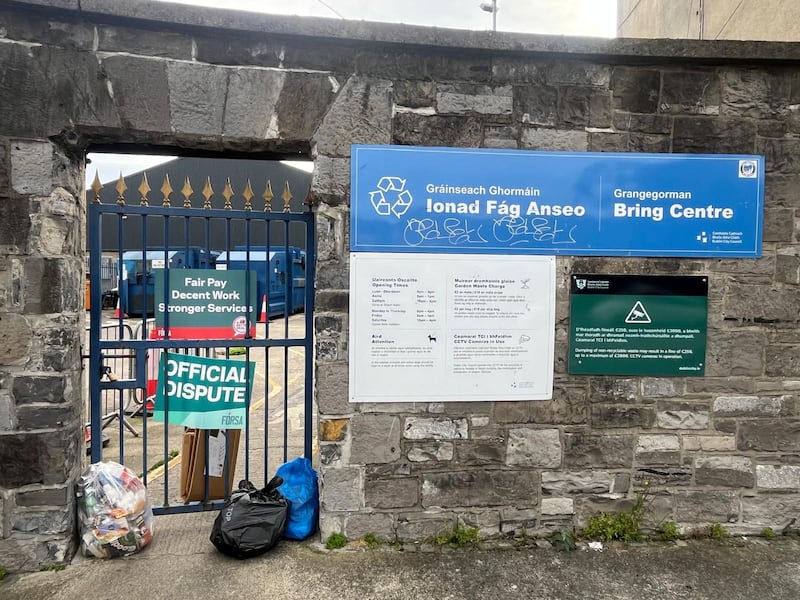 Bags of rubbish left outside the closed Grangegorman recycling centre in Dublin 7 as workers at the centre are on strike. Photograph: Olivia Kelly
Katie Mellett – 1 hour ago
Hundreds of striking health workers at University Hospital Galway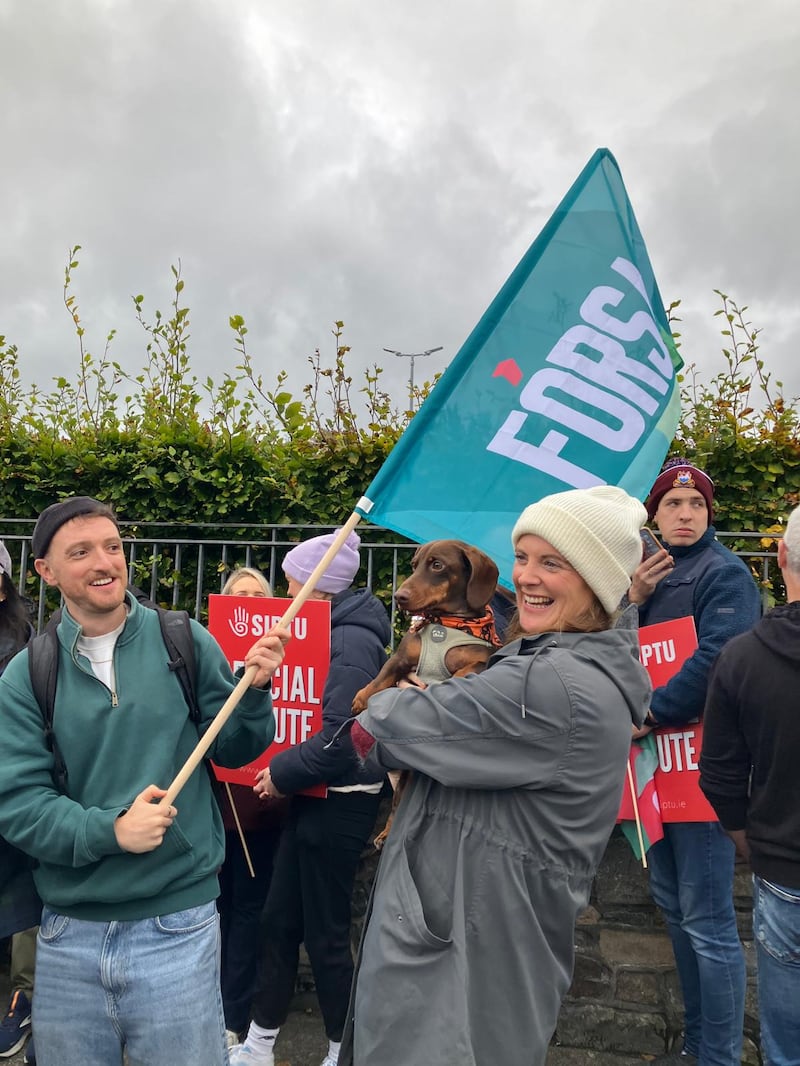 Fórsa members John Fitzgerald and psychotherapist Evelyn Newell holding her dog Alfie among hundreds of striking health workers at University Hospital Galway. Photograph: Dara Bradley
Fórsa members John Fitzgerald and psychotherapist Evelyn Newell holding her dog Alfie were among the hundreds of striking health workers on the picket lines at University Hospital Galway this morning, reports Dara Bradley.
Katie Mellett – 1 hour ago
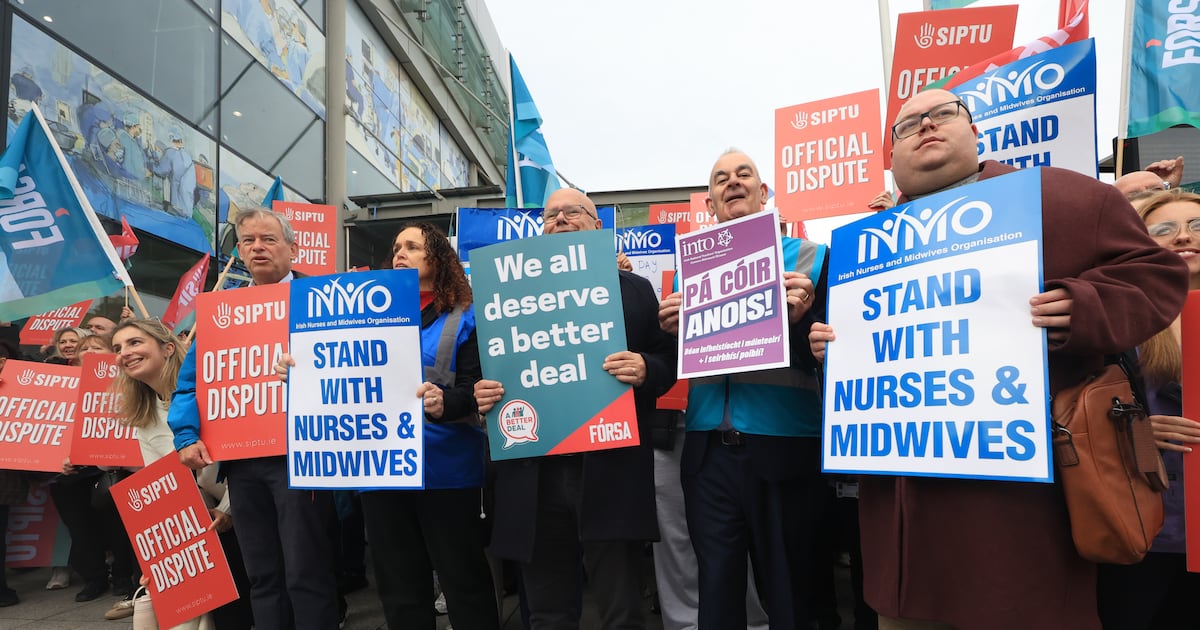
Crowds gather outside the Mater hospital in protest over pay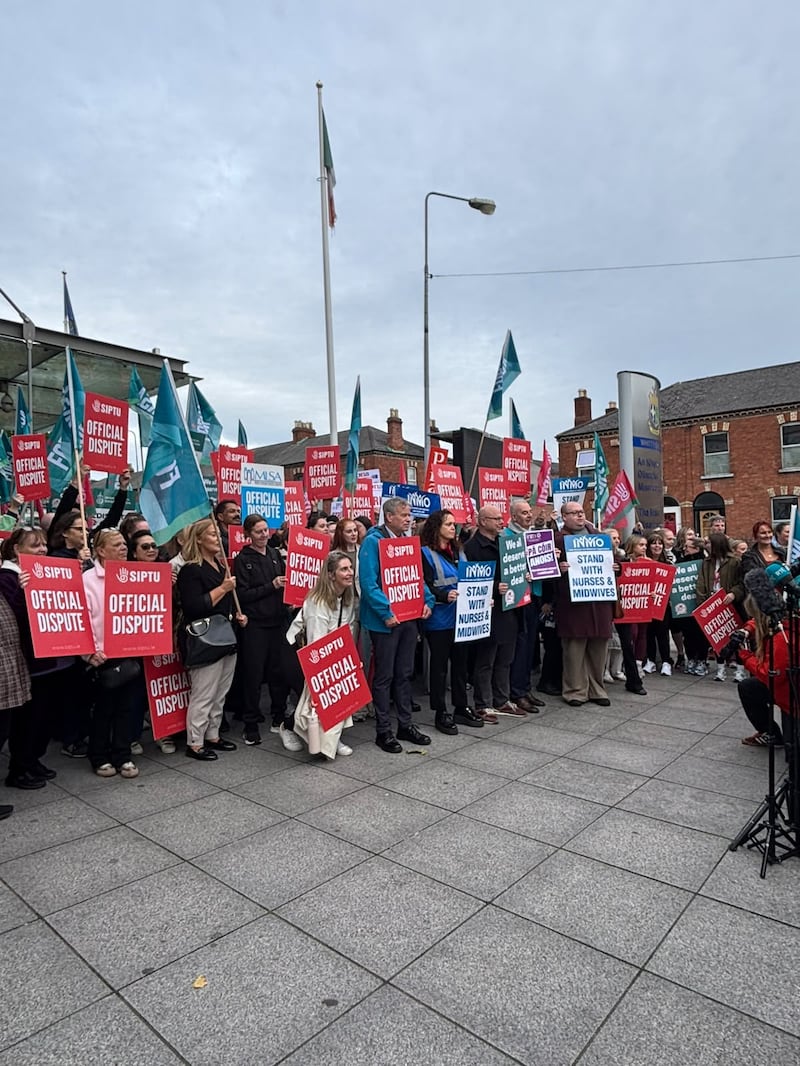 Doctors, nurses, medical laboratory scientists, physiotherapists and other healthcare staff gather outside the Mater hospital in Dublin in protest over pay. Photograph: Shauna Bowers
Doctors, nurses, medical laboratory scientists, physiotherapists and other healthcare staff have gathered outside the Mater hospital in Dublin in protest over pay, reports Health Correspondent Shauna Bowers.
The large crowd of healthcare workers is greeted by horns of support by passing cars, trucks and bin lorries as they call for a better pay deal.
“What do we want? Fair pay. When do we want it? Now,” the protesters chanted.
The gathering comes ahead of the four officers of the public services committee of the Irish Congress of Trade Unions uniting outside the healthcare facility to outline their demands to Government.
Kevin Callinan from Fórsa, Phil Ní Sheaghdha from the Irish Nurses and Midwives Organisation (INMO), Adrian Kane from Siptu and John Boyle from the Irish National Teachers’ Organisation (INTO) are in attendance.
Katie Mellett – 1 hour ago
Small Fórsa picket set up in Brussels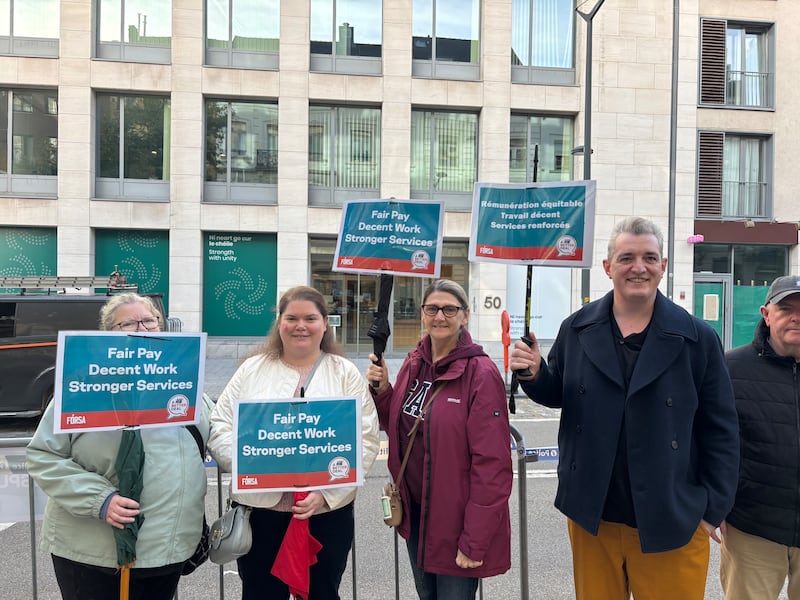 Fórsa staff picket outside the Permanent Representation of Ireland to the EU in Brussels. Photograph: Jack Power
Strike action is taking place abroad as well, writes Europe Correspondent Jack Power
A small Fórsa picket is set up outside the Republic’s largest diplomatic mission overseas, the Permanent Representation of Ireland to the EU.
About 300 diplomats, civil servants and officials are working in the Brussels office, which has greatly expanded to shoulder the extra workload during Ireland’s six month EU presidency.
Civil servants and temporary staff working in Brussels were unsure to what extent they were covered by the industrial strike action, with conflicting advice and guidance coming from Dublin.
The picket nearly didn’t happen, but for a different reason.
The local council, or commune, of the Belgian capital that hosts the EU’s institutions and embassies, requires 10 days’ notice for a protest or public demonstration.
Fórsa got in the paperwork a week ago and the local Belgian administration isn’t known for its flexibility, but they showed a bit of leeway on this occasion.
Two passersby shouted encouragement for the strike as they walked by, and they didn’t even sound French.
Katie Mellett – 2 hours ago
Primary teacher on picket line ‘living pay cheque to pay cheque’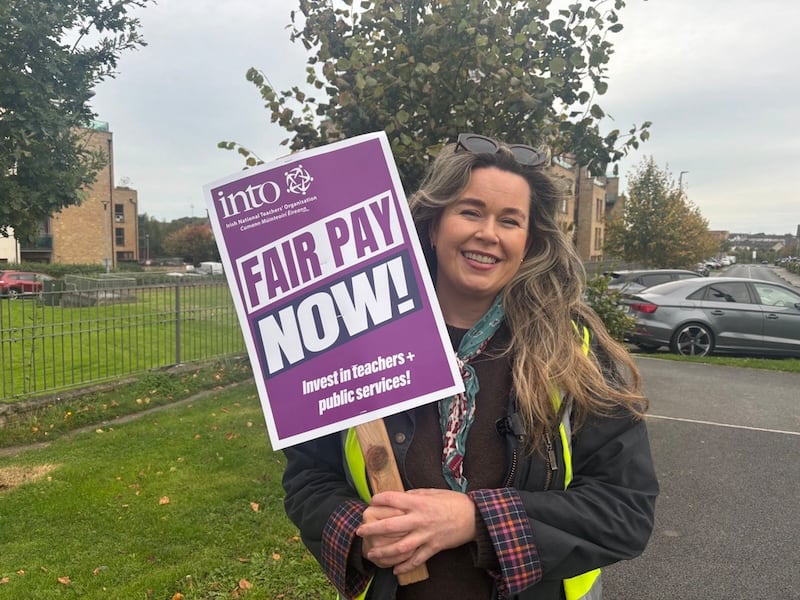 Stephanie Goggins, a primary school teacher at Pelletstown Educate Together primary school in Ashtown, Dublin 15 on the picket line. Photograph: Niamh Towey
Stephanie Goggins, a primary school teacher at Pelletstown Educate Together primary school in Ashtown, Dublin 15 said, she is “living pay cheque to pay cheque”, reports Education Correspondent Niamh Towey.
“I’m earning the most money I’ve ever earned in my career, and I’m still struggling,” Goggins says.
Goggins, who was among dozens of protesters in Ashtown this morning, says there is “a strong feeling among the staff that we want to fight for this and we deserve a fair wage”.
She feels teachers need a pay increase that is “in line with the cost of living, that we can live comfortably on. You know, many of us are well-educated people. We’re dedicated to our work, and we deserve a wage that reflects that.”
Katie Mellett – 2 hours ago
Fórsa calls for appointment of independent mediator
Kevin Callinan, the general secretary of Fórsa and chair of Ictu’s Public Services Committee, has called for the appointment of an independent mediator in the public sector pay dispute, reports Vivienne Clarke.
The Taoiseach needs to take the initiative to try to break the impasse and the appointment of an independent mediator would be a way to do that, he told RTÉ Radio’s Morning Ireland.
It was “disrespectful” to suggest that more than 300,000 people had gone on strike “as a first resort rather than as a last resort”, he said.
“Nobody wants to be on strike, there is a way that we can resolve this but we need a shift in the Government position. I’ve made clear this morning, I think that there is a way in which that can be done.
“I think the Taoiseach needs to take an initiative to try and break the impasse and I’ve suggested how that might be done. If there was an honest broker perhaps assisted by a representative from the employer side and a representative from the union side, it has worked before and I think it’s worth trying.”
Katie Mellett – 3 hours ago
Siptu calls for ‘senior political intervention’
Adrian Kane, Siptu deputy general secretary, has called for “senior political intervention” in the public sector strike, reports Vivienne Clarke.
There had been “a rupture in the social contract” between the Government and public sector workers, he told Newstalk Breakfast with Anton Savage.
It would be helpful if the Taoiseach intervened, he responded when asked if Micheál Martin should get involved.
Katie Mellett – 3 hours ago
‘Onus’ on unions to take next step to ensure ‘deal is done’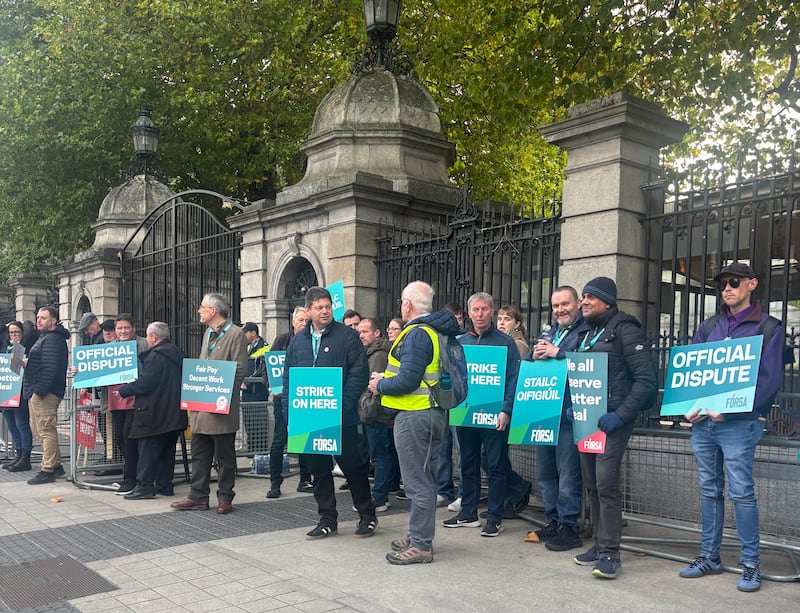 Oireachtas staff staging a strike outside Leinster House in Dublin. Photograph: Cate McCurry/the Press Association
The onus was now on the unions to take the next step to ensure “a deal is done”, said the Minister for Higher Education James Lawless, reports Vivienne Clarke.
The Taoiseach had invited the unions to discuss social partnership, but the unions had “effectively said no thanks, or not right now”.
“I think that’s regrettable, because I think if we did get around the table more often, we’d be in a better place to make progress on these kind of issues,” he told RTÉ Radio’s Morning Ireland.
“And again, my heart goes out to the workers on the ballot today, the parents who had to take children out of school, the hospital appointments being cancelled, the driving test and all the disruption.
“I respect the process, absolutely, but let’s try and not have this again next week and on into the future. The Taoiseach was open to discussion, he had made that position very clear.
“He said pay is always the central issue. He said let’s get on with it. He’s open for discussion.
“No deal was ever done by one side staying outside the room. I think the onus really is on the union now to take the next step.”
Katie Mellett – 3 hours ago
Mixed views on public sector unions strike
In letters to the editor, Irish Times readers had mixed opinions on Wednesday’s strike by public sector unions:
Sir, – The public servants taking industrial action are not available for work and consequently have to forego a day’s pay. However, many TDs, who have a salary of just under €120,000, have indicated over the past week that they would not pass the picket at Leinster House and therefore make themselves unavailable for work, writes David Gordan.
Sir, – I believe the public sector unions are making a major strategic error in their approach to the negotiations with Government on the new pay deal, writes Paul Kilcullen.
In an employment environment increasingly dominated by artificial intelligence (AI), the tactics adopted against Government and the public are ill-advised. The next agreement will be dominated by AI productivity and job losses. The public sector, particularly the Civil Service, is full of opportunities for its use.
Read the full letters here.
Katie Mellett – 3 hours ago
Fórsa seeks appointment of ‘honest broker’
Fórsa general secretary, Kevin Callinan, said Jack Chambers’s comments on the potential to discuss pay at the start of any negotiations is “promising” but is not in itself enough to call off next Wednesday’s second one-day strike, reports Work Correspondent Emmet Malone.
He told Morning Ireland he would like to see the Taoiseach seek to appoint “an honest broker” with experience of industrial relations to bring the two sides together.
“It’s worked before and I think it would be worth trying,” he said.
Callinan reiterated that one of the issues is the “breakdown in trust” relating to problems over the payment of “local bargaining” aspects of the last pay deal and the Government’s failure to honour a commitment to repeal Financial Emergency Measures in Public Interests (Fempi) legislation. The legislation was introduced after the financial crash to prevent local deals being done in the public service and to tighten the Government’s control of its finances.
Katie Mellett – 4 hours ago
Siptu: largest mobilisation of members in a generation
Trade union Siptu said Wednesday’s strike action was its largest mobilisation of its members in a generation.
“More than 60,000 Siptu members will take part in the strike, manning up to 2,000 picket lines across the country alongside tens of thousands of other trade union colleagues in the public sector,” it said in a statement on Wednesday.
Picketing by Siptu members began at midnight at local authority facilities.
Emergency cover will operate under agreed local arrangements to protect life and public safety.
Siptu deputy general secretary, Adrian Kane, said: “This mobilisation demonstrates the determination of our members to secure a better deal for workers struggling under a worsening cost-of-living crisis and a Government which is dismissive of their concerns.
“The €1.2 billion announced in the budget for public sector pay claims is an offer of a pay increase of approximately 2.5 per cent in 2027 once pension costs and previous commitments are included.
“With annual inflation currently running at 4.1 per cent this provides no credible starting point for talks aimed at protecting living standards,” he said.
Katie Mellett – 4 hours ago
Strike action with weather warnings in place
If you’re curious about today’s weather, Met.ie might not be the most up-to-date place for information.
“Due to industrial action, there will be disruptions to updates on met.ie on Wednesday 14th October,” a post on Met Éireann’s site reads today.
However, Met Éireann previously published two yellow weather warnings for Wednesday.
A yellow wind warning is in place for counties Donegal, Galway and Mayo from 6am to 6pm on Wednesday.
A yellow rain warning is valid from 6pm on Wednesday to 6am on Thursday in counties Donegal, Galway, Leitrim, Mayo and Sligo.
Katie Mellett – 4 hours ago
Strikes should be ‘last resort’
Industrial action should be the last resort, Minister for Enterprise Peter Burke has said as he urged unions to enter talks with the Government. Vivienne Clarke reports.
“A strike should be the last resort. That’s the way the industrial relations architecture has worked because we all know here this morning that this issue will be resolved. All industrial strikes, in my memory, have always been resolved,” he told Newstalk Breakfast with Anton Savage.
“But how they are resolved is by dialogue, by sitting around the negotiating table, trying to get strands of commonality and agreement and getting a sustainable agreement for, first of all, their members.
“And that has been the case, as I pointed out, that over the last pay agreement, we’ve had pay increases of about 9.6 per cent cumulatively, which outpaced inflation of 6.6 per cent. So that’s real wage growth for employees who are in the public service. And the Government wants to be a good employer.
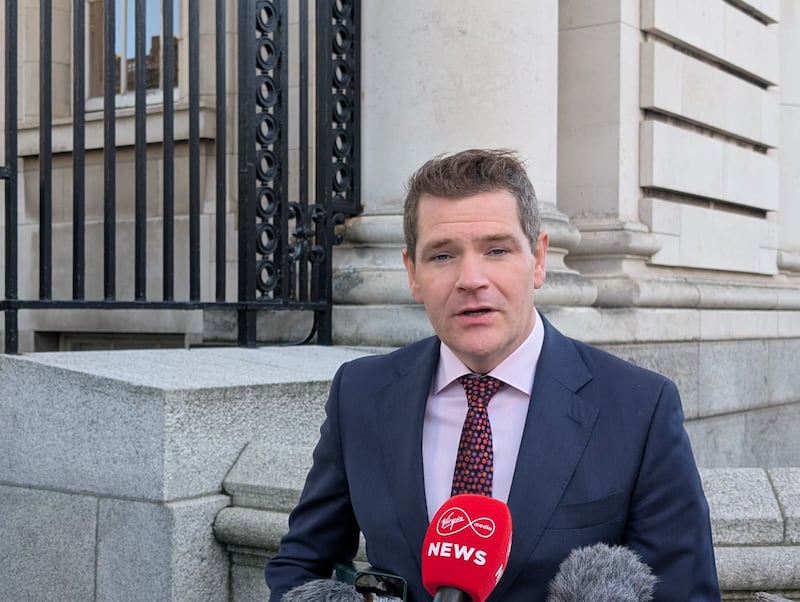 Minister for Enteprise Peter Burke. Photograph: Cillian Sherlock/PA Wire
“We want to offer better pay, better conditions, but we also have to get better services for the public,” he said. “We’ve been very clear that we want to improve paying conditions for all members of the public and Civil Service right throughout our country. We want better conditions, but we also need a sustainable agreement for the taxpayer. And that’s Government’s obligation.
“We can’t negotiate an agreement that ultimately will leave our country exposed or that won’t be sustainable. I think that’s only responsible of any government to take that approach.”
Katie Mellett – 5 hours ago
Taoiseach’s feathers ruffled in Dáil
Micheál Martin had a tetchy exchange with a metaphor-chucking Mary Lou McDonald in the Dáil chamber on Tuesday.
She accused him of “playing chicken” with the public sector unions. Now, McDonald implied, the chicken games were coming home to roost.
Whatever about the chickens, he remained unflappable throughout. Only his innocence seemed injured. More than once, he spoke of the “enhanced social dialogue” he had offered trade unions in vain.
Frank McNally details the exchange in his Dáil sketch here.
Katie Mellett – 5 hours ago
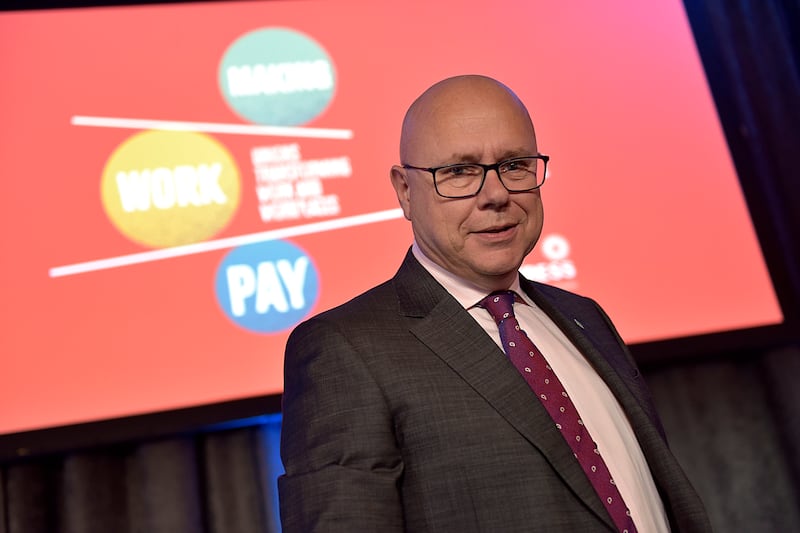 Fórsa union leader Kevin Callinan Unions urge Taoiseach to intervene to prevent more strikes
The Taoiseach should intervene to get a talks process started if further public sector strikes and disruption are to be prevented, Fórsa union leader Kevin Callinan has suggested.
As Emmet Malone and Pat Leahy report, he was speaking after the union side rebuffed late efforts by Minister for Public Expenditure Jack Chambers and the Government side to engage and prevent Wednesday’s one-day strike.
Callinan was responding to a suggestion by Chambers that while the Government wanted talks to begin at the Workplace Relations Commission on Tuesday, he would consider other ways to achieve progress if that could not be done.
Asked about what might break the deadlock, Callinan, who also chairs the public services committee of the Irish Congress of Trade Unions, said it would take “an intervention. And I think that intervention has to come from … the Taoiseach”.
The Government is likely to make a push to bring the unions into a talks process after the stoppage as it seeks to avoid further strikes scheduled for next week.
According to sources familiar with the Government’s position, renewed efforts to start negotiations in the coming days may include seeking an independent mediator or facilitator to bring the two sides together. Coalition sources stopped short of saying they would agree to the unions’ demand to deal with pay first in the negotiations.
It is likely that informal approaches will be made with a view to repairing relations that have become strained in recent days.
Katie Mellett – 5 hours ago
Government appeals fall on deaf ears
The Taoiseach urged trade unions yesterday to engage in further dialogue ahead of the strike.
Micheál Martin expressed concern around the disruption that could be caused and said the €1.2 billion the Government set aside in the recent budget for a pay deal provided a strong foundation for talks.
“We did appeal (on Monday) for the unions to come in for talks, and I would say in the recent budget, the Government made a number of efforts, and took a number of initiatives, that were important for workers – significant tax cuts, continued expansion of public service numbers and specific initiatives on reducing the cost of childcare,” the Taoiseach said.
“In my view, there is a strong foundation there laid by the budget and other measures to facilitate productive negotiations on a new national pay agreement. We have negotiated previous pay agreements in good faith, there is no reason why anyone should doubt our bona fides in respect of negotiating a new package.
“My real concern is the disruption that will be caused to many people, particularly patients who were expecting operations and procedures and indeed in terms of school days being lost.”
Minister for Public Expenditure Jack Chambers had called on the unions to postpone the strike and instead enter talks at the Workplace Relations Commission.
However, the Irish Congress of Trade Unions’ Public Service Committee said there was “no basis” for the strike to be postponed.
Katie Mellett – 5 hours ago
What’s closed? What services are affected?
Órla Ryan has a comprehensive piece detailing the background to the strike action and the impact it will have on public life today.
Here is what you need to know about the strike and its expected impact.
Katie Mellett – 5 hours ago
Now begins a winter of discontent?
Good morning. Hundreds of thousands of public sector staff go on strike today on what could potentially be the first day of a long winter of discontent.
About 300,000 public sector workers, including nurses, doctors, teachers and civil servants, will engage in the national strike following earlier work-to-rule action.
Schools, colleges, universities, libraries, council offices and many parks are among the publicly run facilities that are closed because of the action, which involves some 300,000 workers.
Health services are severely disrupted, with all elective procedures and thousands of appointments postponed. The HSE has warned of “significant and widespread” disruption” to its services.
Members of Fórsa, Ireland’s largest public sector union, as well as Siptu had voted in favour of industrial action including strike.
The major teachers’ unions as well as collective bodies for nurses, midwives and doctors also voted in favour of action.