

Over the last two years in particular, injectable peptides have been heavily promoted and marketed online for their purported fitness, recovery or cosmetic benefits.
While some fitness professionals and influencers say the experience of many is injectable peptides are safe and beneficial, medical professionals question the associated claims, saying there is not yet scientific evidence to underpin them.
As Prime Time has been finding out, peptides advertised as ‘not for human consumption’ are being sold on a grey market in Ireland.
Of four peptide products purchased by Prime Time from suppliers operating in the Irish market three contained “significant impurities,” according to independent laboratory testing.
The products were analysed by researchers at Maynooth University.
One sample of Melanotan, a substance marketed for tanning, contained just 40% of the advertised peptide, with researchers unable to identify several other components found in the mixture.
Two other samples contained substantially less powder than advertised, while all four contained an undisclosed bulking agent.
The findings raise questions about the quality of products being sold in an emerging market for injectable peptides, many of which have not undergone controlled human trials to establish their safety or effectiveness.
Inside the peptide market
Peptide is a broad term covering a huge range of substances. It includes established medicines such as GLP-1 drugs (the ‘P’ stands for peptide), unapproved drugs with promising trial results like the weight-loss drug Retatrutide (Reta), and the murkier world of injectable wellness and fitness peptides.
An alphabet soup of substances like BPC-157, GHKCu and MOTS-C are produced by unregulated manufacturers, many in China, and marketed as having fitness, recovery and beauty benefits.
The Health Products Regulatory Authority (HPRA) has warned against using any injectable substance bought from unregulated sellers, pointing to the risks of infection, contamination and dosage errors.
Despite the absence of established science, peptides were popularised in a subculture of optimisation, aesthetics and biohacking – the practice of trying to enhance the body’s performance through lifestyle changes and experimental treatments.
They are now being used by a broad spectrum of people, according to Dr David Nolan, Assistant Professor of Sport and Exercise Science at DCU School of Health and Human Performance.
“Your typical gymgoer, brides getting ready for a wedding, and c-suite executives using them for [perceived] cognitive reasons,” Dr Nolan said.

Dr David Nolan
While the legal position is well established for unauthorised sales of licensed medicines like GLP-1s such as Ozempic or Mounjaro – or peptides currently within clinical trials like Retatrutide – it is less clear for wellness and fitness peptides.
“It is the wild west at the moment,” according to Dr Nolan.
Sellers of peptides often attempt to circumvent regulation by marketing their products for ‘research purposes’. Most websites will explicitly say the products are not for human consumption.
“A decade or two ago we had the head shops selling plant food that wasn’t for human consumption, yet everyone was taking it or smoking it. It’s a similar kind of thing,” Dr Nolan added.
Despite the scientific uncertainty, the substances have attracted a growing following among fitness enthusiasts and others seeking improvements to their health and appearance.
Injectable pens and vials
Neil Rennie’s fridge holds what you’d expect from a bodybuilder or fitness enthusiast: chicken, rice and potatoes. But the shelves also reveal another side of his training – injectable pens and vials.
He told Prime Time he injects peptides, often nicknamed ‘peps’ or ‘peppers’, to aid with injuries, recovery and even to get a tan for stage performances. They are one of the performance enhancing products he uses in his training regime.
Mr Rennie first took what’s known as the ‘Wolverine peptide stack’ – a reference to the Marvel character with self-healing abilities – following a serious hamstring and adductor tear. He said the estimated recovery time was six months, but he returned to training in just two months.

Bodybuilder, Neil Rennie
“I was sceptical at first but while I had a couple of different medical opinions predicting quite a long layoff, within months I was back training. It made a massive difference.”
The peptides are not licensed medicines, but they are also not controlled substances under the Misuse of Drugs Act. He views the pens and vials as a form of health supplement.
“I know that might sound crazy to people on the outside looking in, but from how I feel on them, that’s what I see them as.”
Among the safety precautions Mr Rennie takes is regularly getting blood tests.
“Every time I’ve got blood work done and I expect to see a certain result from a peptide, I’ve seen a positive result. I’ve never seen negative blood work come back,” he said.
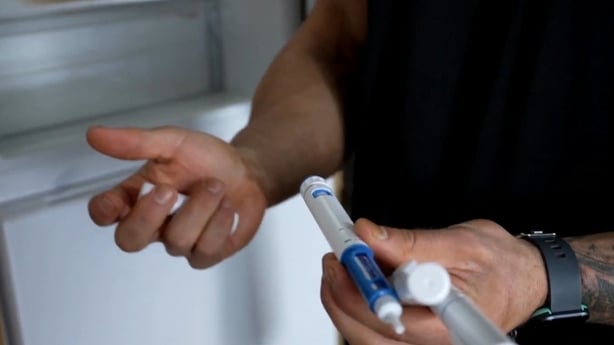
Some of the peptides used by Neil Rennie
His partner, Nikki Beattie, a champion bodybuilder herself, is also a convert. The ‘Wolverine stack’, a combination promoted as peptides BPC-157 and TB-500, has helped reduce inflammation of tendons and ligaments, she believes.
“I inject it into my knees and my elbows. It certainly works for me,” she said.
Ms Beattie also uses a copper peptide which is marketed to improve skin.
“People comment on my skin and I don’t have a big regime. All I can say to them is I use that. If it wasn’t working, why would I spend the money doing it?”
While the pair both have affiliations with peptide companies, they say they don’t make money from their sale.
“I’m certainly not an advocate necessarily for peptide usage but I think it can have its place,” Mr Rennie said.
“You take a chance. It’s a very grey area and you have to accept that something might not be what it says on the tin,” he added.
‘Not what they think it is’
To test the quality of peptides being sold in the Irish market, Prime Time bought four samples from different suppliers.
Three came from websites that sell peptides labelled ‘research only’ and the fourth was bought directly from a social media content creator. The sellers would not accept traditional methods of online payments, purchases had to be made through Revolut or bank transfers.
None of the peptides came with any dosage instructions or information on how to safely inject the substances. The quality of packaging varied considerably.
Some were labelled with the peptide company’s branding and featured the ‘research only’ caveat on the vials while one was delivered in a plastic bag containing a completely unmarked vial.
Three-stage testing was undertaken at Maynooth University’s Department of Chemistry.
Of the four samples, three were found to have “significant impurities” according to Dr Robert Elmes, an Associate Professor at the university and Principal Investigator with the RINN Pharma and Biopharma Centre.
Dr Elmes told the programme a sample of tanning substance, Melanotan, was the most concerning.
“The sample contained just 40% Melanotan peptide. When we ran the analysis it gave us at least five different components. The Melanotan was essentially a minor component of the mixture.
“We know there are impurities in there, but we weren’t able to identify what the impurities were.”
A sample sold as Retatrutide, a counterfeit of the as-yet unapproved weight loss peptide, was found to be just 65% pure.
“You would be expecting about 98 to 99% purity of the peptide itself,” Dr Elmes explained.
The testing also found a significant amount of bulking agent mannitol in all four samples.
“Mannitol isn’t particularly concerning itself, but it’s not declared anywhere.”
Two vials also contained less of the overall powder content than advertised.
“A 5mg sample actually only contained 2.2mg and a 10mg sample only contained 4.8mg,” Dr Elmes confirmed.
In other words, buyers were getting much less than they realised. Not as dangerous as receiving a higher than expected dose, but still concerning, according to Dr Elmes.
“What people are buying is not what they think it is.”
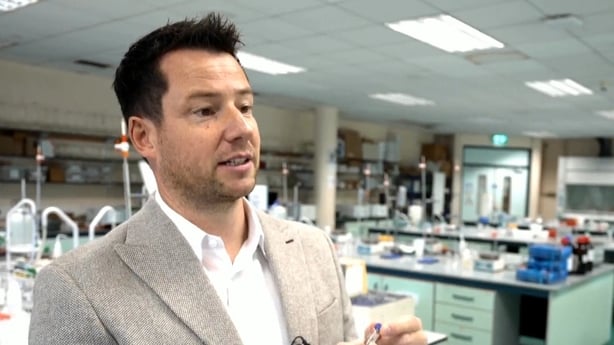
Dr Robert Elmes
While all four samples did contain some amount of the advertised peptides, the tests demonstrated far too many unknowns, Dr Elmes concluded.
Medicines that are clinically trialled go through a lengthy and robust process to assess safety and efficacy, he explained.
“The pharmaceutical industry is in that position because there have been issues in the past with medicines that haven’t been properly tested or quality controlled. We now have a weird situation with peptides where the clinical trial is happening on the population in a completely uncontrolled way.”
Long-term use
There are separate concerns that some peptides which are marketed as boosting recovery or tanning could potentially fuel the growth of cancers.
Dr Andy Hogan, Professor of Metabolic Immunology at Maynooth University, said that studies on the peptide BPC-157 showed no obvious harm and some modest benefits for injury and muscle recovery, but the research only lasted a couple of weeks.
What is missing, he said, is evidence on people who keep using it for a year or two, including whether any cancer they develop might be more aggressive or harder to treat.
The HPRA has said peptides, which are not licensed medicines, may still be considered medical products depending on their composition, intended purpose, and associated claims being made about them by the supplier.
Figures released to Prime Time show a sharp increase in the seizure of peptides by the authority this year. More than 1,300 units of BPC-157 have been seized already in 2026, a 400% increase in just four years. Seizures of TB-500, another component of the so-called Wolverine stack, have also jumped from a handful in 2023 to more than 200 already this year.
It’s a similar picture for GHKCu, the copper peptide, increasing from five units seized to more than 500 this year.
Seizures of Melanotan, the tanning peptide, have averaged around 1,000 annually, with 500 units seized so far in 2026.
The HPRA clarified that it does not record the administration method of substances and in addition to injectables the seizures, “may also include oral, nasal spray or transdermal form.”
“Consumers should be cautious about products promoted online for health, cosmetic or performance-related purposes where the source, composition, regulatory status or supporting evidence is unclear, particularly when significant claims are being made about their benefits,” it said in a statement.
‘Placebo is a very strong thing’
Many people have experimented with peptides, including fitness entrepreneur Rob Lipsett, who told Prime Time he also used the Wolverine stack to help with recovery from an injury.
“I had bicep tendonitis and a shoulder injury. I took it and within two or three weeks the injury was healed. But who knows if that was just healing with time, placebo is a very strong thing.”

Rob Lipsett
Peptides are not a regular feature of Mr Lipsett’s fitness regime, but he said he is interested in their potential.
“If we can do more research on these things, show if they’re effective or not and then regulate them, I think that’d be cool.”
He maintains a “magic pill or shortcut” to fitness or bodybuilding doesn’t exist.
“Outside of GLP-1s I’d urge people to take caution. I don’t think that these [peptides] are going to give mind-blowing results. It always comes down to training, nutrition and sleep, they’re going to give you 99% of your results.”
Growing popularity despite the risks
The absence of clinical evidence isn’t dissuading all.
Research led by Dr Nolan in DCU found peptides are the second most common image and performance enhancing drugs (IPEDs) in Ireland.
The survey of Irish IPED users found that only testosterone was more widely taken than peptides such as BPC-157 and Retatrutide.
“I knew how ubiquitous peptide use was throughout the industry but did I think that they would be used more than human growth hormone or other classic, performance-enhancing drugs? That surprised me.”
The popularity of the weight loss GLP-1 medicines has destigmatised injecting for aesthetic purposes, Dr Nolan believes.
“If you’re happy enough to inject yourself with an unregulated compound with little data around it and use yourself as a lab rat, by all means do it, but there are the risks and people maybe aren’t aware of those risks.”
Information is not being drawn from reliable sources, he added. Some Irish online content creators are documenting their peptide ‘journeys’ and ultimately selling the substances directly to followers, often through affiliate links with peptide companies.
“They’re saying ‘don’t listen to the experts, listen to us.’ The difference is that most have a financial gain or they don’t understand the risks,” Prof Hogan said.
While animal and test tube studies of BPC-157 and GHK-Cu have shown some promise for aiding recovery and wound healing, there have been no controlled, human trials.
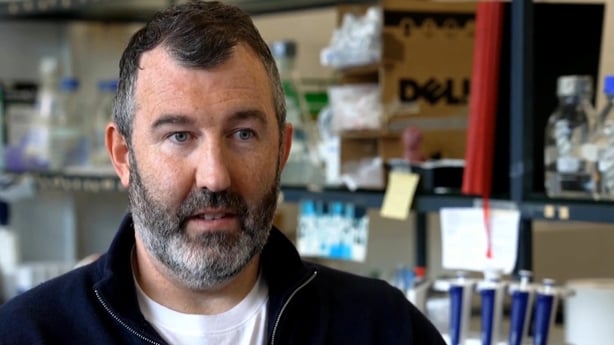
Prof Andy Hogan
Peptide enthusiasts say such human trials are not common because many peptide compounds have been known about for decades, which makes them difficult to patent.
They argue pharmaceutical companies could struggle to protect their products even if they developed a new therapeutic use or a new method of administration.
However, Prof Hogan disagrees.
“Novel compounds are highly patentable. You can make small modifications to any peptide without changing its activity, and it becomes a new entity. So, I think if these were truly wonder drugs, we would have seen that already,” he said.
“I don’t believe that there’s no money to be made here. The evidence isn’t there, that’s why the pharma companies are not going after these,” he added.
Under Health Secretary Robert F. Kennedy Jr, who has expressed scepticism about the pharmaceutical industry for decades, the US government’s stance on peptides has softened in recent months.
“I’m a big fan of peptides. I’ve used them myself with really good effect,” he told podcaster Joe Rogan, another high-profile peptide advocate.
An advisory committee within Mr Kennedy’s Food and Drug Administration (FDA) recently voted to recommend loosening restrictions on some of the most popular peptides. However, the recommendation does not equate to full FDA drug approval.
“Just because we now have a decision that these can be made doesn’t legitimise them, and it definitely doesn’t give us the safety data,” Prof Hogan cautioned.
Many, including Secretary Kennedy, view peptides as a form of personalised medicine, with choice in what substances are taken. They argue the resistance to legitimising such substances drives the problematic, grey market.
Bodybuilders Neil Rennie and Nikki Beattie also highlight a perceived double standard with how society tolerates alcohol and drugs, the risks of which are far higher, they contend.
“Peptides are just a new thing that are going to have to be tested further to be approved. But people are taking (recreational drugs) that aren’t approved every single weekend,” Ms Beattie said.
While science hasn’t proven certain peptides are effective, there isn’t definitive research suggesting they are dangerous either, Mr Rennie argued.
“It’s all kind of anecdote, isn’t it, because the scientists don’t know. We can fearmonger and make everything to be so much bigger than it actually is,” he said.
“Nothing’s happened to me yet. I haven’t dropped dead.”
For Prof Hogan, the risks remain too high.
“I would love it if these compounds were really effective and safe. I’d probably look to take them myself if they had the evidence. So, it’s not that I’m against them, but we need evidence.
“We haven’t done the proper trials to know that these are safe, especially long-term.”
Watch Louise Byrne and producer Lucinda Glynn’s report on use of peptides on the 15 October edition of Prime Time on RTÉ One & RTÉ Player at 9.35pm.