
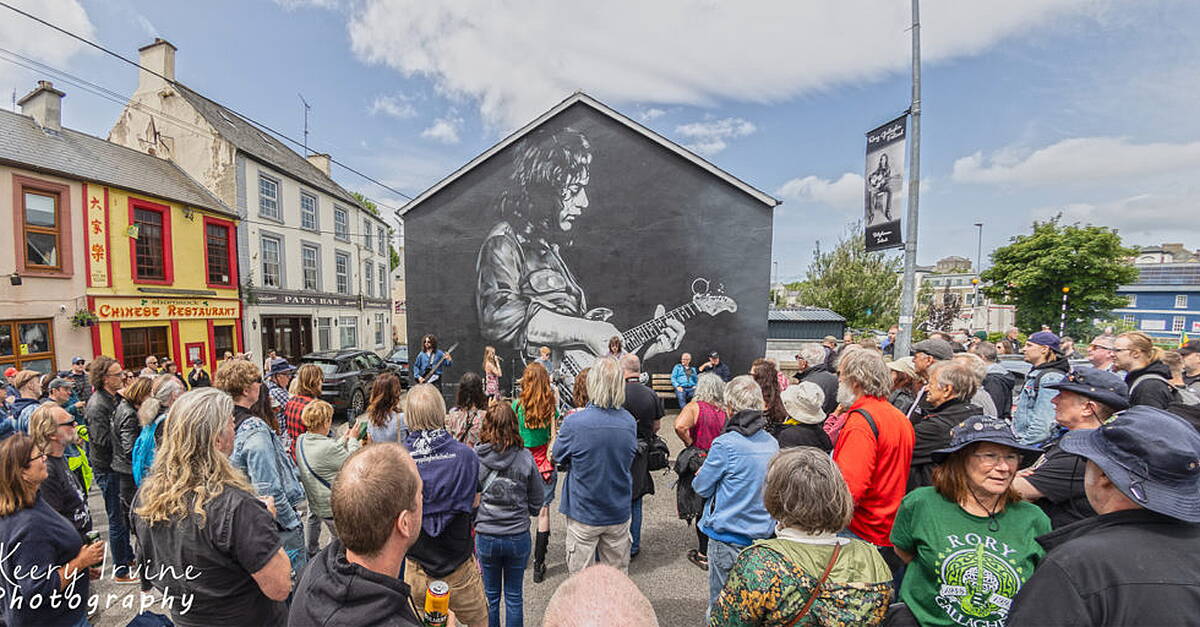
The Rory Gallagher International Tribute Festival is taking its fight for stronger ticketing protections to the European Parliament after suffering a €283,000 blow with the collapse of Tickets.ie.
The Ballyshannon festival was plunged into crisis in June when ticketing company Tickets.ie ceased trading just two days after its hugely successful 2026 event.
Organisers say €283,151.50 in ticket sales remains unpaid. This represents almost 70% of the voluntary festival’s annual income.
The fallout left the committee facing serious concerns over its ability to pay local suppliers, with founder Barry O’Neill warning at the time that it was “very hard to see” how it will return”.
O’Neill is now taking the campaign to the European Union to help prevent other festivals from suffering a similar financial nightmare.
The festival has submitted a petition to the European Parliament seeking stronger safeguards for money collected by ticketing companies on behalf of event organisers.
At the centre of the campaign is a proposed Rory Gallagher Festival Declaration, a European charter aimed at protecting ticket revenue and ensuring greater financial transparency across the live entertainment industry.
Barry O’Neill outlined the shock financial hit taken by the festival this summer: “€283,151.50 is an enormous sum for a voluntary festival organisation.
You may also be interested in


“That money represents ticket proceeds we report remain unpaid, and the consequences for our organisation have been profound.
“We have a responsibility to pursue every appropriate avenue to protect the Festival’s interests and to seek answers about what happened to those funds.”
“But this is not simply about the Rory Gallagher Festival,” O’Neill added.
“It is about whether festivals, promoters, artists and cultural organisations can have confidence that money collected on their behalf is properly protected. We believe that question deserves serious attention at European level.”
The proposed charter calls for ticket proceeds to be kept separate from ticketing companies’ operating funds, clearer accounting of money collected and owed, and firm deadlines for payments to event organisers.
It also seeks stronger protections if a ticketing company becomes insolvent, alongside more consistent standards across EU member states.
The festival is seeking support from Irish MEPs, European Parliament committees and the European Commission to examine what changes could be introduced.
“Our proposed “Rory Gallagher Festival Declaration – A European Charter for the Protection of Client Funds in the Live Entertainment Industry” is about finding practical solutions. We want serious consideration given to segregated client funds, transparent accounting, clear settlement obligations and effective protection in the event of insolvency,” O’Neill said.
“We do not want other festivals, promoters, artists or cultural organisations to find themselves facing the same uncertainty.
“Our immediate responsibility is to protect the Rory Gallagher Festival and pursue the proceeds we report as unpaid.
“Alongside that, we want to help build a European framework that provides better protection for client funds and greater confidence for everyone involved in live entertainment.”
The Festival stresses that its European initiative does not replace or determine the outcome of any ongoing legal process concerning the unpaid proceeds.
The festival has joined other affected events in High Court action and has since launched fundraising efforts, including a major joint concert with Rockathon Music Festival at Dublin’s National Stadium on Halloween night.