
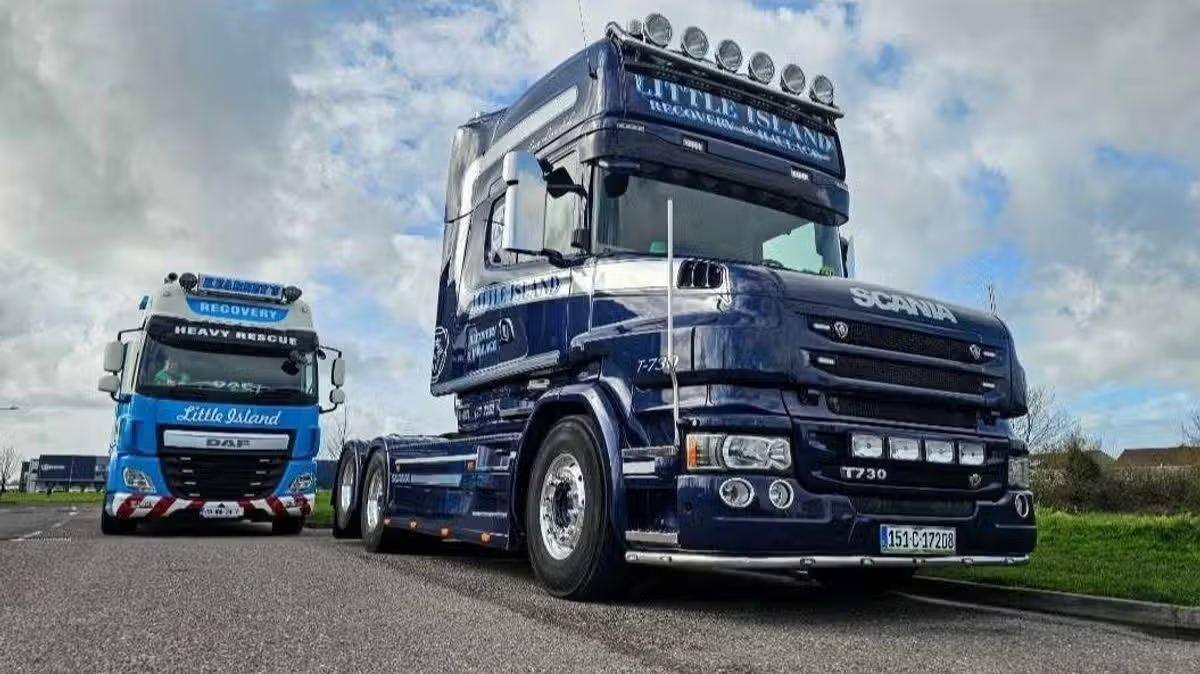
The business’s recovery services are continuing
16:27, 15 Oct 2026Updated 15:03, 16 Oct 2026
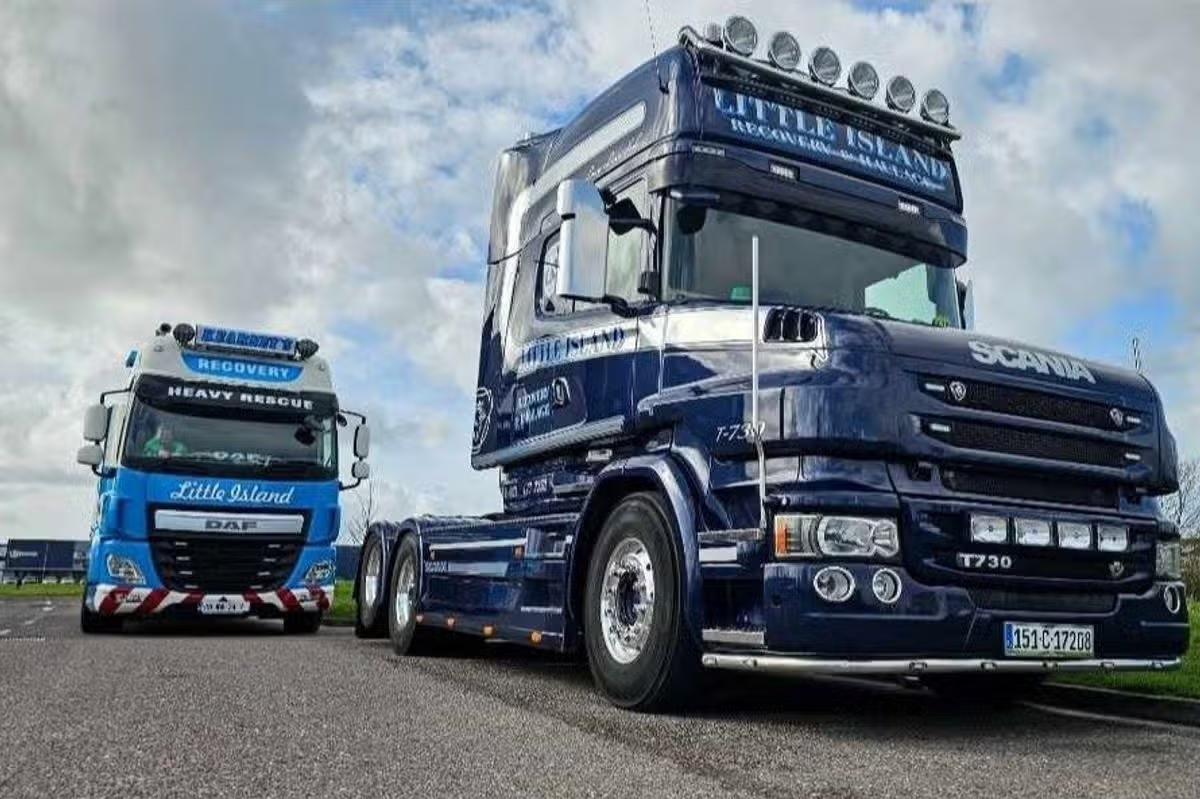
Little Island Recovery & Haulage Services
A family-run Cork trucking business is cutting a major part of its services, as the owners say costs have gotten so high, “the decision was made for us.”
Little Island Recovery & Haulage Services have put a number of its trucks and trailers up for sale as they prepare to cease the haulage side of the business. In a social media update to customers, the group said they will continue to operate a vehicle recovery service, but their haulage service will cease trading on 31st October.
The company had offered a range of services within the haulage and logistics sector to clients throughout Ireland, the UK and Europe.
In an announcement, they said the decision was made due to fuel prices and the “current climate.” They thanked customers for their kind messages during a major shift for the business. They added: “Unfortunately, this decision was made for us and by the messages received in the last 24 hours, we won’t be the only ones.”
It comes as many across Ireland continue to feel the pinch as prices rise at the pumps. The AA Ireland lists the average price of diesel as 214.76c, while drivers are paying 198.16c for petrol.
In the last month alone, diesel has risen by around 20c, and petrol by 12c. Meanwhile, the prices of both fuels in September were up by 22% and 14%, respectively, since September last year.
It’s the biggest annual increase since November 2022. People aren’t just feeling the pinch at the pumps. The price of Home Heating Oil rose by 7.2% between August 2026 and September 2026 and was up by 58.6% in the 12 months to September 2026.
As part of Budget 2027, the government said the carbon tax on home heating oil is being reduced and will not increase in the lifetime of the Government. The rate of carbon tax on both kerosene and natural gas – which had been scheduled to increase twice between now and May next year – is instead being reduced to €48.50 per tonne.
Temporarily reduced fuel excise rates – due to be wound down from November – are being extended until the end of February. There would then be a “gradual and responsible restoration” in four stages until the end of June.