
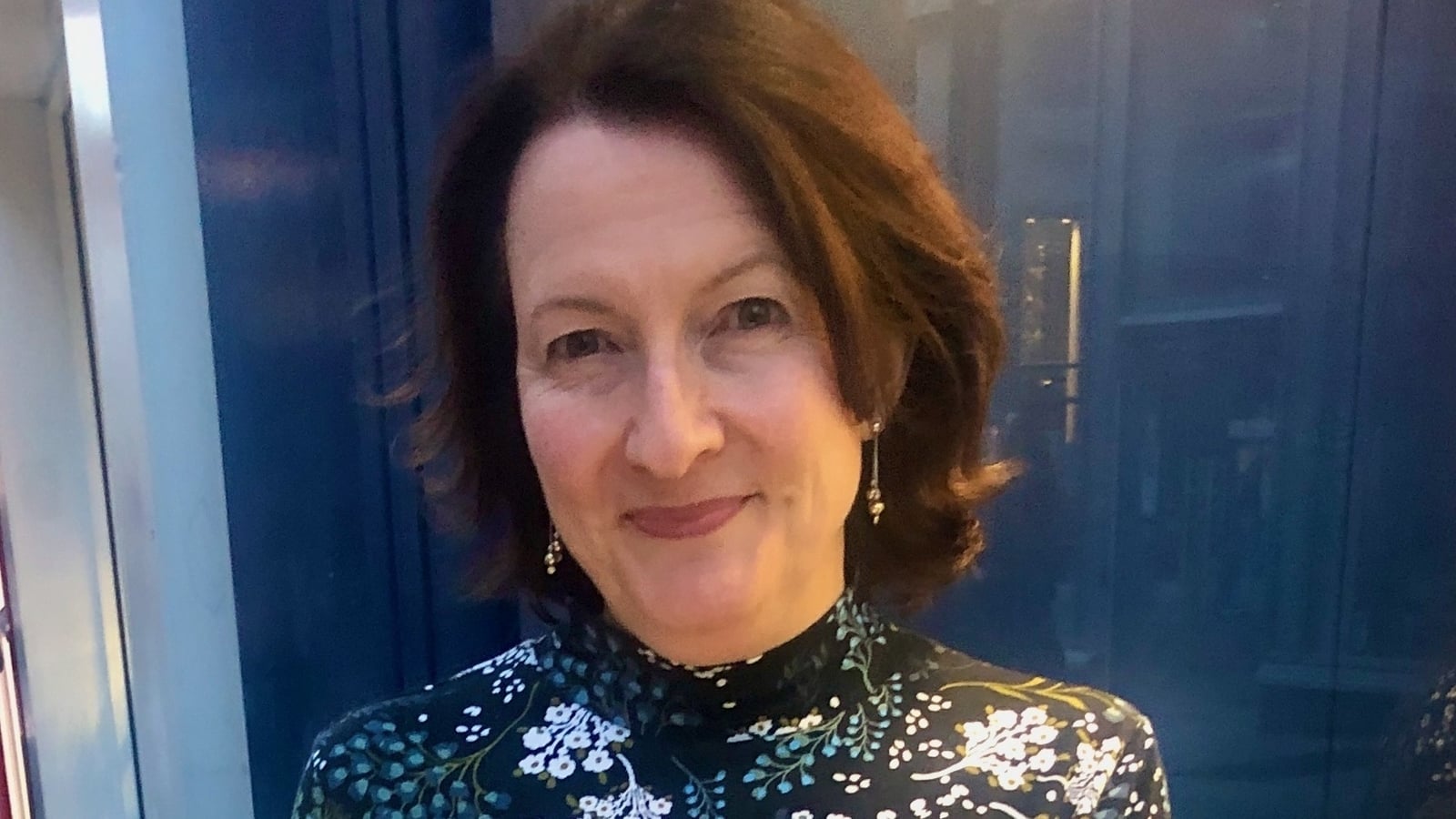
We present another story from the RTÉ Short Story Competition shortlist 2026 — read Cottage Pie by Alison Jameson below, and hear Elaine Dwyer read it on RTÉ Radio 1 at 11.20pm on Tuesday 20 October.
Dad put us into the local school straight away, knowing in his heart that it was like drowning a bag of kittens. He was harsh that first morning and seemed to stop in his tracks when Rose said that the baby would have to be brought with us. The car was completely frosted over, and Robin scraped out one round hole in the windscreen for Dad to look through when he was driving. We were all packed inside then, muffled up in winter coats, the frost making us feel like we were in a strange, sealed container.
‘What are you talking about?’ he asked Rose. He was trying to turn his head in the car so he could see her.
When Rose didn’t answer, he said, ‘He’s five months old. There’s no place for him in a school.’
And we all sat there silently, trying not to look at him.
‘We can’t leave him on his own,’ I explained.
I was sitting right behind my father’s head, and I had a sense that it was pulsing. This was another moment of realisation—there would be so many—when we all came to the same conclusion, us children and our father together—that we were on the brink of some kind of awful trouble. In the rush to get into coats and hats, and in the fog of worry around starting a new school so suddenly, we had all forgotten about the baby. Bo was still in the kitchen doing God knows what on his own. He was not walking yet, of course, but he was beginning to roll over. I was there when he rolled for the first time, his eyes wide with wonder at how, with a flip of his own body, he could make the world spin. We took turns carrying him—not because he wanted it but because he was the closest link we had to our mother. With the baby in our arms, we became her, and this was a comfort even though it was strange and temporary. It wasn’t long before I could change him in less than a minute—the pin between my new front teeth, spinning him on my knee, the wet terry cloth landing with a slap at my feet. And Bo was placid, a quiet baby who didn’t know that I was also a child and accepted everything from me.
Dad sat for a moment in the frozen car, his hands on the wheel, and I could tell that he was imagining going back inside again. He was walking through the awkward dressing of Bo, the pudge of his arms being eased into a cardigan, the possibility of a sodden nappy.
‘The school is only down the road,’ he said. ‘No harm will come to him,’ and with that he turned the key in the ignition and shot the gear stick into reverse in a way that seemed hot with anger.
Through the black December trees, the morning sky was a startling blue, and I closed my eyes as we drove towards it. Rose and Robin were especially quiet, understanding more than me—and their silence seemed solid and unshakable. I could hardly bear the sound inside that car, the sound of all of us being quiet together. Rose turned her face to the passenger window as small pieces of frost began to thaw and slide downwards. I thought she was selfish and uncaring then, but now I understand more of her. If the sad shoe was on the other sad foot, our feelings around the loss of our father—instead of our mother—would have been different. I felt no guilt about wishing we could have had a vote and kept her instead of him. I knew these were dark thoughts and bad ones, but I didn’t care. I only knew that I missed her.
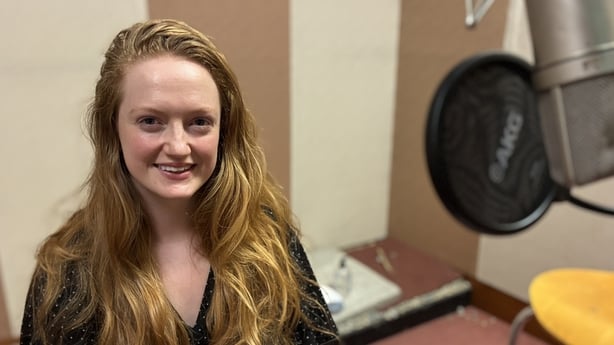
Elaine O’Dwyer reads ‘Cottage Pie’ by Alison Jameson, for Late Date on RTÉ Radio 1
So, Dad pitched us outwards—cold anchor—and sent us to a new school before we were ready. My teacher was called Mrs McGovern, and she tried her hand at being kind to me. Being newly motherless, I found that grown women had, for me, a kind of magnetic quality. Mrs McGovern was a young widow, a hippy type who wore long dresses over bright coloured trousers. The children in the school whispered that her husband had been electrocuted in a freak farm accident, while others said he had died while fixing her washing machine. Either way, it was, from my own point of view, very off-putting. Her hair was long and black with an unflattering centre parting, and she had a habit of letting it fall over her eyes so that I wanted to push it back for her.
She asked about my brothers and sister and then slowly veered towards the subject of my father. She did not ask about my mother—my mother seemed like a rock we both had to step around or jump over. ‘Does he cook a nice dinner for you?’ she wanted to know. ‘I cook dinner,’ I said, feeling myself closing to her. ‘Aren’t you a great little woman?’ I ran my fingers over the wood of her desk in order to do something.
On Tuesday evenings, a truck from the local supermarket stopped at our house and lowered a short ladder. A kind and puzzled man would invite me up to select our groceries, and anyone who has ever seen the child catcher in Chitty Chitty Bang Bang would understand my anxiety. I tried to tell Dad that I was frightened of getting into the truck on my own, but he misunderstood and cancelled the man. The truck stopped coming, and I missed it like a friend then.
‘Does your father like Shepherd’s Pie?’ Mrs McGovern wanted to know. ‘What’s Shepherd’s Pie?’
And she smiled then and put a warm cardiganed arm around me. This arm was not entirely welcome, and I did not know how to tell her.
At lunchtime, I found Rose and Robin and stood with them while everyone else watched us. A bell rang when lunch was over, and as the other children trooped back inside, I turned around and took off running.
The silence outside the school and on the winding back road where Dad had driven us earlier was frightening. The best of the light was already gone, and yet my eyes seemed to grow and grow so that too much of the world was allowed through them. At school, a boy had told me about pulling ticks from a dog using pliers, and the thought of this made me run harder. I felt the hot bristle of a nettle against my bare leg, a sock sliding too low to give me protection. The sight of grass seed snared in the lace holes of my shoes would stay with me. And there were strange sounds—pigeons taking flight—the sudden whirr and flap from them.
I followed the bends on the narrow road until I reached a crossroads and a pub, and it was there that a bold-looking collie dog came out and faced me. He walked slowly at first, his eyes suspicious and yellow, and a low, steady growl was coming up from deep in his torso. When he sprang, he went for the back of my leg, and because I spun to escape him, he took my coat in his jaws and hung on there, snarling. I cried out, my own small voice making a sound that did not belong to me. I continued to turn, knowing that if I stopped, he would spring higher, going for my neck or my face. As long as I kept spinning, his jaws stayed clamped on my coat, and he remained at a slight distance from me.
‘Get down, you bastard!’ a woman’s voice shouted from an upstairs window, and there were feet in heavy boots on the gravel, one of them swinging a kick and going deep into the animal’s side, making an ugly thud sound. The dog gave a high-pitched yelp and rolled away from me. I had never heard the word ‘bastard’ and thought it was what that particular breed of dog was called. He had nipped me somewhere, though—there was blood spilling from behind my knee and into my sock, flaming red in this grey afternoon of winter.
I began running and did not stop until I found our lane and saw the light of the house in front of me. Dad was pacing the kitchen floor with the baby, and he stared as if he did not know me, or perhaps it was with the pure relief he felt because I’d come home to rescue him. I already knew how women could put things in order for men, and so I settled Bo quickly, changing him and heating a bottle, and all the time the dog bite behind my knee was scalding.
A small red Ford Fiesta came through the back gate, and I knew it was Mrs McGovern. Her wide smile came first—it pulled her up out of the car—and then she had to stretch her neck around my father to see me.
‘I wanted to make sure this lady got home safely,’ she said.
She was wearing a small, flowered clip in her hair which had not been there earlier, and my father stood like a wall and stared at her. Her body seemed to become more fluid around him, her head rolling more on her shoulders, and she seemed to smile and laugh at every little thing.
‘I brought you a Shepherd’s Pie,’ and here she handed over a blue casserole dish lidded with tinfoil. ‘Thank you.’ ‘I got the beef fresh in the butcher’s this morning.’ ‘Did you indeed? So, it’s a Cottage Pie then.’
Something in my father’s tone, the correction of a teacher, felt to me like a humiliation. There was a moment then when Mrs McGovern waited for an invitation to come inside, but it was not forthcoming. Bo waited and I waited, and Dad simply stood there and looked back at her. He was letting her know something important with his silence, and to my ears there was an actual sound that rang out among the hawthorns, and it was the sound of a woman falling. He knew exactly what he was doing. Later, in my own life, it would happen to me too, and I would remember her.
We watched as the little red taillights disappeared back down the lane again.
‘That woman is mad,’ he told me.
He saw my sock sodden with blood and the dry rust-coloured river on my leg.
‘What happened to you?’
‘A dog bit me. He was a bastard.’
Dad went to the dresser and returned with a green First Aid box and then gently, tenderly lifted me onto the kitchen table. He pulled a small stool under himself and began the slow and careful washing and binding of my injury. The baby slept peacefully, a small fist in a ball near his mouth, and the little door at the front of the range showed a low hill of bright, hot coals and embers. Rose and Robin burst in, red-cheeked from the cold, and he ignored them. He was very quiet as he went about dressing my leg, pouring warm water from the kettle into a bowl and washing it, then dabbing with a soft towel and finally wrapping a long roll of gauze around and around my injury. Even now, I still think of his hands on either side of my torso as he lifted me, the warm strength of them, his silence as he set about fixing me. I was his girl then—his only girl—and regardless of everything that happened before or afterwards, this was the one time when I knew he loved me. I was given my moment, and that would have to be enough for me.
About The Author: Alison Jameson is a novelist, podcaster and screenwriter whose work explores the quiet tensions of family, the complexities of modern life and the extraordinary in the everyday. She studied English and History at University College Dublin and now works at its James Joyce Library. She is the author of four novels, most recently This Family of Things, and her work has been nominated for the IMPAC Award and shortlisted for the European Prize for Literature.
Listen to the RTÉ Short Story Competition 2026 stories nightly on Late Date from Monday 19 to Thursday 29 October and tune into Arena to hear regular author interviews ahead of the Arena/RTÉ Short Story Competition Awards Night on Friday 30 October with Rick O’Shea and judges Jan Carson, Aingeala Flannery and Tristan Rosenstock, with music, readings from all the stories, and the writers and guests in attendance, live from Poetry Ireland in Dublin.