
Concern has been raised over the lack of specialist accommodation in the state for victims of sex trafficking.
Ruhama has said that the current situation – where many victims are placed in direct provision – needs to be addressed as a priority.
Homeless charity Depaul has confirmed that Rosa’s Place, a dedicated unit for women identified as potential victims of human trafficking, has closed.
A spokesperson for Depaul said that there were plans to reopen the unit and that it was awaiting Budget approval.
When it was operating, the eight-bed unit was regarded as insufficient for the level of need required by women trafficked to Ireland.
The issue has been raised in numerous Trafficking in Persons (TiP) reports, which assess and rank countries globally on efforts to combat trafficking.
The most recent report described the Irish government’s framework for providing accommodation to victims as “inadequate”.
Ruhama’s CEO Barbara Condon has pointed out that without a secure place to live, it is almost impossible for women to rebuild their lives.
Ruhama, which works with victims of human trafficking for sexual exploitation, has seen a rise in the number of victims seeking its services last year.
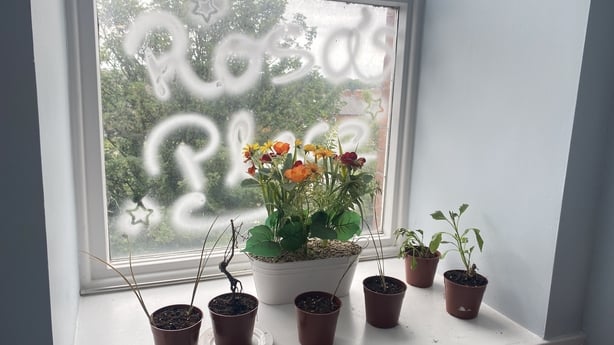
Depaul has confirmed that Rosa’s Place has closed
Of the 1,242 individuals that engaged with Ruhama in 2025, 284 were victims of human trafficking.
The charity says this is a rise of over 30%, equating to 68 additional victims compared to 2024.
Accommodation was “a significant challenge” in 2025 according to its latest annual report; with service users requiring support in relation to IPAS transfers, the housing crisis, unsuitable accommodation, and experiences of homelessness.
Victims of trafficking for sexual exploitation represented 28 different nationalities.
The highest number (177) were trafficked from Nigeria, followed by Zimbabwe (27) and South Africa (13).
Individuals impacted by prostitution represented 62 nationalities.
Again, the majority were from Nigeria (63), followed by Ireland (46) and Somalia (40).
Worryingly, caseworkers noted a 77% increase in supporting service users on suicide prevention.
The report outlines the lived experiences of survivors, supported by Ruhama, including one who lost her mother to suicide at the age of 10 and became involved in street prostitution at 20, amid family involvement in crime and a chronic drug addiction.
In 1999, she was fined £100 for loitering for the purposes of prostitution.
After becoming drug-free in 2011, she completed her Leaving Certificate and qualified as a home care assistant. But just as she was starting a job in home care, a disclosure on her garda vetting form relating to her conviction cost her the opportunity.
Former justice minister Frances Fitzgerald, who is an ambassador for Ruhama said solutions demanded “sustained political leadership and cooperation at national, EU and international level”.