
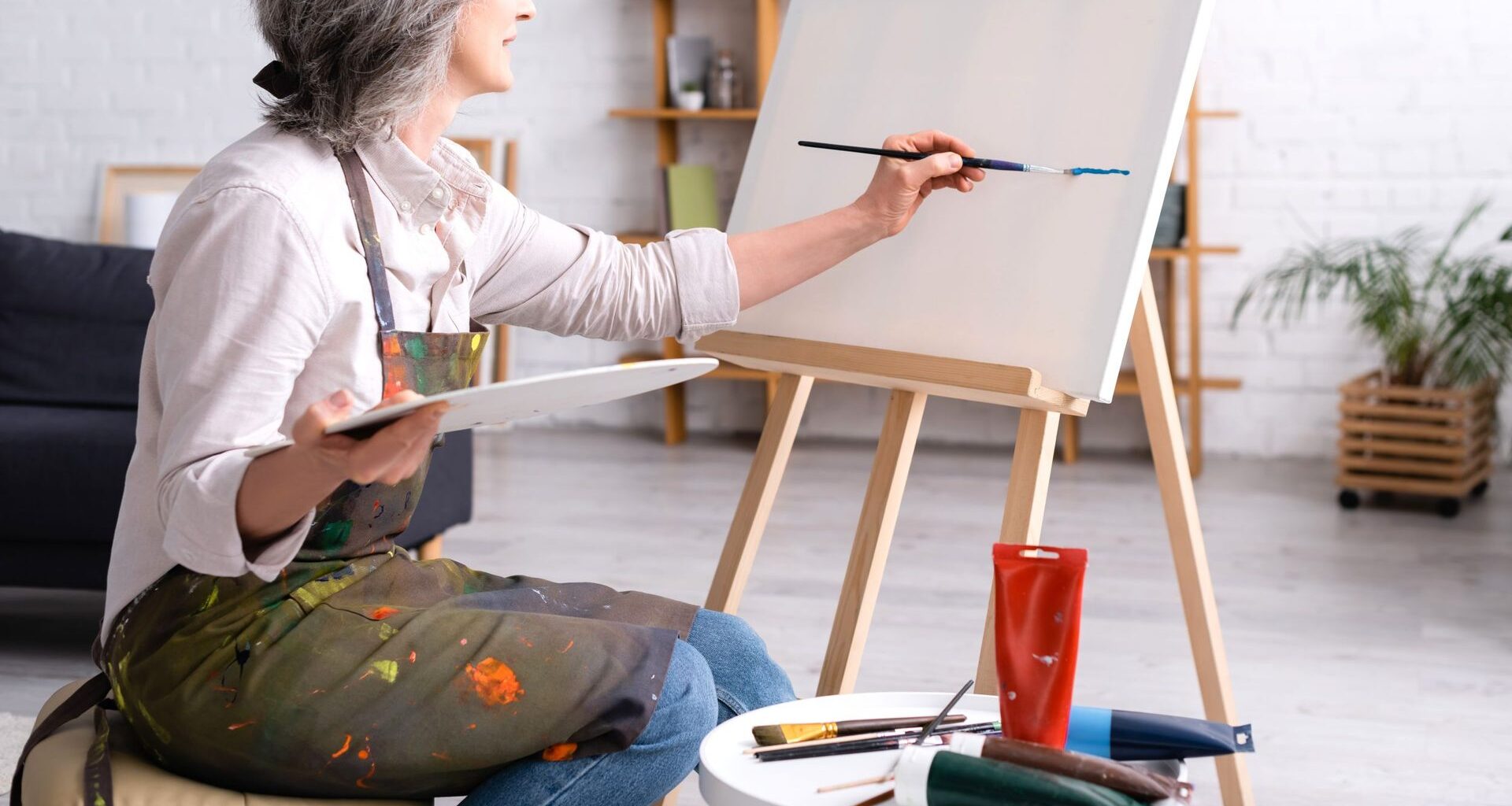
Growing research suggests that music, dance, theater and visual art can support physical and mental health, although important questions remain.
Taking dance classes or singing in a choir may seem like a simple hobby, but growing evidence suggests that the arts can play an important role in human health.
Yet, in trials, people in dance programs improved their balance and mobility and fell less, about as much as people in exercise programs.
That finding is part of a broader argument from an international group of health and arts experts.
The experts argue that music, dance, theater and visual art can support mental, physical and social health.
The evidence has grown large enough, they feel, for health systems to plan around the arts, rather than treat them as an add-on.
They’re just as direct about the gaps. Much of the evidence still comes from small, short studies of low or moderate quality, and the group lists what research funders should fix first.
Arts and culture in a health framework
The case appears as a Viewpoint in The Lancet. The essay pulls together existing research rather than reporting a new experiment.
It’s the first of two cornerstone papers in a new Lancet collection named for the Jameel Arts and Health Lab.
Nisha Sajnani is the first author, and the team includes Agustín Ibáñez of the Global Brain Health Institute at Trinity College Dublin.
“This is a historic moment for medicine,” Ibáñez said.
“For the first time, arts and cultural engagement are being brought together within a global medical framework spanning health promotion, prevention, treatment and care.”
Benefits show up across a lifetime
The authors build on a 2019 review by the World Health Organization, which drew on more than 3,000 studies.
It found a role for the arts at every stage, from preventing illness to treating it. A 2025 review in Nature Medicine then looked at the arts for disease prevention specifically.
Studies of people who take part in the arts for pleasure, including simply viewing art, link it to more enjoyment, higher life satisfaction and a stronger sense of meaning. That includes everyday arts and crafts.
Some research suggests those feelings may build resilience against later mental health problems.
For children, the authors draw a line. Big claims that the arts boost school performance have been refuted, they wrote, but there’s evidence for narrower benefits, such as some tied to how the brain handles language.
Studies are also finding links between arts activities and better-preserved thinking later in life.
Taking part in the arts also supports bonding with other people, and it’s linked to a lower risk of loneliness, now and later.
Patients gain alongside treatment
One source the authors cite is an umbrella review, a study that combines other reviews, covering 149 of them.
Compared with usual care, arts-based programs were linked to medium-sized improvements in anxiety, depression, physical function and quality of life for people with cancer, heart disease and mental health conditions.
For people with neurological conditions, the gains were small to medium. That umbrella review is still a preprint, which means it hasn’t yet finished the peer review process.
Some results are specific. Music-based programs improved walking speed, stride length and mobility in people with Parkinson’s disease, and dance improved their balance.
But the same reviews found mixed or no effects on agility and other movement measures.
Dance programs also lowered blood pressure in people with hypertension and eased pain in people with fibromyalgia.
Arts-based programs eased the body’s signs of anxiety during biopsies, kidney dialysis, time on a ventilator and surgery.
Put together, the authors wrote, that can mean less pain, shorter procedures and less need for anxiety and pain medication. In these studies, the arts were part of care, used to help manage symptoms.
Budgets push the case for planning
The timing matters, the authors wrote. Many governments face slow growth in public health budgets.
So the authors argue the arts have to be seen as cost-effective, equitable parts of core health and social systems, not optional extras.
A global review of 172 policy documents found ministries of health, culture, education and social welfare coordinating arts and health programs in dozens of countries.
Larger trials are now running in ten countries, including Argentina, Nigeria, Norway and the U.S., with participants ranging from premature babies to older adults.
Ibáñez framed it as a change in how health is defined.
“We are moving from seeing the arts as an optional complement to health towards recognizing cultural engagement as part of how we understand, protect and improve human health,” he said.
The arts can harm health as well
The authors don’t treat the arts as automatically good for people. Like any health behavior, they wrote, the arts can cause harm, on purpose or by accident.
Their examples run from music used in torture to injuries from performing, job stress among professional artists and programs that reinforce social inequality.
Good intentions aren’t enough, the group argued, and research should center the voices of artists and people with lived experience.
Who benefits isn’t fixed either. The same activity can help one person and do little for another, depending on their background, how the program is designed and delivered, and the place it happens.
Much of the evidence remains thin
The research has some limitations. Many studies follow people for only a short time, involve small groups, and lack randomly assigned comparison groups.
Very few trials have directly compared arts programs with the best standard treatments for the same conditions.
Cost-effectiveness keeps turning up as a strength of arts programs, but in many areas it hasn’t been measured well.
The research is also lopsided. Most of it comes from high-income countries, while low- and middle-income countries have seen fewer large studies, even though arts-based health programs rooted in local culture are common there.
Theories built in wealthy countries, the authors wrote, need adapting with local communities before they fit elsewhere.
Trials of arts and health come next
It’s still unclear how most arts programs compare with standard care, in health and in money.
For mental health, the quality of the evidence is starting to compare well with other common treatments, the authors wrote, but for many outcomes it still varies widely.
A second paper in the collection lays out roadmaps for research, practice and policy.
The group presented the collection in New York on September 22, during the week of the United Nations General Assembly.
“Health emerges from the interaction of biological, psychological, social and cultural environments. Arts and culture are part of those processes,” Ibáñez commented.
“The challenge now is to build the evidence, policies and health systems that recognize this.”
The ten-country trials now running, along with longer studies that track costs, are what could show when, and for whom, the arts work best.
The full study was published in the journal The Lancet.
—–
Like what you read? Subscribe to our newsletter for engaging articles, exclusive content, and the latest updates.
Check us out on EarthSnap, a free app brought to you by Eric Ralls and Earth.com.
—–