
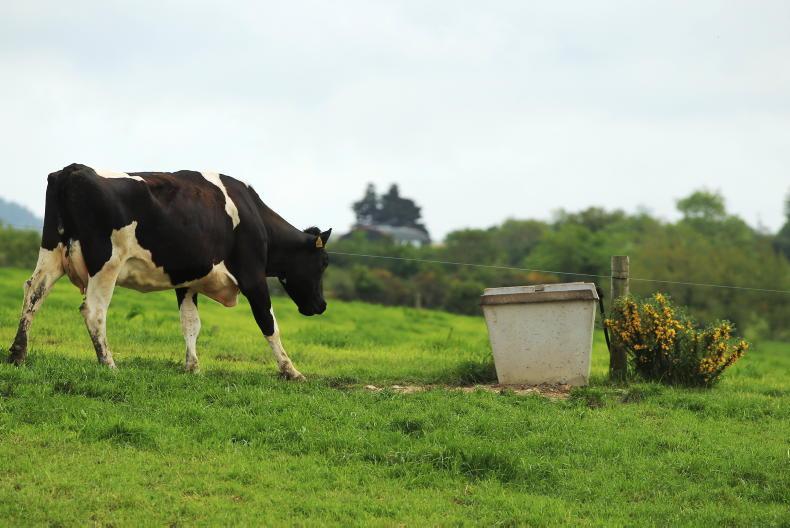
If 2026 is the year of the horse, then September was the month of the scouring cow.
Since the welcome end of the drought, we have come across quite a lot of issues with cows being loose with a drop in milk yield lasting a few days.
Another issue reported by farmers has been high milk urea levels in the bulk tank.
Normal bulk tank urea should be between 25 and 35 mg/100ml with some farmers seeing levels significantly higher than this.
There was a sudden burst in growth in September when the grass finally got some moisture which seemed to compensate for the lack of growth in July and August.
This will have resulted in a high uptake of nitrogen into the grass, high water content and low dry matter or fibre.
This change overwhelms the rumen’s ability to process nitrogen and protein ultimately resulting in high urea in the blood that is then passed through to the milk.
The rumen microbes require adequate fibre and energy to function and process protein.
Some farmers have had to carry out corrective measures to buffer the rumen by maintaining silage in the diet or adding soya hulls to increase fibre intake.
On another note, AHI has recently announced that a new Johne’s control programme is available to dairy and beef farmers.
This is a tricky disease to manage which can ultimately result in a cow with chronic scour and weight loss but has a lot of other effects at a herd level.
Participation in the programme is worthwhile as it is estimated that the disease is costing the dairy industry between €11.24 million and €23.85 million annually.
And then to keep us on our toes, the arrival of Shamonda virus, another virus spread by midges that can cause milk drop, scours, high temperatures and deformities in calves.
There’s never a dull moment!
Paul Ryan, MVB, XLVets, Waterside Veterinary
Limerick