
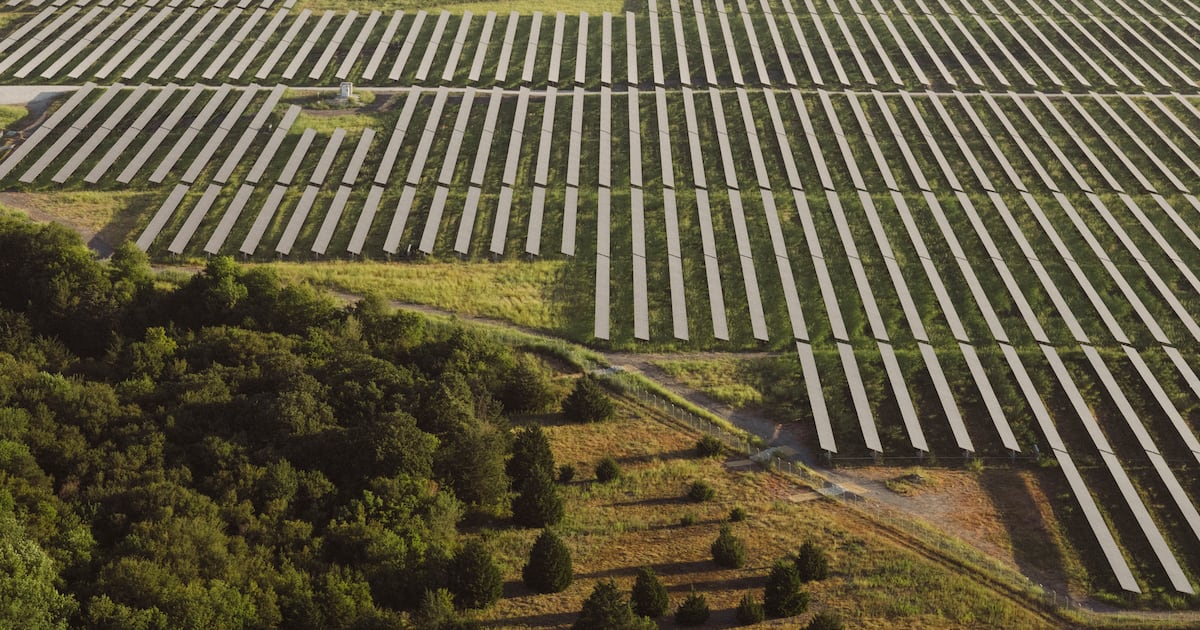
Irish energy consulting firm Azorom is at the centre of a plan by the Palestinian authorities to bring a new solar and battery storage system to the West Bank.
The company has just completed a six-month feasibility study for the Palestinian Energy and Natural Resources Authority (Penra), funded by the World Bank, to assess existing solar generation, electricity demand and the distribution network in the region.
The objective was to determine where additional distributed solar and battery storage systems “can be deployed safely and economically”, the company said.
The need for greater energy independence is crucial for the Palestinian state. The West Bank currently depends on Israel for 87 per cent of its power needs.
And the supply frequently gets caught up in the politics of the region. Israel’s state-owned electric company Israel Electric Corp has in the past imposed power cuts on several West Bank cities for unpaid debts.
Palestinians in Gaza have been without system electricity since 2023 when Gaza’s power plant was forced to shut down due to fuel depletion, leaving the territory in an effective electricity blackout.
The Palestinian Authority has being trying to reduce the region’s dependence on Israel for energy through state and private sector-funded solar projects.
Penra is targeting an additional 1,430MW (megawatts) of solar PV by 2030, nearly five times the current installed capacity across the West Bank and Gaza combined.
Azorom was selected by Penra following an international tender process. As part of its work, the Irish firm assessed the feasibility of adding the additional power to two pilot electricity networks – Tulkarem Municipality in an urban setting and the Tubas District Electricity Company (TDECO) in a predominantly rural one.
The company “analysed the performance of the networks and their need for storage, to produce investment-ready procurement documentation”.
[ Will French unrest benefit Marine Le Pen’s presidential run?Opens in new window ]
Together, the two electricity networks serve approximately 54,000 customers. Tulkarem has over 12MW of solar PV, while TDECO has over 27MW of existing solar PV capacity.
“The study assessed how much additional solar can be accommodated by each network and how much and where storage is required,” the company said.
The work is intended to provide a replicable model for wider roll-out across the West Bank.
“The West Bank faces significant electricity supply constraints, recurring outages and a heavy dependence on imported power,” Azorom chief executive Conor Lonergan said.
“This project has been about moving beyond analysis and putting the technical, financial and procurement groundwork in place to bring solar and battery storage projects towards investment and delivery in a scalable and sustainable manner.
“The focus is on enabling greater use of locally generated renewable energy while supporting a more secure and reliable electricity supply for communities and businesses.”
On whether the company found it difficult to operate in the region given the continuing violence between Israeli settlers and Palestinians, Longergan said: “We worked in neighbouring Lebanon for many years.
“On this project in the West Bank, because of the present situation, we were allowed to have our international experts work from home base while also utilising local experts on site.”