
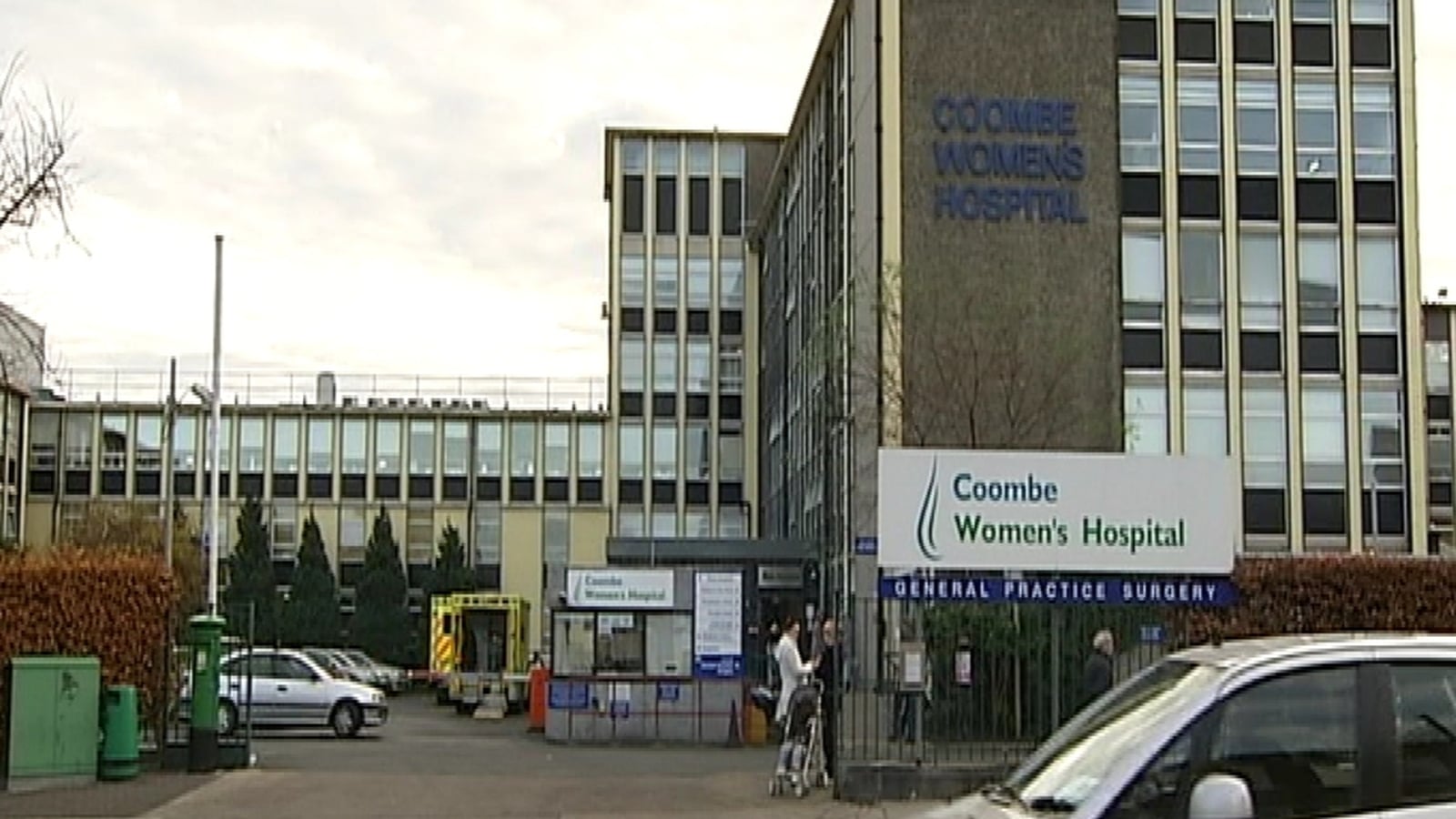
A new exhibition is celebrating the 200-year history of The Coombe Hospital, which was founded in Dublin in 1826.
‘Born in Dublin’ tells the story of one of Ireland’s oldest maternity hospitals and the generations of women, newborns, families and healthcare professionals who have shaped its history.
Founded in the Liberties in Dublin in 1826, Prof Michael O’Connell, Master of TCH, explained that The Coombe Hospital was set up “in the aftermath of a tragedy” when two women lost their lives trying to make their way to the Rotunda hospital for care during a winter storm of 1825.
“A woman called Margaret Boyle set about founding a maternity hospital to care for Dubliners in the Liberties, founding what was then ‘the coombe lying in wait’ hospital,” he said.
Her vision was to provide maternity care to ensure that pregnant women, particularly those facing poverty, had a safe environment in which to deliver their babies on the south side of the city.
That original hospital offered just 15 beds, and across its two centuries the service has grown and expanded, moving to its current location in Cork Street/Dolphin’s Barn in 1967 where it could offer a more substantial bed facility of over 200 beds and cots.
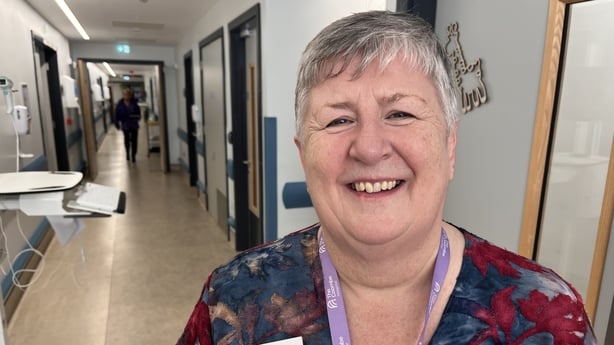
Ann MacIntyre is Director of Nursing and Midwifery at the Coombe Hospital
‘Born in Dublin’ is being hosted at the Little Museum of Dublin and it is filled with objects and information charting the development of professional nursing and midwifery.
These developments are at the heart of the exhibition noting how from its inception in 1826, and ratified by royal charter in 1867, The Coombe Hospital played a role in the development of formal training for nurses and midwives, as healthcare moved towards the professional, specialist care today.
“We started off with the pinards, which is like a little funnel when we listen into the foetal heart, and now we have CTG monitors and electronic equipment,” explained Ann MacIntyre, Director of Nursing and Midwifery at the Coombe Hospital.
The technology “is fantastic now, we have MNCMS, the computer systems, ultrasound, sonography and we are picking up high-risk pregnancies and helping the babies and the mothers too,” she said.
“We are diagnosing much earlier and that is resulting in good care, safe care and fantastic outcomes for the women and the babies and the families too.”
For midwife Denise Lambert, the hospital holds a special connection.
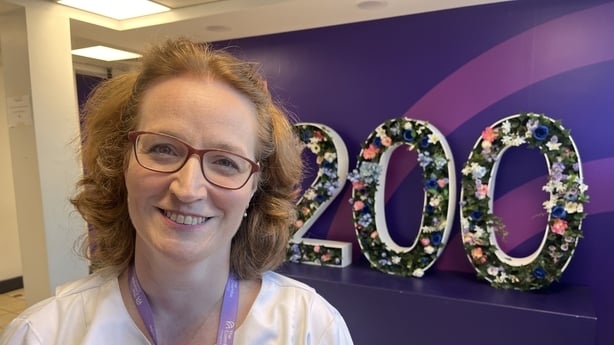
Midwife Denise Lambert’s family and husband were born in the hospital
“I was born here, my family was born here, my husband was born here and I’ve been working here as a staff midwife for 20 years,” she said.
The affection she holds for the hospital and its staff is clear as she outlined how “the hospital has looked after me so well with my own personal experiences,” adding how she felt “so safe and cherished and looked after there by everyone”.
The hospital has a long history of medical teams who were at the forefront of maternity services developments. Just one of the many exhibits on display is a 19th century hypodermic needle.
The exhibition explains that Francis Rynd, who served as a consulting surgeon to The Coombe, is credited with performing the first recorded subcutaneous injection at Dublin’s Meath Hospital in 1844.
Other stories of the people, milestones and healthcare advances that have shaped developments there are celebrated, including Dr John Drumm, working with Dr Dermot FitzGerald, who together pioneered the use of Doppler ultrasound to assess blood flow in the umbilical cord.
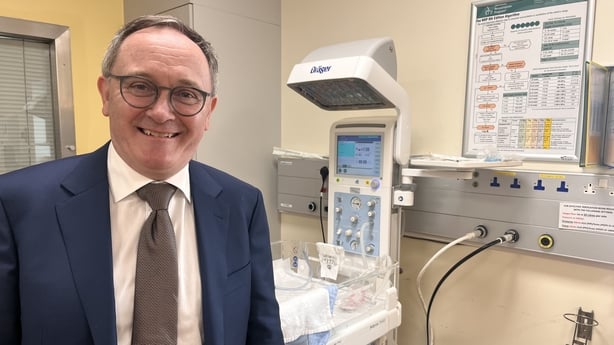
Prof Michael O’Connell is the Master of the hospital
Their research, published in 1977, contributed to the development of techniques that help clinicians assess foetal wellbeing and identify risks in pregnancy.
“Its role has changed over two centuries, and the major developments that have shaped its services are all celebrated in this exhibition,” Prof O’Connell explained.
For Ann MacIntyre, Director of Midwifery & Nursing, this is for the team behind the exhibition, the stories show that it has one eye on the past and one on the future saying that “the evolution of maternity care, the role of midwives and nurses, and how education and clinical advances will shape the future too”.
Two centuries of Irish history are at the core of this exhibition, as the Coombe Hospital has borne witness to the history of Dublin, from the Act of Union and the Great Famine to the Spanish Flu, two world wars, Irish War of Independence and Covid-19.
Over its 200 years, The Coombe has continued to provide care through periods of profound change in Ireland and the team there say they are relishing the next decades.
“It is hard to be precise as there were records lost in the 1930s because of a fire, but we estimate more than 740,000 babies up until 30 September this year and we deliver approximately 6,500 babies annually.”
“Working here in the team is wonderful,” Prof O’Connell said, pointing out that “nowadays we can have babies that are 400 grams less than half a bag of sugar, 23 weeks gestation through the neonatal unit, so it’s phenomenal”.