
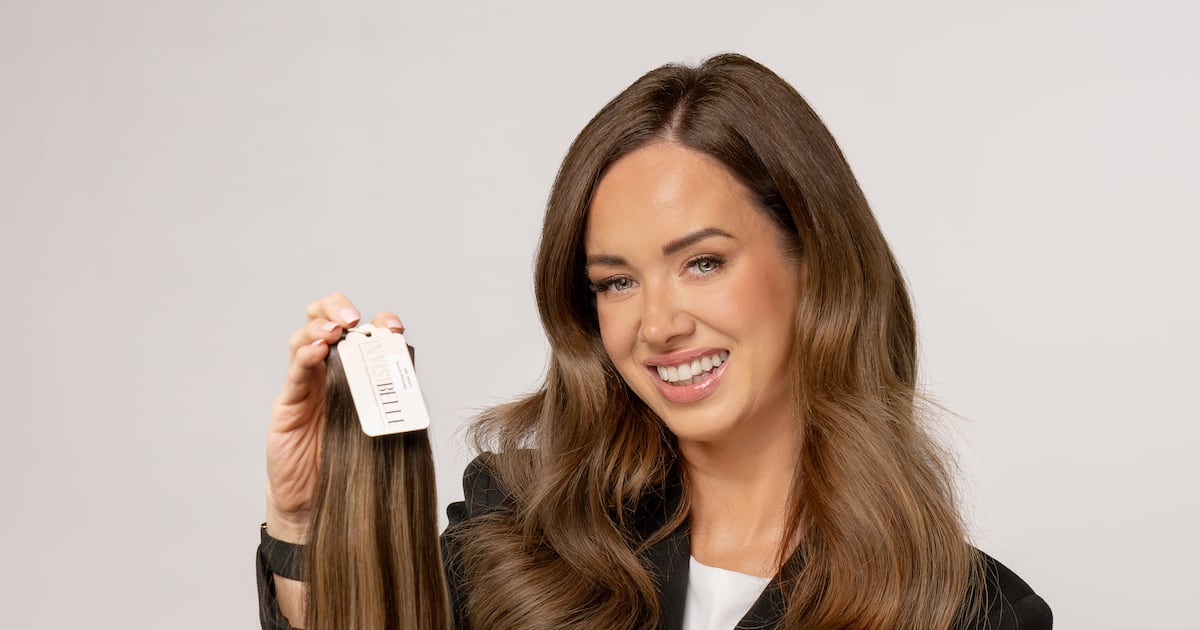
For years, my view of hair extensions was rather archaic. Rapunzel-like locks with obvious bonds or tapes came to mind, mostly on younger women who wanted to change their style or have very long hair. I had briefly tried them myself about a decade ago, but could not manage the maintenance, and they were whipped out shortly afterwards.
Recently, my hairstylist suggested I try them again. I was growing my hair and wanted a little more volume, especially at the sides. She felt my hair could support them and assured me that the quality, fitting methods and maintenance required had moved on considerably since my first (failed) attempt.
So, I took the plunge. And I love them. They’re all but undetectable, adding fullness exactly where I wanted, while still looking like my own hair.
Conversations with friends, colleagues and industry experts have since revealed what I’d been missing. Hair extensions are more advanced than ever, and being used by women dealing with thinning hair, including during perimenopause and menopause, and sometimes alongside treatments aimed at improving hair growth and scalp health.
If you’re considering hair extensions, a consultation with an experienced specialist is the best place to start. There are many options available now, including wefts, tapes, individual bonds, clip-in pieces, halo extensions, mesh integration systems and hair pieces, using natural and synthetic hair. Prices vary considerably, from several hundred euro for a volume boost up to €2,000 and above for a bespoke mesh system, depending on the method, the amount and quality of hair, whether it can be reused, and the maintenance involved.
To find out more, I spoke to Dr Emma Fanning, an aesthetic doctor and founder of Le Formulaire clinic in Dublin 2, who has a particular interest in treatments to support hair growth, and hair extension specialist Nancy Costello, founder of The Belle Brush and Belle Hair Salon in Galway.
The first thing Fanning aims to establish is what someone means when they describe their hair as thin. Is it shedding more than usual? Are fewer or finer hairs growing from the scalp? Or, is it breaking along the length? These are different problems requiring different approaches. A widening parting alone is worth having medically assessed, she says, “because it is the classic early sign of female pattern hair loss, and treatment works best when started early. Styling can disguise it, but it won’t change its course”.
Fanning says treatment starts with getting that diagnosis right. That might mean correcting a deficiency, looking into a trigger that causes shedding, or prescribing medical treatment. Her three favourite approaches at her clinic are LaseMD Ultra, polynucleotides and platelet-rich plasma (PRP).
 Emma Fanning, founder of Le Formulaire clinic in Dublin
According to Fanning, the latter “has the strongest evidence of any in-clinic hair treatment, with studies showing improved density and reduced shedding, particularly while the follicles are still active”. PRP works using your own blood. A small sample is spun to concentrate the platelets and plasma, which are rich in growth factors. These are then injected or lasered into the scalp at the follicle level.
She’s keen to stress, however, that no treatment produces an overnight result. Results take time. Can extensions help someone feel better about their hair while they wait? Fanning says yes, but the diagnosis matters here too. “Extensions attach to existing hair, so the real question is whether the hair and scalp can bear the load.”
[ I have alopecia – I always have at least one small patch of hair loss on the goOpens in new window ]
She says that mild pattern thinning is very different from an active shed, alopecia areata (a condition where the immune system attacks hair follicles, causing hair to fall out) or a scarring condition. The strength and density of the hair and the health of the scalp also need to be taken into consideration, along with the weight, extension method and how long they will be worn. The main risk factor she highlights is traction alopecia – hair loss caused by repeated pulling on the follicles.
Costello agrees and says that sometimes, the most professional thing a hair-extension specialist can do is turn the client away. For others, she might recommend less hair, or a different method. “The health of the client’s own hair should always dictate the extension plan, rather than the other way around.”
For those seeking fullness rather than length, Costello says people are often surprised by how little extension hair is actually needed to make a noticeable difference. A “volume boost” is one of the most popular services at her salon, with small amounts of hair placed strategically, close to the client’s existing length.
With fine hair, Costello says there is no single extension method considered universally best: “What matters is weight distribution, placement and the ratio of extension hair to the natural hair supporting it. The cut is also important. Too much length or bulk through the ends can make extensions harder to blend and manage.”
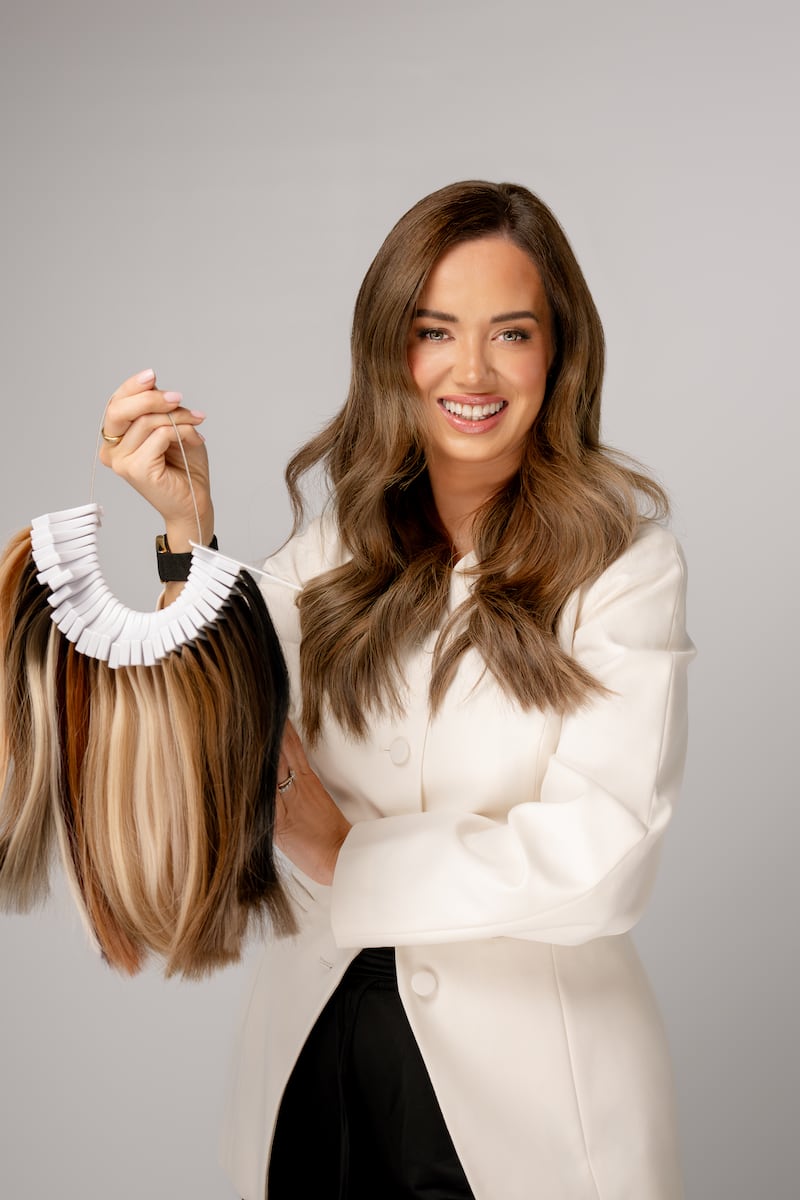 Nancy Costello of Belle Hair Salon in Galway
Her approach takes account of lifestyle as well as hair: how much maintenance someone wants, how often they can return to the salon, and whether something worn occasionally like a hair piece would suit them better. If someone swims in the sea every day, for example, she would be cautious about recommending extensions.
Once the extensions are fitted and you’ve skipped out of the salon feeling fabulous, Costello says not to forget about maintenance. “Extensions should never be something that are fitted and then forgotten about. Monitoring the health of the natural hair is just as important as the initial application.”
For first-time wearers, she recommends a check-in at the four-week mark to make sure everything is comfortable and that your scalp and hair are happy. After this, follow-up appointments will depend on the type of extension you opted for and the condition of your own hair.
Fanning points out things to watch for post-application, including persistent pain or pulling, itching, redness, bumps around the attachments, or broken hairs and thinning at the bond sites. “If any of these happen, go back to your stylist and have them loosened or removed professionally – don’t pull them out yourself, as that can cause more damage.” She recommends medical assessment if symptoms persist or the thinning doesn’t improve.
Fanning also emphasises the emotional impact of hair loss, which she describes as quietly devastating for confidence. With treatment taking time to produce results, how someone feels about their hair in the meantime matters. For suitable candidates, she sees extensions as a “cosmetic bridge” – a way to restore fullness and confidence while treatment for the underlying hair loss has time to work.
“Used thoughtfully, they work together,” she says. “Used without a diagnosis, extensions can mask – or even worsen – a problem that would have been far easier to treat early.”