
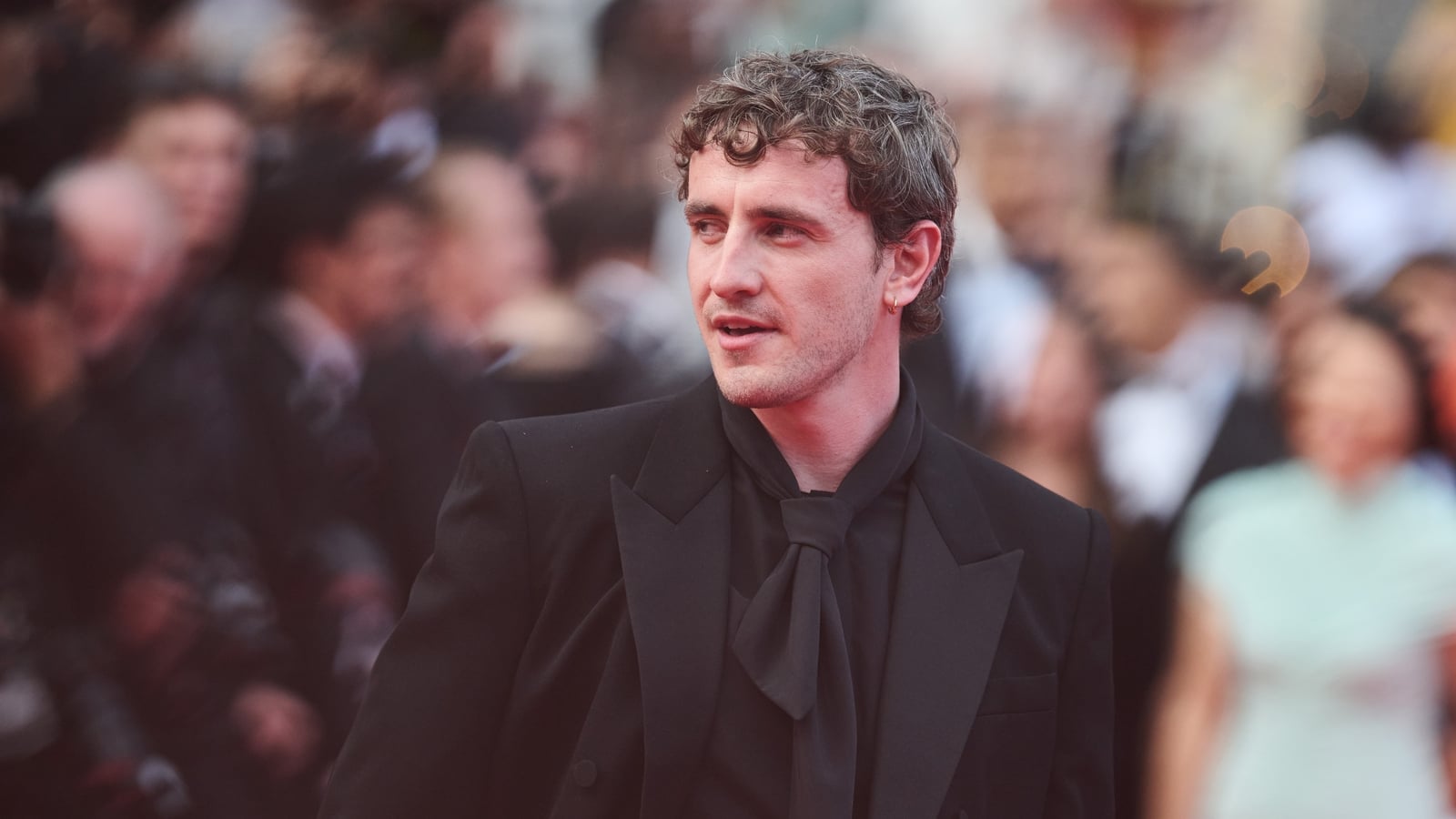
Mary is Missing follows an ensemble immersed in a crime thriller with delicious twists and turns. Now, with Paul Mescal involved, could Oscar success be imminent? Kate Demolder writes.
Could it be that, at long last, we’re finally starting to see people with disabilities given opportunities to shine on screen? If a successful cultural transformation can be defined as the moment when actors of all kinds are in front of the camera, in roles not centred on their perceived differences, then Mary is Missing might just be one of those hallowed pieces that is ushering in a new era.
Mary is Missing is an Oscar-qualified Irish short film that features an ensemble of Irish intellectually disabled performers, including award-winning Irish actor and theatre maker Mark Smith – known for his semi-autobiographical one-man stage show Making a Mark – as well as Derek McSweeney, Eoghan Ashe, Ella-Jane Moore, Jackie O’Hagan, John Egan, Keith Foley, Maurice Coll, Neil Coffey, Teresa Flood, Wesley Fairbrother, Lucy Smith and Conor Begley.
“We’re down to the wire now,” Smith says of the impending wait for the Academy Award shortlist, announced on December 16. “But… It’s very exciting.”
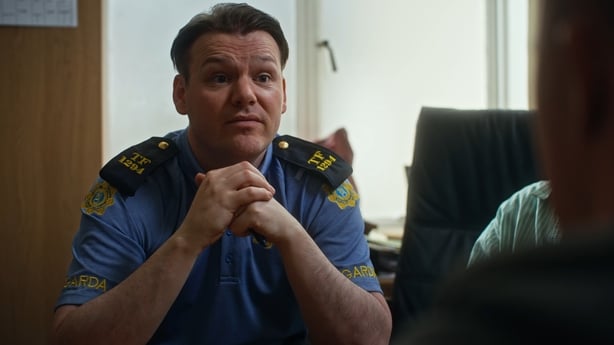
The film centres on Yellow Tree Day Service care worker Mary, who hasn’t turned up for work two days in a row. When Garda Foley is called, he and the care team begin investigating the conflicting accounts of the service’s users – to uncover not just what happened, but why they might be hiding the truth.
The plot hails from a writers’ room with the film’s cast at Run of the Mill, the award-winning and inclusive arts company based out of The Mill Community Centre in Celbridge and Maynooth University.
“It exists as a platform for our artists,” Run of the Mill founder and Mary is Missing Director Aisling Byrne says.
“We had made a previous film under Run of the Mill, which Mark was kind of the star of, and the rest of the ensemble were very interested in getting involved, so we came up with different ideas. One day, we did a quick improvisation exercise and just imagined what might happen if a care worker went missing… And this is what we came up with.”
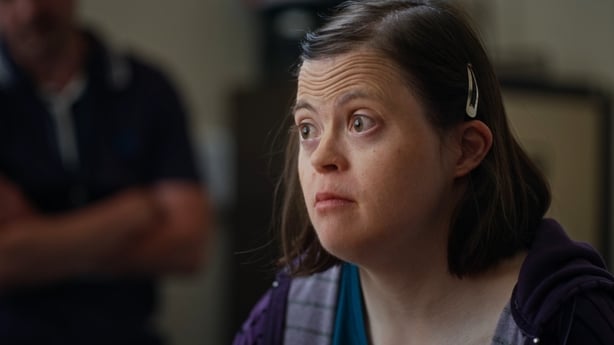
The film’s ensemble was central to its development; of the 19 cast members, 13 engaged in the writing process, contributing ideas around characters, themes and storytelling, ultimately creating a crime thriller that places learning-disabled artists at the centre of the narrative.
“A number of things inspired the film, like Fair City and Law and Order,” Byrne says, noting the film’s compelling twists and turns. “From start to finish, they were the ones who co-authored the script.”
Byrne, a filmmaker and daughter of a nurse at St Rapheal’s Special School and Liffey Services – part of Saint John of God Community Services, where Byrne eventually became the artist in residence – founded Run of the Mill in 2014 in order to bring exactly these sorts of stories to life.
“When I began filmmaking, I wasn’t seeing representations of this community in any way that matched the incredible richness and complexity of characters I was encountering,” she says “I just thought, you have to create the things that you wish exist.”
Byrne speaks fervently about the intellectually disabled community, most notably about the many reductive, perpetuated stereotypes that exist on screen. “When you have people in your life that have lived experience of disability, you’re watching things and going, I know this could be done better,” she says.
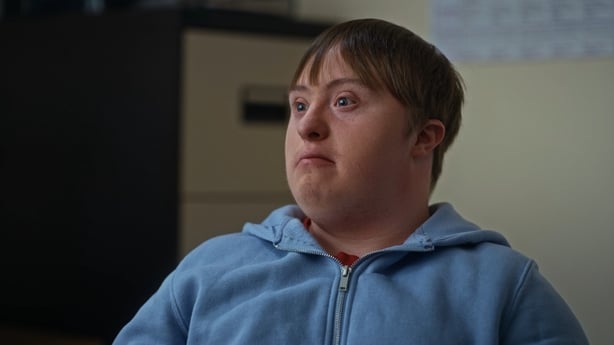
“And that this person is becoming a symbol in a story and probably being attached at a really late stage to the project, so they have no chance to execute it meaningfully. I genuinely believe not only is that not the way it should be, it actually impacts society. If culture holds a mirror up to society, then there’s a whole community of people that are being misrepresented.”
That’s not to say that Mary is Missing is a film created to teach us something. “I laughed my socks off,” Smith interjects. “It’s really, really funny.”
Do a film about the Holocaust or ‘play a mental’, and you’re guaranteed an Oscar, so the infamous Kate Winslet scene in Ricky Gervais’s 2005 comedy series Extras goes. “Schindler’s bloody List, The Pianist”, Winslet says, playing a nun. “Oscars coming out of their arse.”
There is truth to Gervais’s satirical script – lest we forget, Winslet later won her first Academy Award for playing an illiterate former Nazi in 2008’s The Reader – but only now are we getting to a place where actors with disabilities, disorders and learning difficulties are benefitting from playing the parts written about them, instead of just watching them.
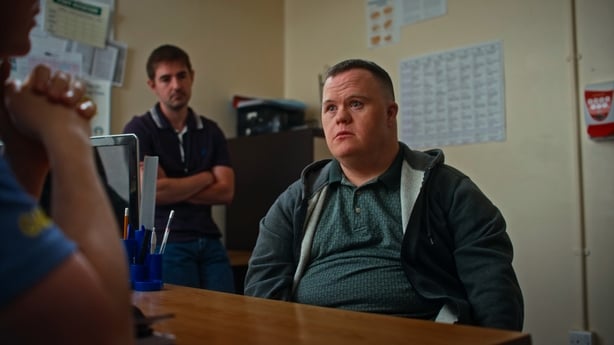
Some of that is down to the way we make films today, producer Killian Coyle insists. “Everybody from the assistant director team to all the HODs had to work differently to the way they were used to,” he says of Mary is Missing’s 5-day shoot.
“All of the modalities of working in a traditional sense had to be twisted to fit this job. Luckily, we had an incredible team who were so willing to do that.”
For the team at Run of the Mill, that proof of concept was important to continue moving the dial as they leverage future projects. “Mary is Missing stands as proof that things don’t always have to be done the same way,” Coyle says. “And that excellent work is possible when you include new voices.”
Despite strides taken towards casting actors of all walks of life in recent years, a 2023 study by the Ruderman Family Foundation found that out of 350 scripted TV series from 2016 to 2023, just 3.9% of TV characters had a disability, well below the nearly 30% of the U.S. population that identifies as disabled.
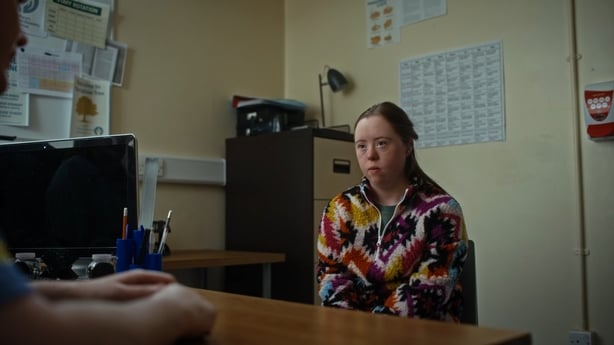
Furthermore, nearly 80% of characters with disabilities were played by able-bodied actors, showing no clear upward trend in authentic casting.
Nonetheless, the sense of momentum is real. In the recently rebooted Will & Grace, Christopher Thornton, an actor in a wheelchair, shows up as a romantic interest for Karen. George Robinson, a tetraplegic actor, appears on season two of Netflix’s Sex Education, and Lara Ricote, a comic and actor with degenerative hearing loss, is currently playing the love interest in Channel 4’s Break Clause.
“When you’re up against the constraints of a big production, you need time,” Byrne says. “And time is money, unfortunately.” “But what we’re trying to do with the likes of Mary is Missing is show what can happen when you have a few extra days or a few extra hands,” Coyle adds. “This is what it looks like. This is what it means.”
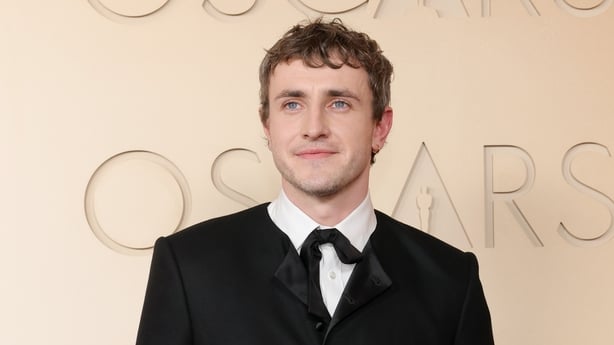
Paul Mescal attends the 98th Oscars. (Photo by Mike Coppola/Getty Images)
Another set of hands on the Mary is Missing set has been Paul Mescal, who recently signed on as executive producer. ‘There are films that remind you just how exciting cinema can be when it opens itself up to new voices,’ Mescal wrote in a statement. ‘For me, Mary is Missing is one of those films.’
“He’s so down to Earth,” Smith gushes of his new colleague. “And really easy to work with.”
In order to combat the low numbers, the Ruderman study recommends that the industry greenlight more stories by people with disabilities behind the camera, adopt authentic casting processes and focus on crafting narratives that feature characters with disabilities without making the disability a focal point. Mary is Missing exists as a shining example of each of these, proving with ease that we’ve been missing out on a whole cohort of stories until now.
“I want people to enjoy the film in all of its rich, complex, multi-faceted glory,” Byrne says. “There are drug dealers, love affairs, but also a real opportunity to see what we can create when we open up these spaces for something unapologetically unique and surprising. Everything these days is homogenised… and something like this makes for truly unique viewing.”
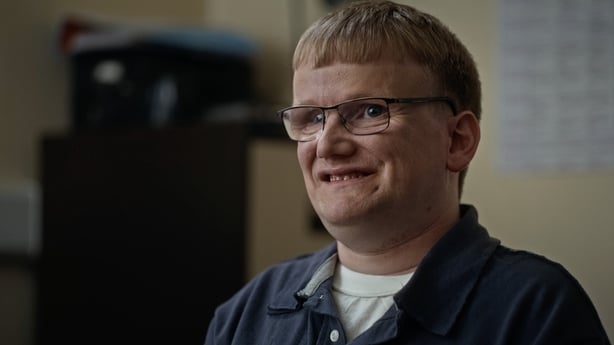
Crucially, it also raises bigger questions for audiences internally, Smith concludes: “Including who we choose to believe.”
For Coyle, he insists he would love people to walk away from it seeing what’s possible. “You know, I don’t have a reference point for 13 intellectually disabled people writing, co-authoring, developing and acting in a film before, so I hope that is recognised on an international level. But also, a lot of people have been surprised about where the story goes, which I’d like people to internally question. Because that’s where the real change happens, within.”
Mary is Missing is currently in the middle of its film festival run, with an upcoming screening at the Waterford International Film Festival on November 14–15, 2026. Check Run of the Mill’s Instagram (@runofthemillarts) for further screenings to be announced.