
Deirdre Mullins takes a detour from the motorway for a Michelin-starred dinner, and discovers a world of history, nature and memorable encounters in a part of Ireland she thought she knew.
It looks like someone plucked a lemon straight from the tree and planted it in a bed of crushed ice. Still attached to its twigs and leaves, the top lifts off to reveal a refreshing, tangy-sweet lemon sorbet finished with olive oil.
My server tells me that chef Danny Africano’s father handpicked the lemons a few days earlier at a market near Pompeii, before sending them to his son’s kitchen. “A little taste of Amalfi,” she says. But I’m nowhere near the Amalfi Coast. I’m at Michelin-starred Lignum, in the East Galway countryside just outside Loughrea. As a child, I spent a lot of time in East Galway.
My father was from Loughrea, and I spent many summers visiting relatives and jumping into the local lake, Lough Rea. But I had never thought of holidaying there. In recent years, I mostly saw East Galway through the car window, speeding past the signs for Loughrea, Athenry and Portumna on my way from Dublin to Galway city or Connemara. This time, I had a reason to take the exit.
Lignum
I wanted to eat at the renowned Lignum, so I decided to take a short break and play tourist in a place I thought I already knew. Lignum occupies a converted barn on Danny’s family property, the same site where his parents ran Slatefort House restaurant for nine years. Its past is still visible in the old stable doors.
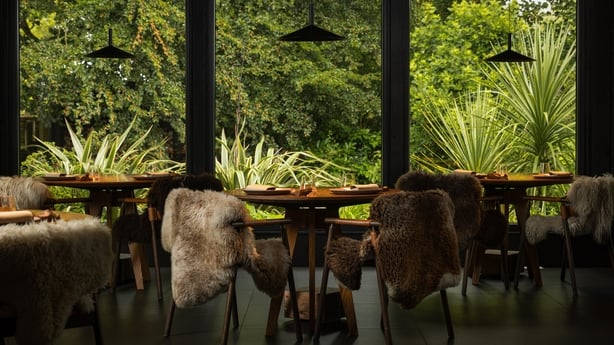
The smell of wood hit me as I entered. A fire burned in the centre of the dining room, and charred timber, black slate, and sheepskin throws created a warm, Nordic feel.
It was polished but not stuffy, with big windows looking out onto the surrounding greenery. Lignum means wood in Latin, and the kitchen’s domed wood-burning oven was at the heart of the cooking. Danny runs Lignum with his wife, Molly Keane, a stylish couple whose eye for aesthetics seemed to extend to everything, from the interiors to the servers’ sharp black uniforms and wooden-handled cutlery.
With an Italian father and a mother from Loughrea, Danny’s cooking draws on both sides of his Irish-Italian heritage, marrying Irish produce with Mediterranean flavours. The welcome card at my place asked diners to “trust us to take you on a journey of our roots; of our obsession”. I buckled up.
Over the next 10 courses (€165), 20 dishes arrived, and I loved every bite. A standout was the Achill lamb; the rack was aged for two and a half weeks, alongside sausage, sweetbread, shiso and apricot. It was the first time I’d ever eaten sweetbread and genuinely enjoyed it.
Since winning its Michelin star, Lignum has become a destination in its own right. On the night I visited, Americans occupied four tables, and another table was taken by diners who had flown in from London specifically to eat there. Danny and Molly eventually hope to add accommodation to the property, turning a destination dinner into an overnight stay.
A short drive from Lignum, the road narrowed to a boreen with tufts of grass growing up the middle. Stone walls divided the surrounding fields. I was on my way to meet local beekeeper Noel Leahy, whose family produces honey in the foothills of the Sliabh Aughty Mountains. At the family home, his daughter Aoife and their dog greeted me.
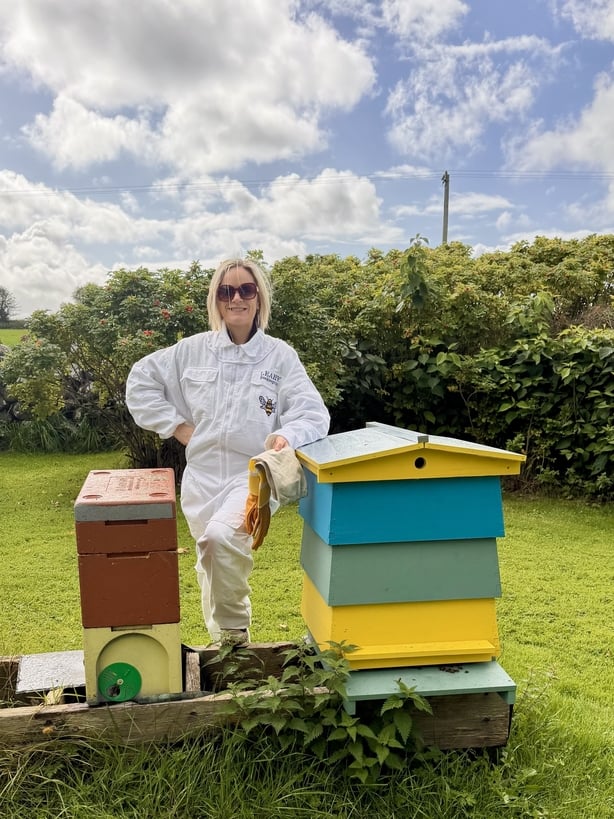
Noel was “up the field”, she explained, but appeared shortly afterwards in his beekeeping overalls. Within minutes we’d established that he knew several of my relatives and had even been in my family home in Dublin. Only in Ireland.
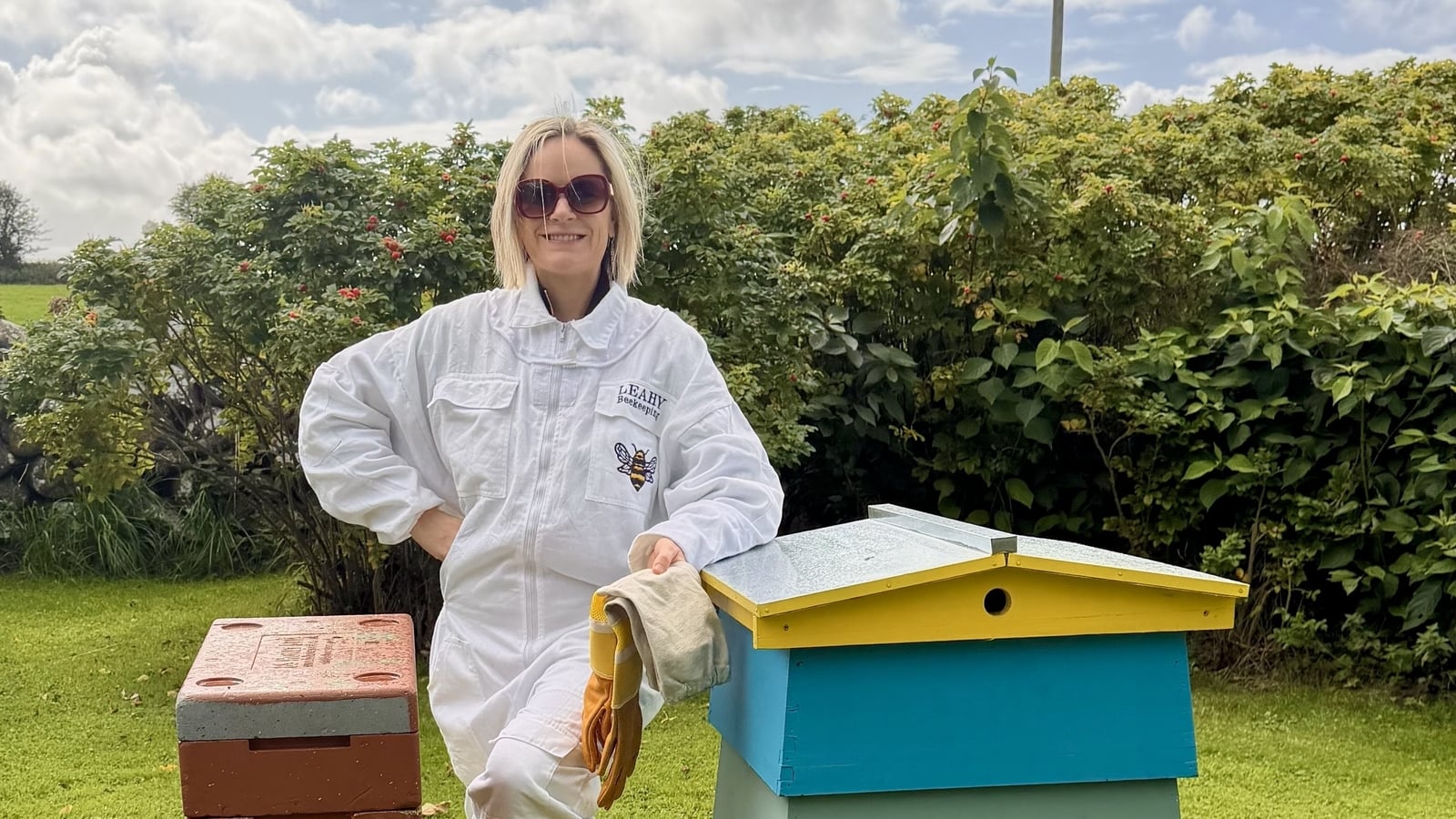
A fourth-generation beekeeper with more than 300 hives, Noel offers personalised tours of his apiary (90 minutes, €150 per person for one or two visitors, with discounts for larger groups). Dressed in a protective suit that made me feel like an astronaut, I followed him out to the hives.
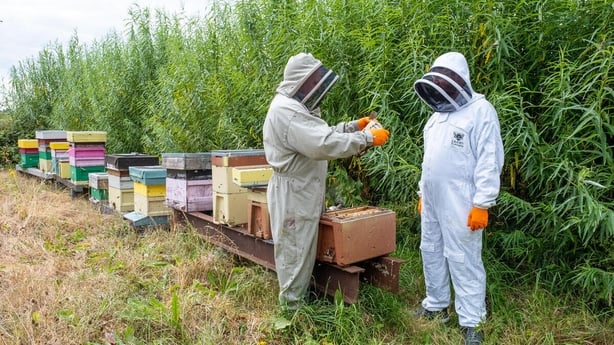
Noel gently puffed smoke around the bees to calm them, then lifted the lid off a hive. I could hear the hum of thousands of bees. Soon they were landing on my suit, and before long I was holding a frame covered in them.
Surprisingly, I wasn’t nervous at all. Noel pointed out the queen, identifiable by a tiny white mark on her back. What struck me most was how gently Noel handled the bees, moving slowly and calmly so as not to agitate them. Back inside, we gathered around the family table to taste his honey, from wildflower and mountain heather to smoked and hot honey.
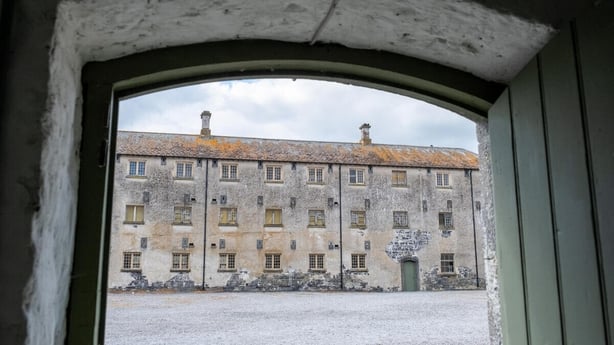
Paired with local Irish cheeses, the flavours were delicious, particularly the wildflower honey. As I was leaving, Aoife appeared with a bag of freshly picked blackberries and grapes from their garden. Nature seems generous around these parts. During a guided tour of the Irish Workhouse Centre in Portumna (€12), food took on a very different meaning.
After enjoying a ten-course tasting menu at Lignum, I felt uncomfortable as our guide, Brendan, described how workhouse inmates survived on just two meals a day. Breakfast was a watery porridge nicknamed ‘stirabout’, and dinner was boiled potatoes. Brendan told us they sometimes added sawdust to the porridge to thicken it, which, unsurprisingly, caused stomach issues.
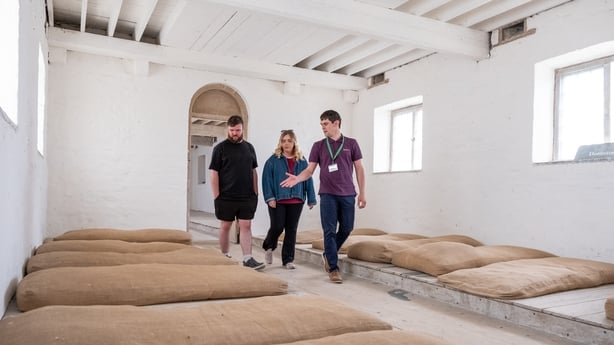
Brendan led us through the former workhouse, describing a deliberately harsh regime. Families entering the institution were separated, and even talking and hugging were forbidden. We walked through the cold dormitories, with straw mattresses and moth-eaten blankets.
Comfort and privacy seemed non-existent for the inmates. The workhouse’s darker history was brought vividly to life through holographic projections, including the extraordinary story of its first master, Henry Ogle, who fled to America in 1865 amid allegations of abuse and financial misconduct.
From the grim conditions of the workhouse, I made my way to the grandeur of Portumna Castle, once home to the wealthy de Burgo family. Under Ireland’s Poor Law system, landowners helped fund workhouses through a property tax known as the poor rate. A member of the de Burgo family also chaired the local Board of Guardians, which oversaw the workhouse.
Portumna is one of the few towns in Ireland where visitors can explore both ‘the workhouse’ and ‘the big house’, two very different sides of Irish history. Built in the early 1600s, the castle was the family’s power base for centuries until a fire left it roofless in 1826.
Today, its restored ground floor houses an exhibition tracing the castle’s history. Our guide, Tony, remembered playing in the ruins as a child. He was disappointed when restoration began in the 1960s and ended his adventures, but now he enthusiastically shares the castle’s history with visitors.
Outside, I wandered through the formal gardens and walled kitchen garden, where sunflowers, herbs and vegetables grew without pesticides. After visiting Noel Leahy’s apiary the previous day, I was delighted to discover a hive of native Irish black bees living in the castle’s thick stone walls.
Back in Portumna town, I collected a bicycle from Dick, whose enthusiasm for his hometown was infectious. He hires out everything from tandems to four-seaters and child trailers, and marked out a route for me on a map.
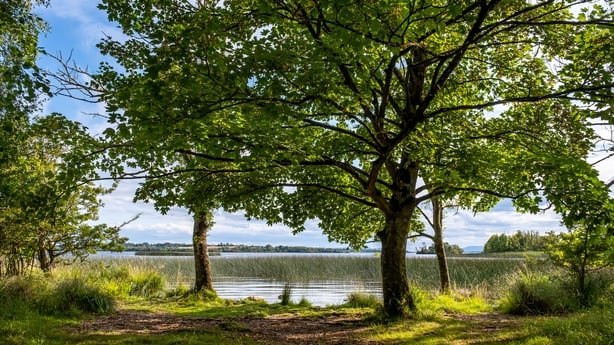
He and his wife also run Podumna Village, a glamping village with cosy pods and a communal space for guests. I followed the Blueway cycle path to Portumna’s blue flag swimming area on Lough Derg, then cycled on to the marina, where children fed ducks and fishermen cast their lines.
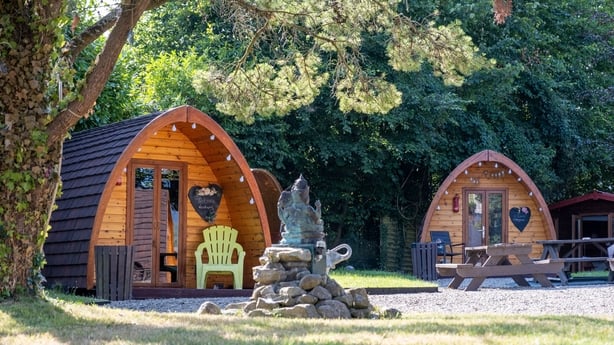
Podumna Glamping Village
As I relaxed on the harbour, a group of swans suddenly took flight, skimming across the lake’s surface. From there, I pedalled into Portumna Forest Park, leaving the open lakeshore behind for peaceful trails winding through towering trees. The woodland is home to fallow deer, foxes and elusive pine martens. The flat trails are ideal for walking and cycling, and entry is free.
My final stop was Athenry, a town immortalised in Pete St John’s song The Fields of Athenry. I’d known the town since childhood but had forgotten just how rich its medieval history was. Considered one of Ireland’s best-preserved medieval towns, Athenry boasts an impressive Norman castle, medieval walls, a Dominican abbey and the North Gate.
My enthusiastic guide, Adrian, showed me around the 13th-century castle (€5 entry). Fascinated by surnames, Adrian pulled out a book and looked up mine, Mullins, tracing its Anglo-Norman roots to Clare, Cork and Galway.
Lignum might have brought me back to East Galway, but I left wondering why I’d spent so many years driving straight through it.
Deirdre Mullins was a guest of Discover Ireland.
To find out more about East Galway and to stay updated with the latest inspiration on places to visit, go to https://www.discoverireland.ie
To follow more of Deirdre’s travels, follow her on Instagram @deirdremullins