
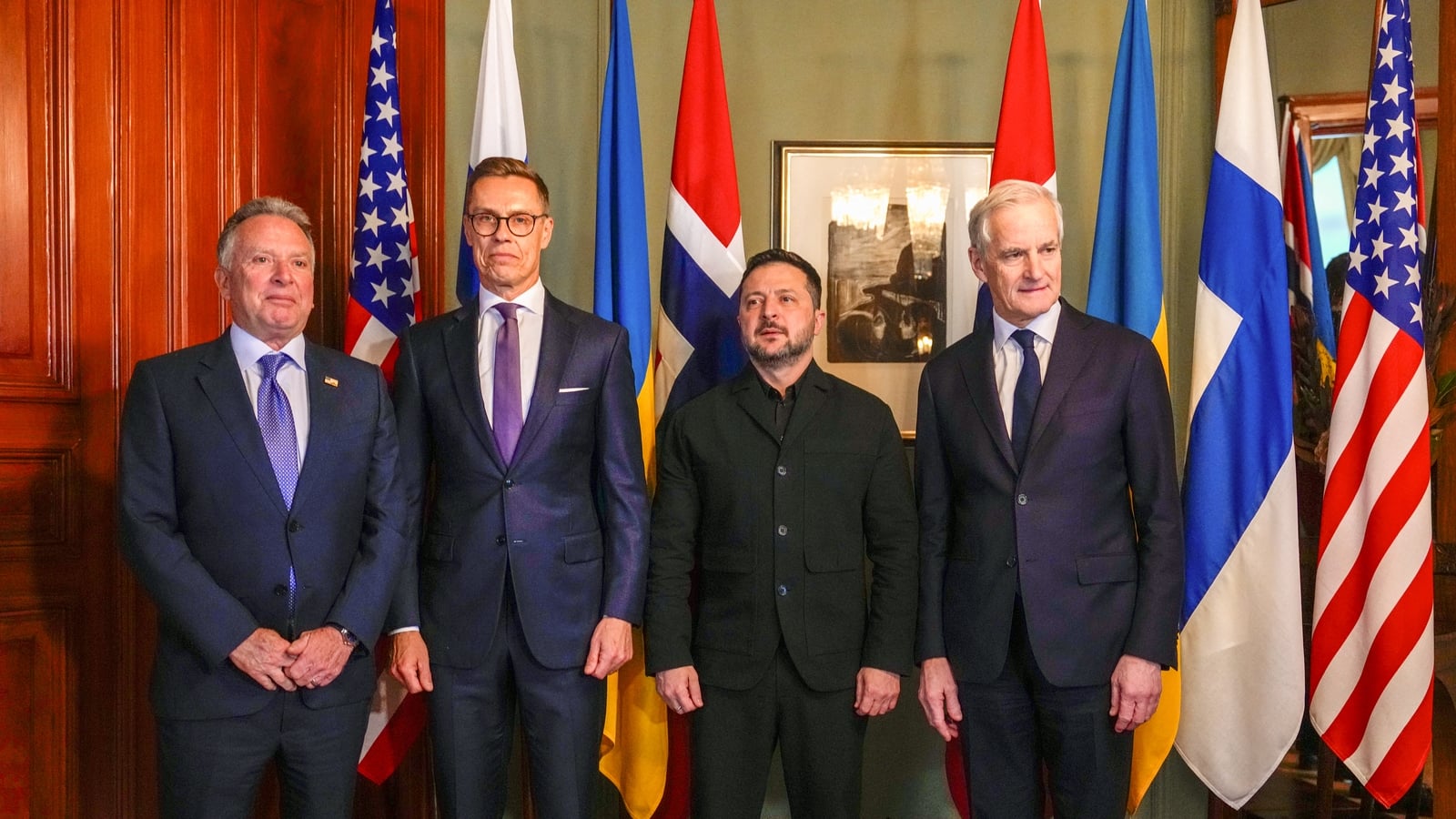
Finland’s president and Norway’s prime minister held a “frank and substantive” discussion with Russian President Vladimir Putin about efforts to end the war in Ukraine, the Nordic leaders said.
“The outcome of this war will have a direct impact on our and the broader European security. Ending the war requires direct discussions,” Finnish President Alexander Stubb said in a joint statement with Norwegian Prime Minister Jonas Gahr Støre.
Speaking to reporters in Helsinki, Mr Stubb said the idea for the call had originated during a meeting in Oslo on 20 October between Mr Støre, Mr Stubb and Ukraine’s President Volodymyr Zelensky as well as US envoy Steve Witkoff.
US President Donald Trump’s son-in-law Jared Kushner also took part in the meeting remotely.
After the Oslo talks, Mr Witkoff travelled to St Petersburg to meet Mr Putin.
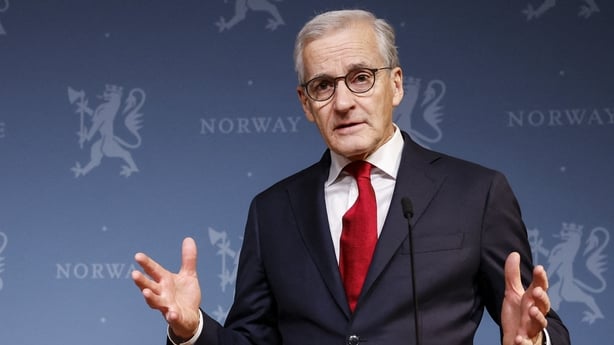
Jonas Gahr Støre said in the call ‘we stressed the importance of de-escalation’
Speaking to reporters in Helsinki, where Nordic leaders are meeting, Mr Støre said the 90-minute call highlighted “big differences in views” on Ukraine.
According to a statement from the Kremlin, Mr Putin had during the call stressed that it was the EU’s and NATO’s “confrontational policy” that was “leading to a protraction of hostilities”.
The Kremlin said the three leaders “agreed to continue maintaining direct contact by telephone”.
Mr Stubb and Mr Støre initiated the call to discuss “efforts to end the war and promote peace and stability in Europe”, their statement said.
Mr Støre said: “The war comes with enormous human and material costs.
“The suffering and destruction will impact generations.
“In the call we stressed the importance of de-escalation.”
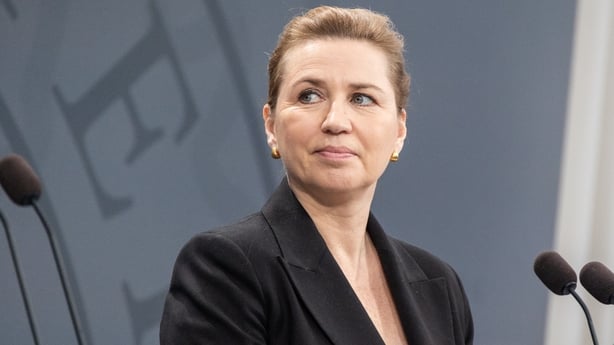
The Danish prime minister said Finland and Norway’s leaders had gone ‘solo’
Shortly after the announcement of the call, Ukraine said Mr Zelensky had spoken to the Nordic leaders about the conversation with Mr Putin.
Mr Stubb confirmed the talks with Mr Zelensky in a social media post and commented: “Finland and Norway will continue to support Ukraine, and the efforts to find a just and lasting peace.”
The leaders stressed they were representing their own countries and had not spoken on behalf of Europe, but Danish Prime Minister Mette Frederiksen bemoaned that they had gone “solo”.
“I’m very sceptical about this Norwegian and Finnish initiative. It hasn’t been coordinated with any of the rest of us,” she told reporters while attending the meeting of Nordics leaders, that included Mr Støre and Mr Stubb.
“I honestly don’t know what those two countries think they can achieve with this,” she said.
Mr Store rejected the criticism.
Speaking to reporters, he said: “In the times we live in, it cannot be that only the US administration has a channel to talk to the Russian leadership.
“European countries must be able to do that as well.”
US-Ukraine strains
We need your consent to load this rte-player contentWe use rte-player to manage extra content that can set cookies on your device and collect data about your activity. Please review their details and accept them to load the content.Manage Preferences
Relations between Ukraine and the United States have become strained again after Mr Trump this month suddenly announced a deal with Russia for diesel, as part of his efforts to lower oil prices sent soaring by his Iran war.
Ukraine reacted with dismay after Mr Trump also waived sanctions against Russia and appeared to again pivot to Mr Putin.
The Oslo meeting followed furious diplomatic efforts in Washington, Kyiv and Western capitals to calm the situation.
Norway and Finland, both NATO members, share borders with Russia and the statement emphasised that the countries are “firm supporters of Ukraine”.
Regional ceasefire
Meanwhile, Russia and Ukraine have begun a regional ceasefire to allow the start of a humanitarian effort in the Russian-occupied town of Oleshky, both sides have said.
The local truce, brokered by US first lady Melania Trump with the involvement of Pope Leo, is intended to allow aid into Oleshky and enable those who want to leave to do so.
Russia and Ukraine both said they were abiding by the local ceasefire, which went into force at 3am Ukrainian time (1am Irish time) as part of US efforts to end Russia’s war in Ukraine.
It is due to last until Sunday.
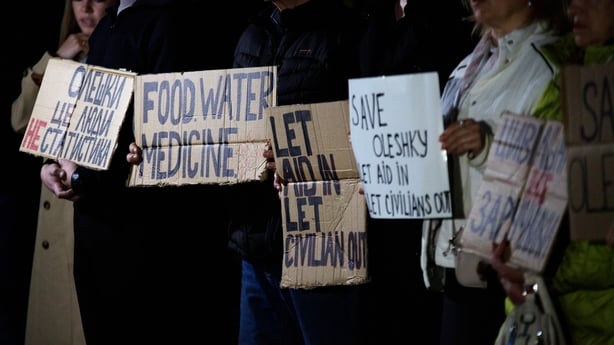
People in Kyiv hold placards with slogans during a rally in support of the residents of Oleshky
The head of President Zelenskiy’s ruling faction in parliament, David Arakhamia, called it the “biggest de-escalation since 2022”, while Foreign Minister Andrii Sybiha said it could be a confidence building measure for future agreements.
Ms Trump said on X that the truce been expanded beyond the town itself, “to provide safe passage for the humanitarian convoys”.
The ceasefire does not apply elsewhere, and Russian forces again struck the Ukrainian capital Kyiv with ballistic missiles overnight.
Local officials said the attacks killed at least one person.
In the Ukrainian-held city of Kherson, which lies across the Dnipro River from Oleshky and is regularly bombarded by Russian forces, locals said the day had been calm.
Ukraine’s human rights ombudsman, Dmytro Lubinets, said that by 5:30pm (3:30pm Irish time), no violations of the ceasefire had been reported by either side.
Oleshky lies on the eastern bank of the Dnipro, close to where it enters the Black Sea.
Russian troops seized it during the first days of their full-scale invasion of Ukraine in February 2022 and have controlled it ever since.
The town has suffered extensive damage and was badly flooded after the destruction of the huge upriver Kakhovka dam in 2023.
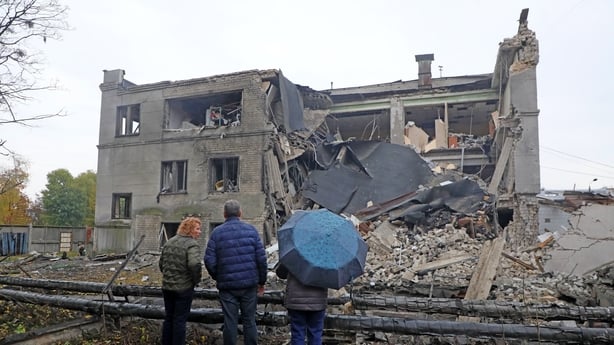
People face a building destroyed by a Russian ballistic missile strike in Kyiv
The United States has said only a few thousand remain in the town out of a pre-war population of 24,000.
Residents and officials have reported severe shortages of food, medicine and other basics, and Oleshky has been largely without running water, electricity, gas and central heating.
Residents have offered harrowing accounts of risking their lives travelling along mine-strewn roads just to get food and water, one of which they call the “road of death”.
Ukrainian and Russian officials have said humanitarian corridors will be established to allow aid in and residents out.
This is expected to involve demining roads and could take several days.
One resident who managed to flee Oleshky said many of those left behind were sick or elderly, and would find it hard to relocate.
Ukraine and Russia blame each other for the humanitarian crisis.
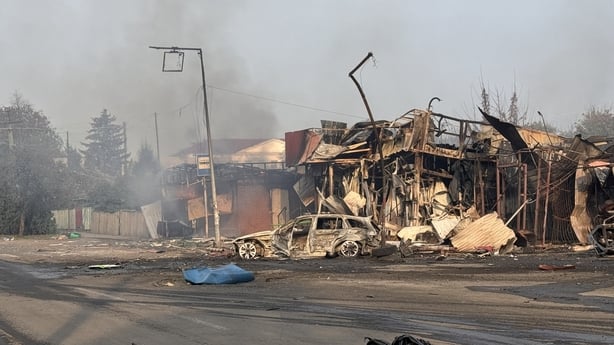
The aftermath of a Russian airstrike in Donetsk Oblast, Ukraine
White House envoys have talked to both sides in recent days as part of efforts to mediate an end to Europe’s deadliest conflict since World War II.
Mr Zelensky said last week that three-way talks would continue in Abu Dhabi in early November.
Russian battlefield gains have slowed this year, but it has demanded that Kyiv cede the remaining 20% of the Donetsk region in eastern Ukraine that it still controls before Russian forces stop fighting.
Russia’s overnight strikes damaged a university campus and Kyiv’s important southern bridge, in what Mr Zelensky described as”a serious escalation” against Ukrainian logistics.
A Ukrainian military source said Russia had hit the bridge with four Iskander ballistic missiles.
Mr Zelensky said energy facilities, logistics and infrastructure in 10 other regions had also been attacked overnight.
Moscow’s Defence Ministry said it had struck transport infrastructure in Kyiv, a logistics hub in the Kharkiv region, as well as industrial facilities and cargo vessels in attacks aimed at military targets.
In Russia, a drone attack killed one person in Bryansk, near the border with Ukraine, authorities said.
Officials said one person was killed and 30 injured in a strike on a bus in a Russian-held part of Ukraine’s Zaporizhzhia region.
Reuters could not immediately independently verify the reports.
Russia and Ukraine deny deliberately targeting civilians.