
Analysis: The existence of ancient sweathouses shows that Ireland’s new enthusiasm for saunas is not simply an imported wellness fashion
By Maria Loftus and Fiona Murphy, DCU
There are small, circular stone buildings to be found in fields overgrown by briars in the Irish hinterland whose original purpose has all but vanished from collective memory. Crossing the threshold into this dark space beyond the low entrances and thick, cold walls, you can imagine an alternate relationship between the body, the landscape and the communal practices through which people once cared for and healed one another.
Fires were lit inside these structures and rushes were scattered on the dirt floor. Once the stones were sufficiently heated and the embers cleared, people individually entered to sweat, seeking relief from the aches and ailments of lives shaped by physical hardship, damp weather and limited access to medical care. These were Ireland’s sweathouses, or tithe allais, part of a largely forgotten geography of vernacular healing, where care was fashioned from the materials available locally: stone, turf, rushes, water, heat and the accumulated knowledge of neighbours.
We need your consent to load this rte-player contentWe use rte-player to manage extra content that can set cookies on your device and collect data about your activity. Please review their details and accept them to load the content.Manage Preferences
From RTÉ Radio 1’s Today with David McCullagh, author and journalist Kathy Donaghy and author of Sweat House, The New and Ancient Irish Sauna Tradition Rosanna Cooney on the rise of Irish sauna culture
Journalist Rosanna Cooney unearths this tradition in her book Sweat House: The New and Ancient Irish Sauna Tradition through the structures and narratives that survive. Their origins remain uncertain and their remedies are somewhat refuted yet their existence negates the idea that Ireland’s enthusiasm for saunas is simply an imported wellness fashion. A practice can disappear then return generations later under a foreignised name, accompanied by a price unimaginable to those who depended upon its earlier forms.
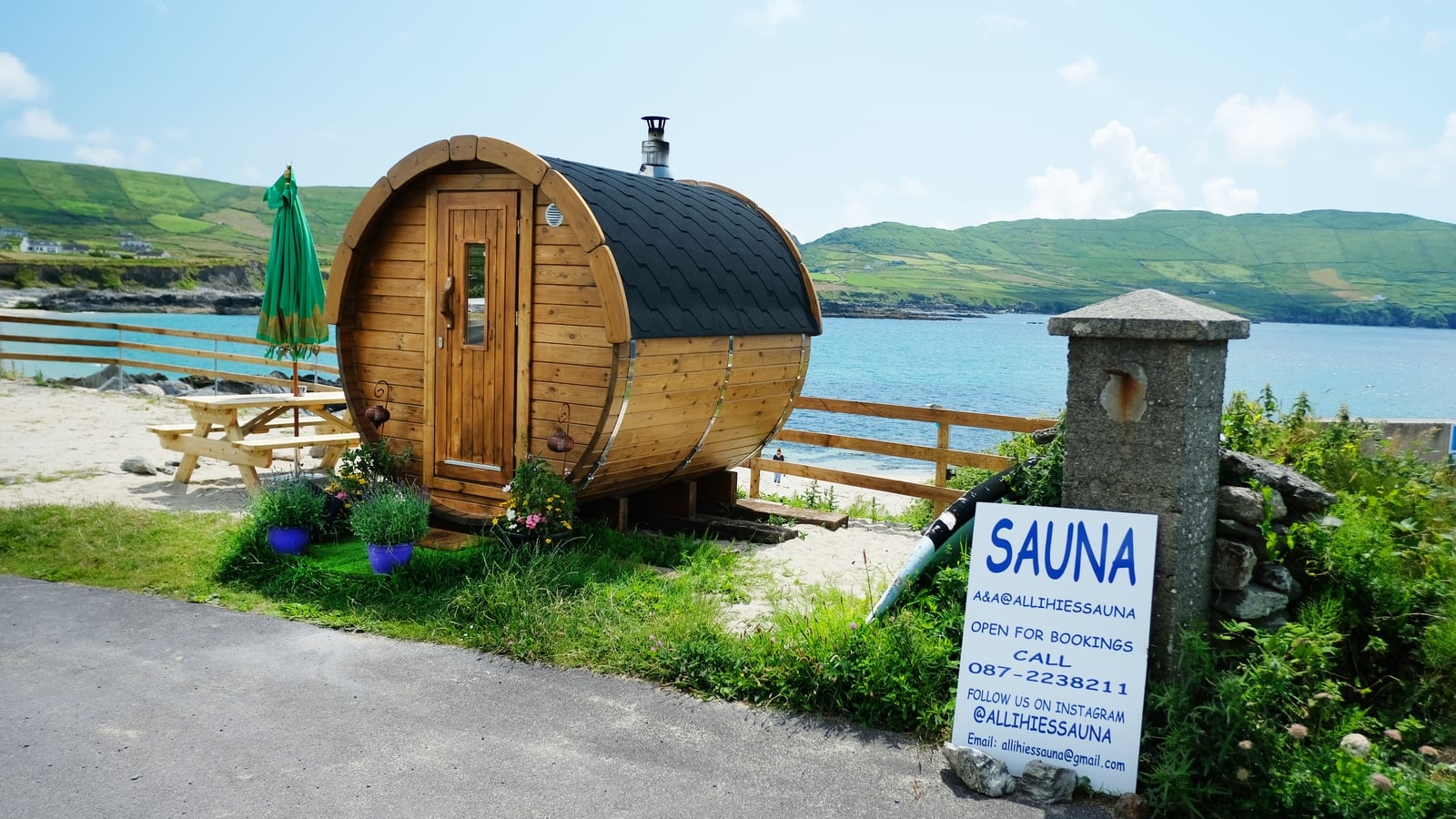
Today, wooden sauna structures can be found from beaches to industrial zones. In a society organised around individual wellbeing and time management, they offer people a space in which conversation or silence can unfold without anything productive resulting.
But the admission cost determines who can turn that temporary comfort into a practice. Costing anything from €15 to €25 a session, this represents a significant sum for people already stretching incomes across housing, food and heating. When the opportunity to rest and spend time with others is sold session by session, the people under greatest financial pressure can find themselves excluded from the very places that might offer some repair.
We need your consent to load this rte-player contentWe use rte-player to manage extra content that can set cookies on your device and collect data about your activity. Please review their details and accept them to load the content.Manage Preferences
From RTÉ Radio 1’s Morning Ireland, RTÉ Eastern Correspondent Samantha Libreri reports that Dún Laoghaire-Rathdown County Council is looking at a proposal to build a floating sauna
Ireland’s sauna boom raises a familiar question from debates about housing, leisure and public space: will we allow the market, yet again, decide who belongs or invest in places where fellowship is affordable? Recent research shows this inequality merits greater attention. An extensive study, led by psychologist Martha Newson involving nearly 2,000 participants, found commonalities between shared sauna rituals, social kinship and self-reported wellbeing. These findings do not establish causation but they argue that the socialisation aspect merits consideration alongside physiological benefits. Finnish research similarly describes public saunas as “third places”, where relationships develop beyond home and work through ordinary, recurring encounters.
Indeed, Finland offers many examples of how such encounters might be sustained. Helsinki’s Sompasauna is free and maintained through voluntary collective effort, making communal warmth a shared responsibility. In neighbouring Estonia, Anna Hints’s documentary Smoke Sauna Sisterhood follows women whose gatherings create room for accounts of grief, intimacy, violence and survival. Across these different settings, heat becomes part of an environment in which people can speak, listen and gradually come to know one another, allowing the familiarity of a shared practice to make difficult conversations possible.
Trailer for Smoke Sauna Sisterhood
The sociologist Eric Klinenberg uses the term “social infrastructure” to describe places supporting everyday relationships, such as libraries, parks, swimming pools and community centres. A community sauna could join this fold, with affordability, disability access and cultural difference informing its design from the beginning. London’s not-for-profit Community Sauna Baths offers one such model, combining paid sessions with concessions and community programmes.
In Dublin’s Bluebell, a sauna opened at the Bungalow Wellness Sanctuary in July 2025 following a donation from Fad Saoil. We are working with Bluebell Community Development Project to explore its place within neighbourhood care, with residents and community workers shaping who it serves and how access works. This research phase is funded by Avolon Aerospace Leasing Limited. A future pilot could draw on this recent UK template, supporting affordable provision and assessing participation, social connection, costs and sustainability.
We need your consent to load this rte-player contentWe use rte-player to manage extra content that can set cookies on your device and collect data about your activity. Please review their details and accept them to load the content.Manage Preferences
From RTÉ Radio 1’s Today with David McCullagh, is it fair to charge sauna owners an annual fee to operate at beaches?
Across Ireland, local authorities, leisure centres and not for profit groups could utilise existing facilities to combine affordable access with subsidised sessions. Users would help determine opening hours, arrangements around gender and modesty and the practical conditions that make a welcome meaningful.
The pressing question here is what we choose to hold in common in a world in the throes of polycrisis. Libraries demonstrate a commitment to knowledge beyond individual purchasing power; parks preserve places where gathering is not dependent upon spending. Community saunas could extend that imagination to warmth, healing and companionship, facilitating the return of familiar faces each week so that the conversation can continue and deepen.
The surviving sweathouses recall a history in which recovery was woven into local primary materials and shared knowledge. What we build now and who can enter will determine the inheritance we leave: places where people might carve out a little time for themselves and one another, with the door open to those who have the least to spend.
Follow RTÉ Brainstorm on WhatsApp and Instagram for more stories and updates
Dr Maria Loftus is an assistant professor in French language and French literature and cinema in the School of Applied Language and Intercultural Studies at DCU. She is a Research Ireland awardee. Dr Fiona Murphy is an anthropologist based in the School of Applied Language and Intercultural Studies at DCU. She is a Research Ireland awardee.
The views expressed here are those of the author and do not represent or reflect the views of RTÉ