
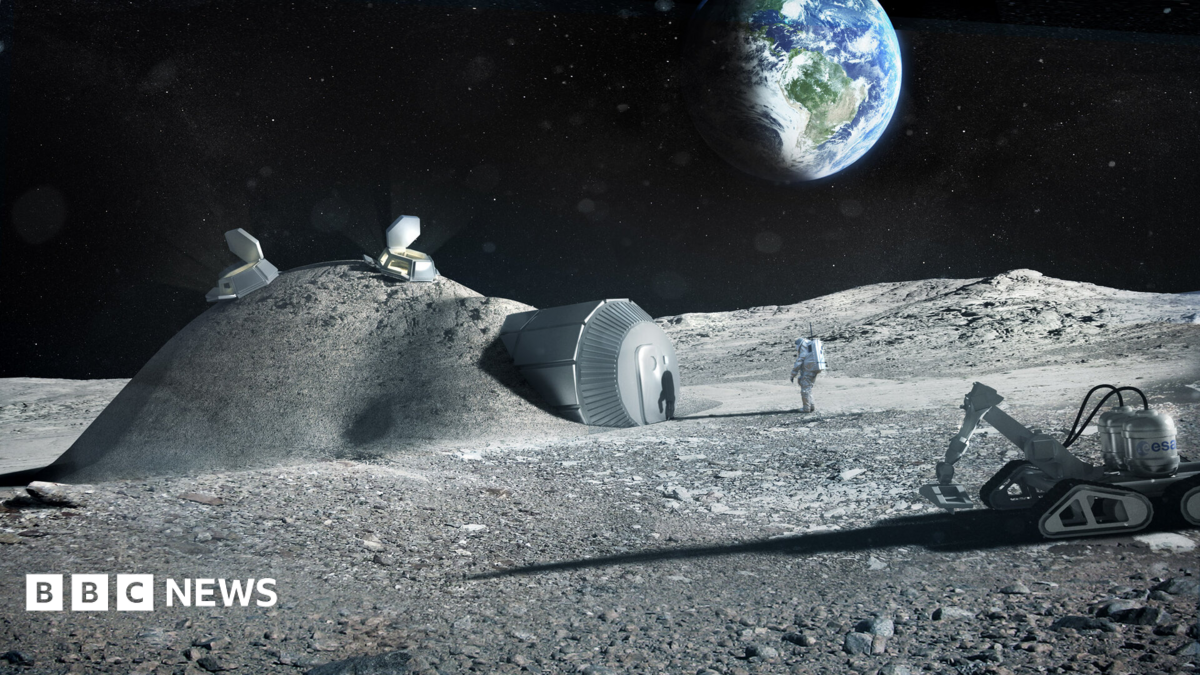
The firm said it was able to use its expertise in ceramic processing to turn the loose powdery material that blankets the lunar surface into a more solid material.
The process, known as sintering, is commonly used in the manufacture of bricks and many ceramic products.
“Our city is all about ceramics and its great history… but we also need to look at the future of ceramics,” said Kinsella.
“All of this work is about ceramics and it’s going to have such an impact on our living in every way – in energy, in how we live, in batteries, how we travel, and therefore, this is part of that new dynamic in the future of ceramics.”
Kinsella said he believed there would be a “colony” on the Moon within his lifetime, even if it was just a few people.
“I think we will have a small colony of people who can reside on the Moon outside a spaceship for longer than a few weeks,” he added.
“In an era defined by renewed momentum in space exploration, innovations like this will shape how, and where, humans live in the future,” Richard Goodhead, from the firm, added.
“And in turning lunar dust into the building blocks of possibility, Lucideon is helping to lay the foundations for humanity’s next giant leap.”