
NASA’s Artemis III mission is scheduled for 2027 as a 14-day orbital demonstration flight in low Earth orbit, aimed at practising rendezvous and docking operations between the Orion crew spacecraft and commercial lunar landers ahead of future Moon landings.
According to the European Space Agency (ESA), NASA announced in early 2026 that Artemis III—previously expected to be the first lunar landing of the Artemis programme—would instead focus on validating key procedures and technologies in Earth orbit. The mission is intended to rehearse docking operations considered central to later crewed lunar surface missions.
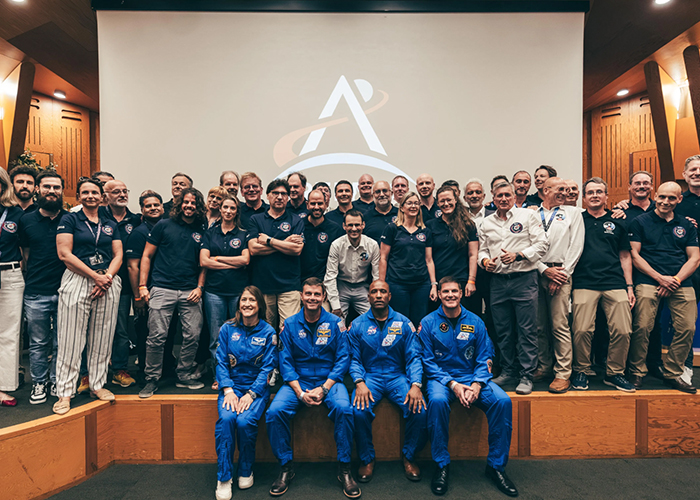
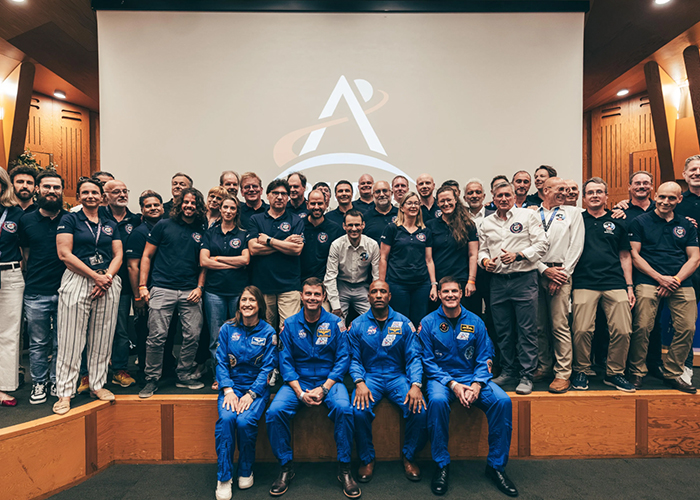
The four-person crew listed for Artemis III comprises NASA astronauts Randy Bresnik, Frank Rubio and Andre Douglas, alongside ESA astronaut Luca Parmitano.
ESA said the mission will involve three launches and two docking demonstrations. Blue Origin’s Blue Moon lander test article is slated to launch first, followed by Orion with its crew aboard NASA’s Space Launch System rocket from Launch Complex 39B at Kennedy Space Center in Florida. Orion is expected to rendezvous and dock with the Blue Moon test article, which the crew will enter.
A SpaceX Starship lander test article is then expected to launch, after which Orion will rendezvous for a second series of docking demonstrations. ESA said the crew will not enter the Starship test article.
ESA said the docking demonstrations are intended to help teams assess how Orion can operate with the landers that are expected to carry astronauts to the lunar surface in later missions, including how hardware and software systems work together and how the combined vehicles behave in space.
Europe’s role in Artemis III includes providing the third European Service Module, which powers Orion, and Parmitano serving as the mission’s pilot. ESA said Parmitano will take a leading role in rendezvous and docking operations, including manual control of the module’s engines during complex phases.
ESA said the European Service Module provides consumables and environmental control functions for the crew, with solar wings generating power and 33 engines providing propulsion for manoeuvring. At the end of the mission, the service module is expected to separate from the crew module and burn up in Earth’s atmosphere after Orion is on course for splashdown.
Parmitano is currently training with crewmates at NASA’s Johnson Space Center in Houston, while ESA said integration work has already brought together the European Service Module and the Orion crew module ahead of further testing and installation of the spacecraft’s solar wings.
ESA compared the mission’s role as a technology and operations test in Earth orbit to Apollo 9’s role ahead of Apollo 11.