
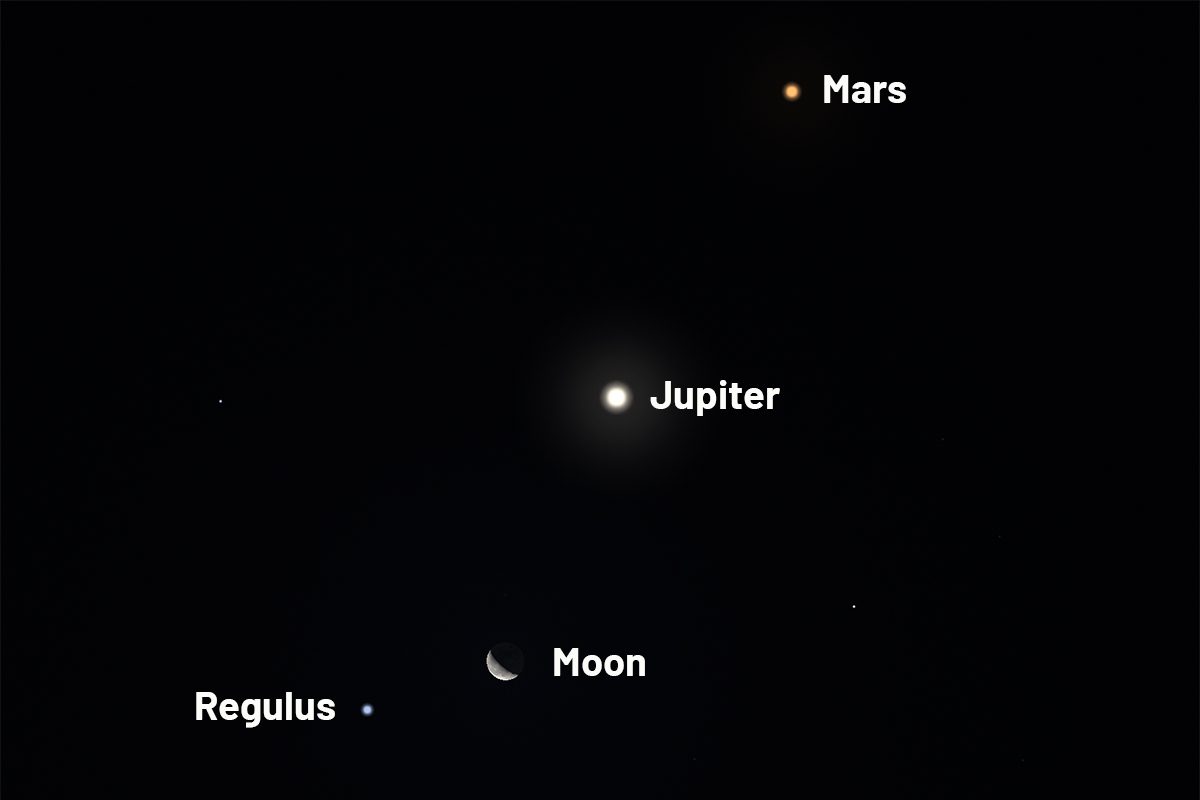
Mars and Jupiter are currently visible in the southeast before sunrise, looking like two beautiful stars shining in the morning sky.
As November rolls on, the mornings will get darker and the planets will get closer together, meaning this is a beautiful naked-eye sight that you shouldn’t miss.
 Credit: Shimpei Yamashita / Getty Images
Mars and Jupiter are currently very easy to see and, with sunrise now getting later and later, it’s not too much of an early rise to see the planet pair in the sky before you start your day.
This week on 3 and 4 November, the crescent Moon joins the scene, forming a line in the sky that includes Mars, Jupiter and Regulus, the brightest star in the constellation Leo.
Here’s all you need to know to see the crescent Moon meet Mars and Jupiter this week.
Tuesday 3 November
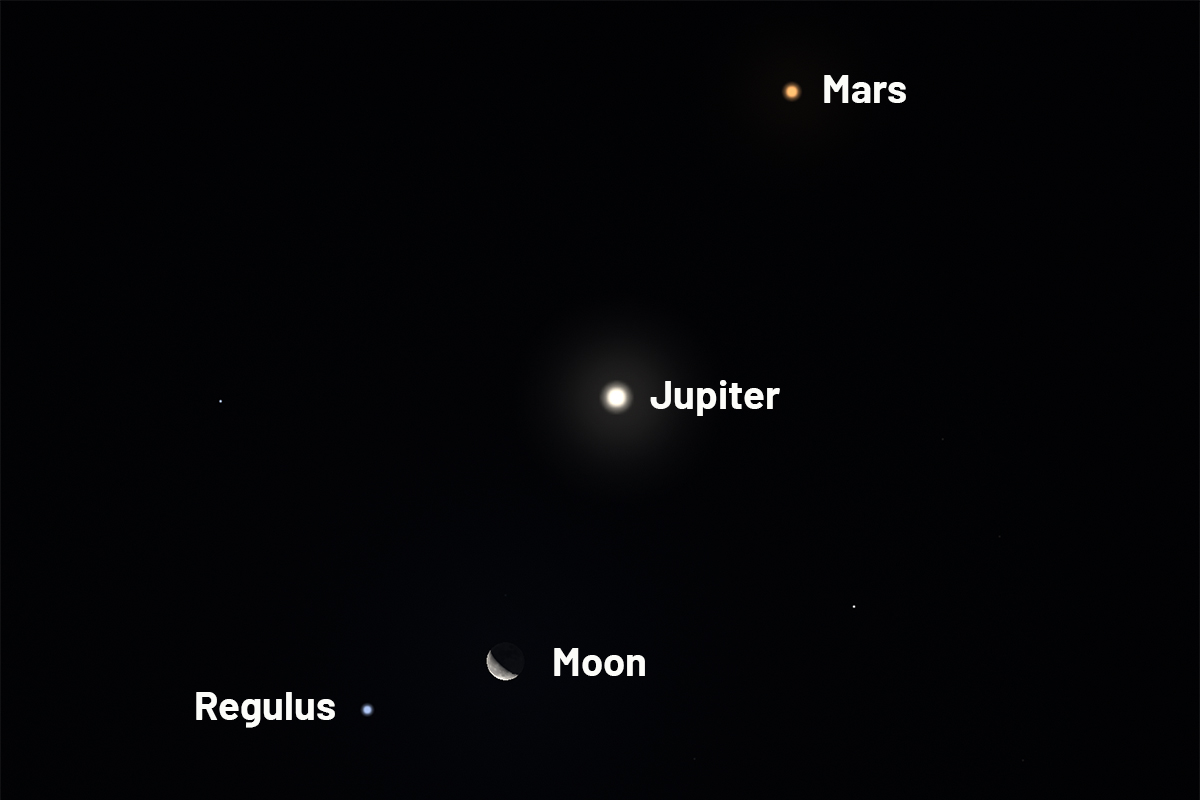 Chart showing the Moon with Mars, Jupiter and Regulus, 3 November 2026. Credit: Stellarium
Look to the southeast before sunrise
In order of lowest first, you’ll see Regulus, the crescent Moon, bright Jupiter and Mars
The four-body alignment will climb higher towards the south before being swallowed by the morning twilight
Wednesday 4 November
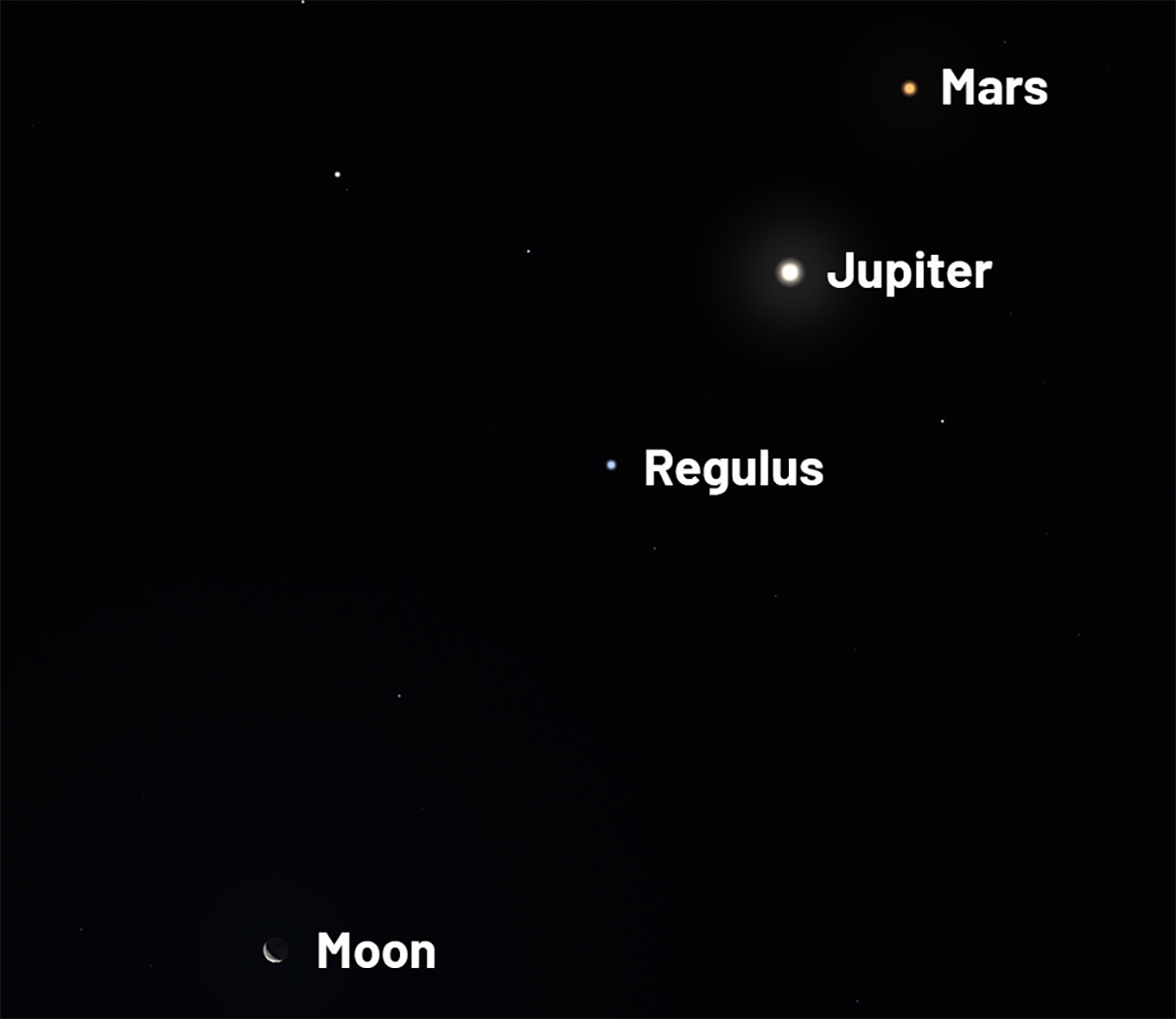 Chart showing the Moon with Mars, Jupiter and Regulus, 4 November 2026. Credit: Stellarium
Look to the southeast before sunrise
Regulus, Jupiter and Mars form a neat trio that resembles the three-star formation of Orion’s Belt
The Moon is much lower now than it was the previous morning
If you observe or photograph Mars, Jupiter and the Moon this week, get in touch by emailing contactus@skyatnightmagazine.com