
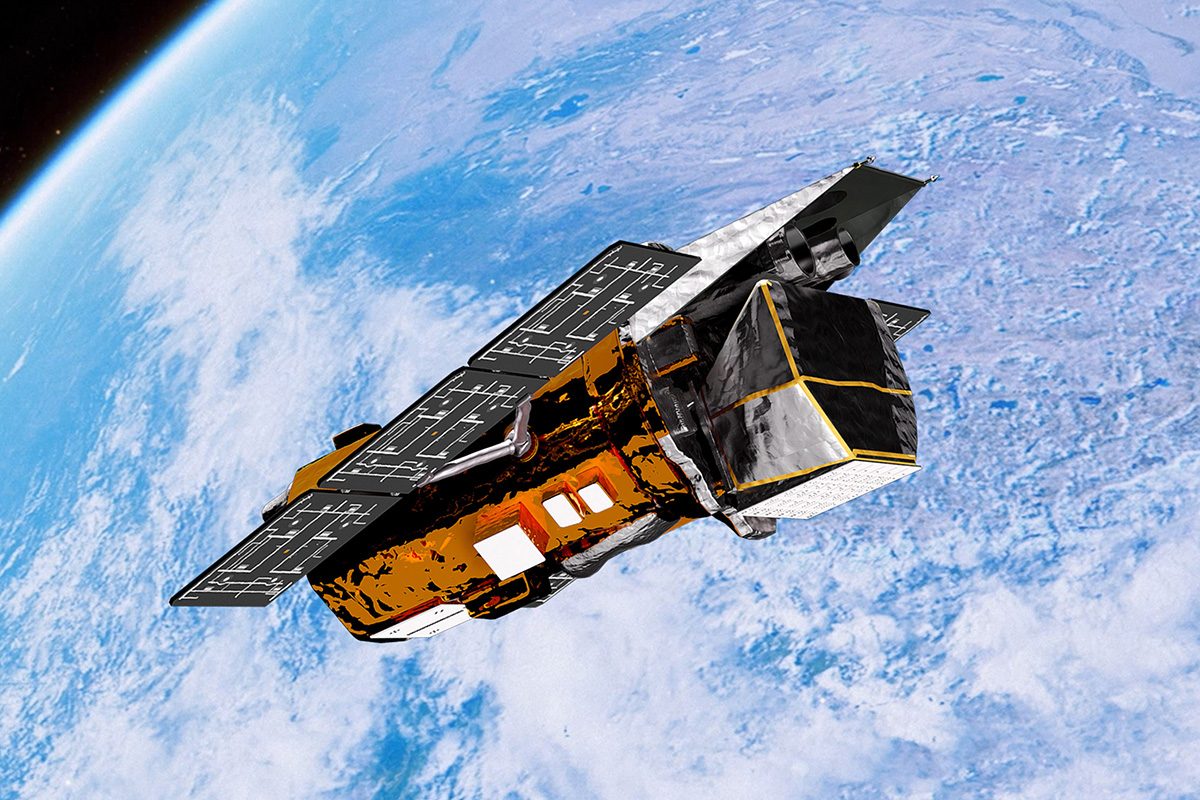
A NASA space telescope that was designed to explore cosmic explosions in deep space has crashed back to Earth, after a failed rescue attempt.
The US space agency says its Neil Gehrels Swift Observatory re-entered Earth’s atmosphere on Wednesday 4 November 2026, nearly 22 years after launch.
The spacecraft re-entered Earth’s atmosphere at 07:39 EST (12:39 UTC), breaking up over the North Sumatra region of Indonesia.
NASA says most of the space observatory will have burned up as it slammed into our planet’s thick atmosphere, but some parts may have survived re-entry.
More amazing Chandra observations
 Credit: Dennis Bodewits, Auburn University
The mission to explore explosions in space
Launched on November 20, 2004, Swift was placed into orbit around Earth and was originally designed as a short-term, two-year mission.
Its primary purpose was to solve one of astronomy’s greatest mysteries: gamma-ray bursts (GRBs).
These strong flashes are among the most powerful explosions in the Universe and produce heavy bursts of the most energetic form of light, known as gamma rays.
They’re thought to be caused by either the deaths of giant stars or the collisions of neutron stars, but they vanish almost as quickly as they appear, often lasting only a few seconds.
However, scientists have discovered much longer bursts, including an incredible seven-hour gamma ray burst.
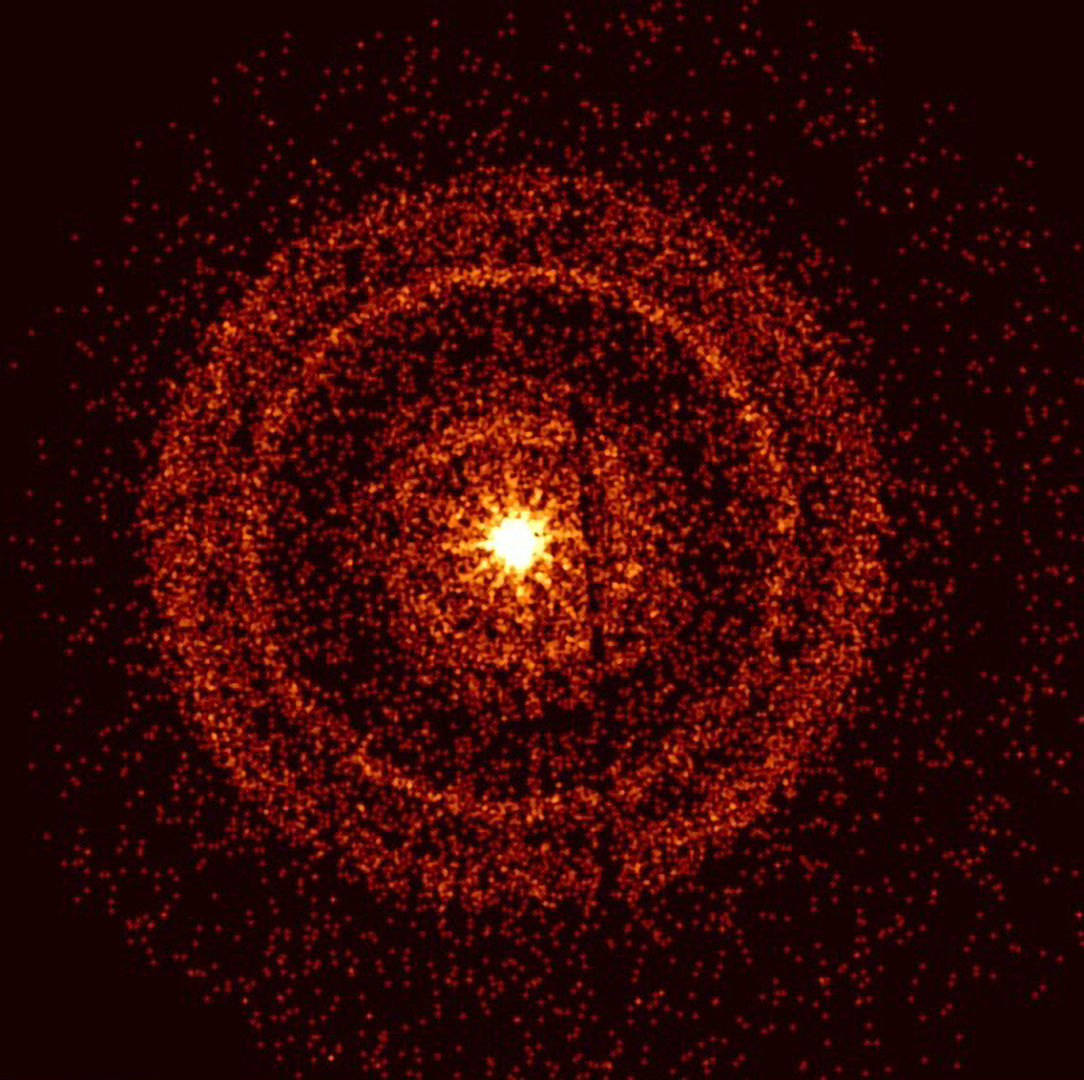 The afterglow of Gamma Ray Burst 221009A, as seen by the Neil Gehrels Swift Observatory. Credit: NASA/Swift/A. Beardmore (University of Leicester)
The Neil Gehrels Swift Observatory was equipped with three telescopes spanning different wavelengths of light.
It could automatically detect a gamma-ray burst and turn to observe it, alerting scientists and ground-based telescopes around the globe to follow up with more observations.
The space telescope’s two-year mission turned into a nearly 22-year marathon.
Over two decades, Swift tracked gamma ray bursts but also observed comets and asteroids in our own Solar System, supermassive black holes in distant galaxies and X-ray flares from active stars.
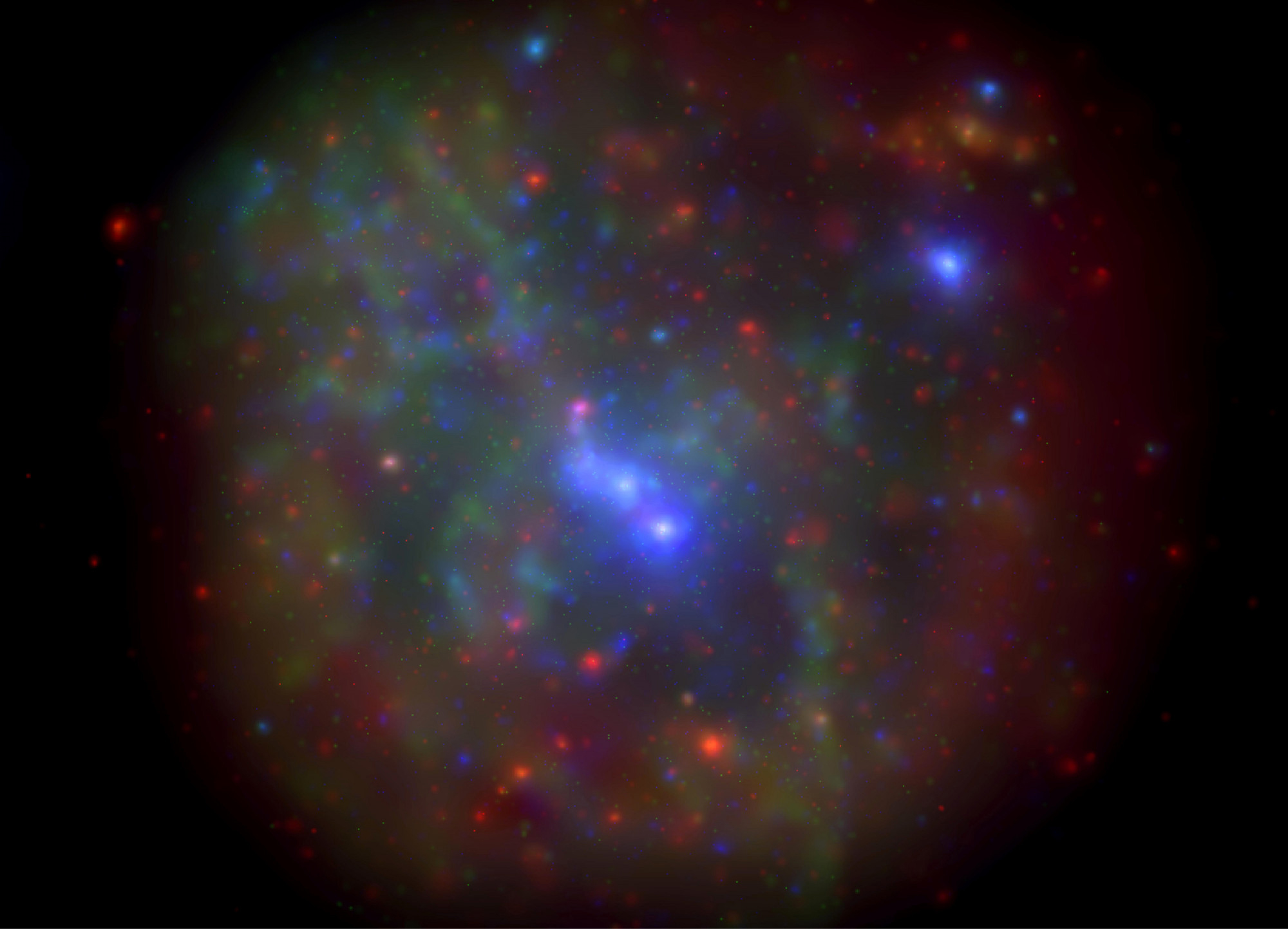 An image of our Galaxy’s core with black hole Sagittarius A* at its centre, made from X-ray observations by the Swift Observatory from 2006-13. Credit: NASA/Swift/N. Degenaar
The mission to rescue the Swift telescope
Satellites in low earth orbit travel through the outer layers of Earth’s atmosphere.
As a result, the constant drag of our planet’s thick atmosphere slowly pulls their orbit lower and lower. This is known as ‘orbital decay’.
Swift’s orbit eventually decayed past the point of recovery, prompting NASA to conclude its science operations.
Earlier in 2026, NASA attempted a rescue mission whereby a spacecraft was sent to rendezvous with Swift and boost it to a safer, higher orbit.
Technical issues prevented the spacecraft from executing the manoeuvre, leaving gravity to take its course.
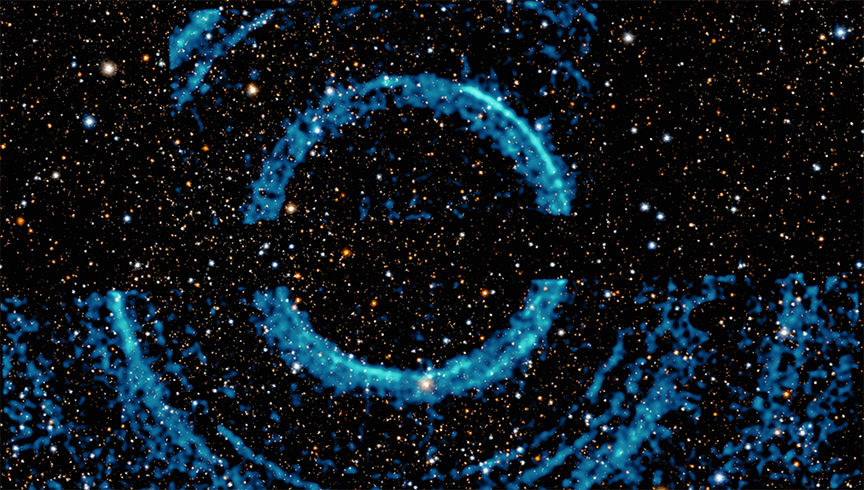 X-ray ‘light echoes’ around the black hole at V404 Cygni, by Chandra X-ray Observatory, Pan-STARRS, Neil Gehrels Swift Observatory. Credit: X-ray: NASA/CXC/U.Wisc-Madison/S. Heinz et al.; Optical/IR: Pan-STARRS
A lasting legacy
“Swift delivered an incredible, lasting return on investment for the nation, designed for a two-year primary mission but productive for more than 10 times as long,” says Shawn Domagal-Goldman, director, Astrophysics Division at NASA Headquarters in Washington.
“In that time, Swift played a major role in advancing our understanding of the changing universe and was part of a revolution in astrophysics that showed how critical rapid-response observations are to the entire community.
“To support rapid response to cosmic events in a post-Swift world, we’re exploring our ability to use and augment NASA’s fleet of existing space telescopes, from fast-to-orbit commercial capabilities to efficient, innovative new missions.
“And Swift leaves us with an extraordinary archive of multiwavelength observations that will fuel new discoveries for decades more.”