
Photo credit: marchello74 via Shutterstock
A version of this story was published in the AI-Energy Nexus newsletter on October 28, 2026. Subscribe to get pieces like this — plus expert analysis, original reporting, and curated resources — in your inbox every Wednesday.
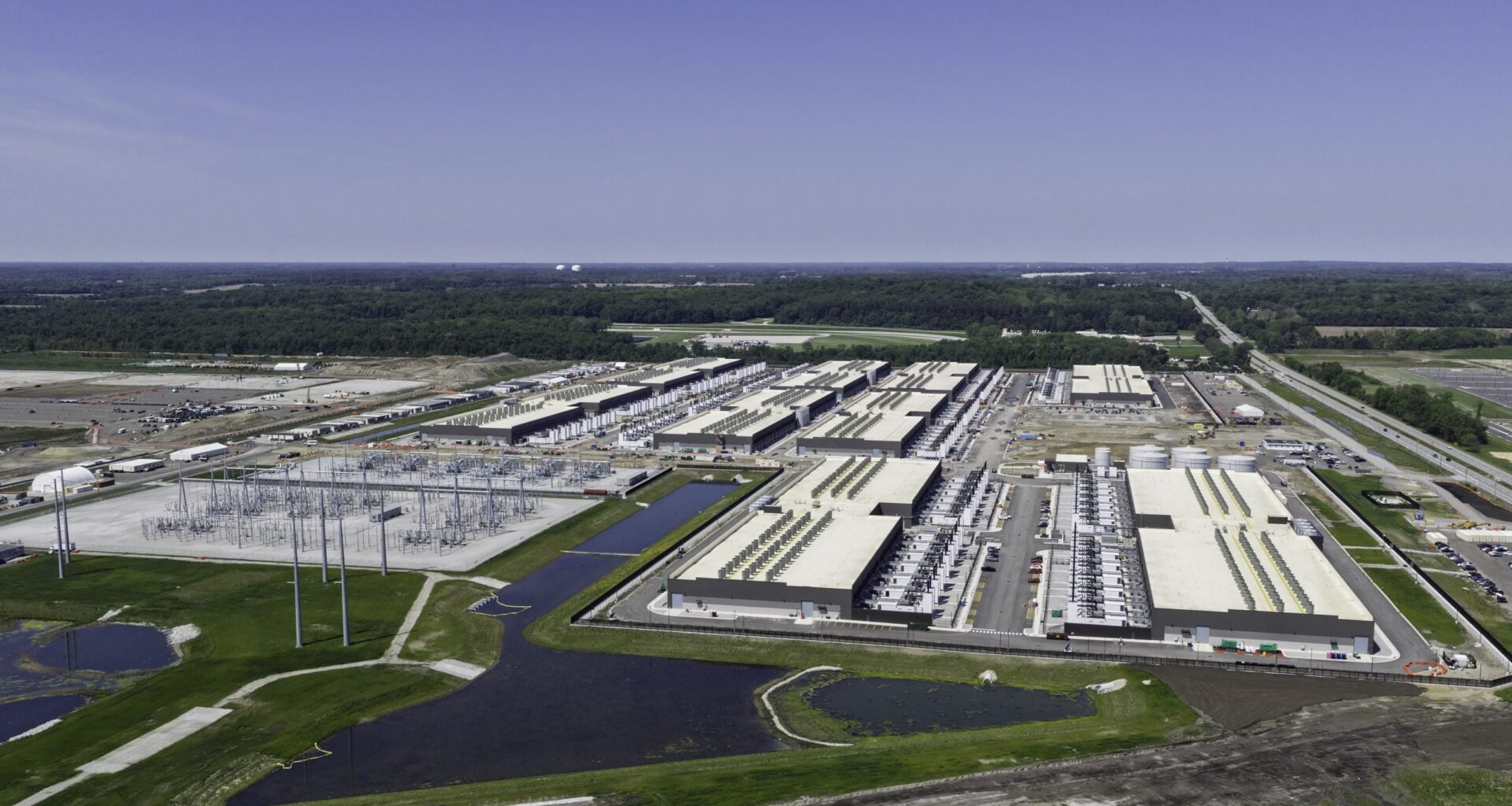
Cracks are emerging in the rush to build out on-site gas power for massive data centers. Literally.
We’ve been hearing stories about large power providers and EPCs fielding a growing volume of calls from data center developers that are blowing gas-fired turbines, and need help fixing mechanical failures because they lack their own operations and maintenance expertise.
Meanwhile, projects that lean into behind-the-meter gas plants are vulnerable to fuel price shocks and pipeline constraints — risks that Anthropic detailed in its highly anticipated IPO filing this week. The company is shifting toward building its own data centers, including a $50 billion investment in Texas and New York, after years of leasing compute from hyperscalers and neoclouds. That means Anthropic is competing for firm gas capacity and transported fuel, which is expected to further drive up prices at a time when U.S. gas exports are already in high demand due to President Donald Trump’s war with Iran and the bottlenecks in the Strait of Hormuz.
The company only briefly mentioned clean energy like solar, wind, battery storage, nuclear, and geothermal, stating that it “may not be available in the quantities or on the timelines we require, or may be available only at higher cost.”
Despite the red flags, the race to build onsite gas shows no signs of slowing down. Cleanview this month estimated there are 110 gigawatts of onsite gas projects underway, up from 20 GWs last summer. Hyperscalers want to get data centers online as quickly as possible to start cashing in on their trillion-dollar infrastructure investment, and yearslong delays to hook up to the grid aren’t cutting it. That means building gigawatts of onsite power with even higher levels of reliability than a typical power plant, because data centers operate 24/7.
So far this year, there’s been several reports of data centers’ onsite power equipment malfunctioning. Gas turbines cracked at small projects in the U.K. and at xAI’s much larger Colossus campus in Memphis, Tenn., Bloomberg reported. xAI deployed Tesla batteries to absorb large power swings. The Stargate project in Abilene, Texas, developed by Crusoe, has also run into technical problems with backup gas turbines and cooling equipment, The Information reported. A Vantage VA2 data center in Loudon County, Va. had a “critical power failure” this summer at its onsite gas turbine plant, and had to switch to backup diesel generators for nearly 24 hours, WUSA9 reported. Locals complained about noise and air pollution.
These kinds of issues often stem from the unique power demands of AI workloads, which can trigger megawatt-level fluctuations within milliseconds that stress equipment, according to industry research and interviews with power developers. To smooth out those spikes and secure enough electricity, developers are increasingly combining on-site gas and storage — either with limited or no grid connections — as well as adding UPS systems inside the data center that protect IT hardware from voltage swings.
Harmonizing all those complex systems requires a level of experience few project developers have, not to mention dedicated O&M teams that can quickly solve equipment failures once a site is up and running.
“Are there enough electrical contractors and HVAC technicians to build these campuses? That’s a big challenge,” Jon Parella, CEO and co-founder of TerraFlow Energy, which makes long-duration flow batteries for the power grid, told Latitude Media. “Then you need mechanics who know how to fix and maintain gas engines, and service them on an annual basis.”
A pipeline crowded with ‘trash’
Sheldon Kimber, CEO and founder of Intersect, a power developer acquired by Google in late 2025, told Latitude Media it’s “absolutely absurd” how many inexperienced teams are getting into the game and that the pipeline is crowded “largely with trash.” There aren’t many companies that can deliver BTM power plants at gigawatt scale, he said.
“I get emails all day from people who are like, ‘I’ve got this patch of dirt in Texas with gas, and I’ve had good conversations with folks who have gas turbines. You’re with Google, do you want the data center?’ Congratulations. That’s like half of Texas,” Kimber said.
He said some of these teams are showing up at town meetings with a data center pitch, which hurts companies like Intersect that’s built behind-the-meter renewable plus gas plants and negotiated community benefits for a decade.
To make projects more seamless, Google and Intersect are integrating data centers and power plant designs that reflect the tech giant’s bespoke AI models and IT equipment. That way, the facility can be more energy efficient, reliable, and cost less money, Kimber said. The companies have so far announced two joint projects in Texas powered largely by solar, wind, batteries, and some gas backup, but didn’t disclose their size.
SpaceX, which acquired xAI this year, is similarly considering more vertical integration, although Elon Musk pitched it as a speed-to-power play rather than solving equipment glitches at data centers. During a third-quarter earnings call, Musk said he expects SpaceX to add at least 10 GW of compute in 2027, supported in part by its own in-house gas turbine blade and vane casting. That could help shore up its turbine supply 12 to 18 months faster than competitors, he said.
“We’re looking at many different sources of power, not just gas turbines. We obviously want to use solar, wind, and every other source of power that we can obtain,” Musk said, adding that the company also sees an opportunity in modular inference compute — or much smaller data centers built in a factory and distributed globally.