
As Saoirse Ronan aimed to make her directorial debut, the actress contacted a fellow Irish woman whose movie had made an impression on her.
Clare Dunne was intrigued to receive the four-time Oscar-nominated Ronan’s first screenplay — and was moved to learn that she was approached because of a film Dunne had made years before.
During a crossroads in her own acting career — and on learning that a friend with children was facing eviction from her rented home — Dunne wrote and starred in Herself, a 2020 film that proved to be a turning point. In it, she plays Sandra, a mother trying to escape an abusive partner, who leans into the idea of self-building an affordable home.
Years later, Saoirse Ronan — now making her own foray into writing — reached out.
She was looking to cast Dunne in her first short film, Paper Plane, about a young girl who stages a silent protest against her troubled home life.
“I got an email with a script and a letter attached,” says Dunne. “She wrote a really lovely note to me explaining the story, the script, and how she’d always hoped that I would play the role of Mam in it.
I was absolutely delighted. I’d never even spoken to her before, and I was really, really touched. She said it was because of my own film Herself. My heart burst because she even watched it and had a real take from it. I felt very honoured and very lucky.
It helped, says Dunne — who has always had a keen eye for a good screenplay — that Ronan’s debut made a strong impression.
“Twenty years of experience in the business was clear to me because her writing and her vision are really clear and succinct and powerful. I think when somebody has been on a set that much since they were younger, there’s a purity of heart there because she started in it all when she was a child, and I think that’s still there. You can feel it, and she clearly wanted to just express something in a piece of art, and her art is film.”
Ronan’s highly-anticipated short film Paper Plane will have its first Irish screening as part of the shorts programme at this year’s Cork International Film Festival. It’s one of two movies starring Dunne — who has just wrapped filming on a third series of RTÉ crime drama Kin — coming to CIFF this year.
The Dubliner also stars in feature-length film The Education of Jane Cumming, among a cast that includes Cork-born acting legend Fiona Shaw.
The film is set in the 1800s, and centres on a student who accuses her two female teachers of having an affair.
The film is based on a true story, with Dunne playing Marianne Woods, one of the two women facing accusations. They do so after setting up a boarding school aiming to educate and inform girls about science, maths, and other subjects that were dismissed as irrelevant to women at the time.
“As usual with me, it’s if the writing is good, and the writing was very good. I was like: ‘Wow, that’s a great script’,” says Dunne of the period drama.
I found it a really interesting exploration, and I just thought the heart of it was saying something so pure, actually. It was such an interesting thing that it was about educating young girls and this idealism of these women trying to educate women in a time where usually they would just get married off.
The Education of Jane Cumming is based on US historian Lillian Faderman’s book Scotch Verdict.
Faderman’s books on lesbian and LGBT+ history have earned praise and awards.
“I read the book that Sophie [director and co-writer Sophie Heldman] and Flora [co-writer and actor Flora Nicholson] worked from mostly, which was the book that Lillian wrote about the court cases,” says Dunne.
“It has excerpts of the court cases, the most important ones, and that was really interesting. I mean, apart from seeing how they talk about women in those days — it was kind of mad reading that — but also just seeing people’s actual testimonies, and then how people speak of other people. I found that really interesting.”
Her hope is that audiences will connect with the drama.
“I think in Ireland we probably have a lot of resonance with feelings of being repressed by the church and also the fact that homosexuality was illegal to a certain point, not so far [in our] distant history in Ireland.”
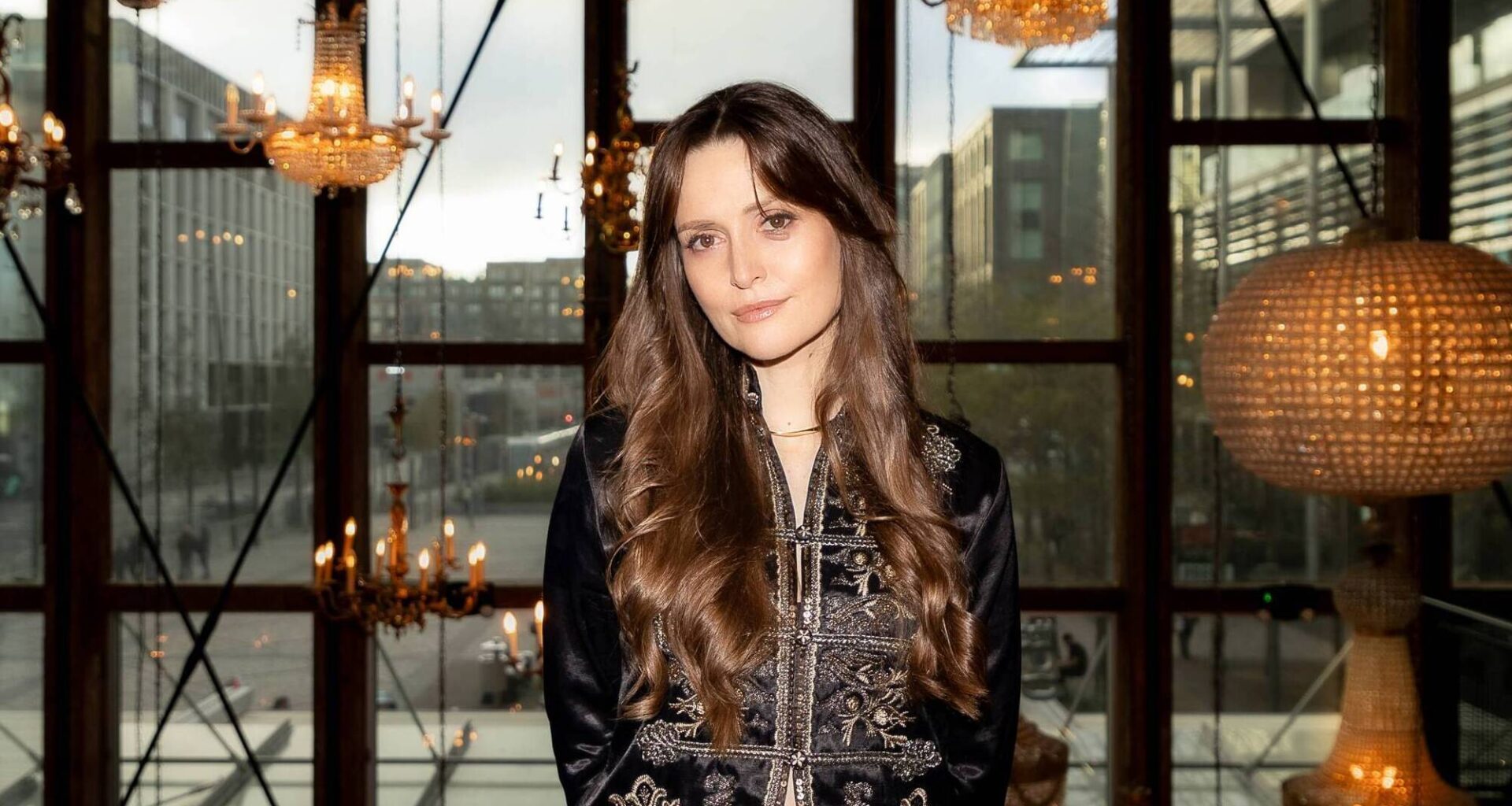
 Clare Dunne: ‘When people love a character and love a series, there is a little bit of pressure when you’re coming back’
From Dublin, Dunne had already built a strong career in theatre in Ireland and the UK when she wrote the screenplay that was to change her life. She started writing Herself while experiencing her first pilot season in the US. Pilot season involves actors taking part in an intensive round of auditions for several potential new shows being put forward by TV networks and production studios.
“It was my first time experiencing that. It was at a time where they were a little bit harsher on women about looks, so I had to do a lot of covering up my birthmark [the actress has a birthmark under her left eye].” While going through the intense audition process, she learned that her friend — a mum of three kids — had been given a month’s notice to leave her accommodation.
“It was happening to a lot of people and still happens to people. This was in 2014, and if there was any house available to rent that was available on the HAP scheme, there would be a queue all the way around the block.”
On googling the words “self build Ireland” and adding the word “cheap” she came across Dominic Stevens, a man who had devised a plan to self-build homes at a low cost.
It inspired Dunne to write and star in the acclaimed drama, about a mother who attempts to build her own home to escape an abusive relationship.
Throughout her busy acting career, Dunne has continued her passion for screenwriting and has completed a screenplay for a feature-length adaptation of her 2023 short film, One good conversation. She has a cast attached and hopes to make the film next year.
I feel like there’s a bit of an energy of renaissance and revolution and change in Irish filmmakers and storytellers at the moment, and I want to ride that wave now.
She is glad to have two films showing at Cork International Film Festival and says it solidifies her sense of connection to the county in recent years.
Like many actors and filmmakers, she has become a fan of the relaxed setting and unique vibe at the Fastnet Film Festival in Schull.
“I only first went last year, and I went back down this year as an audience member, a complete audience punter, and I just think it’s one of the best things,” she says.
“I’m really excited that I’m in two films at the Cork Film Festival. I’m really delighted that it’s there and I now visit Cork very frequently to go writing, and I just love it there. When I was in Fastnet, I made so many great connections and friends, and I love knowing that there’s now West Cork studios doing great work.”
In the coming months, Irish and international audiences are looking forward to the return of one of the most-anticipated TV shows of recent years.
She plays Amanda Kinsella in Kin, the hugely popular series centred around a fictional Dublin crime family. The series was put on hold in 2022 after one of the international backers went out of business. But Dunne and her co-stars have just wrapped on series three after new financiers were found.
“Everyone that was still part of the production team, they just kept chats up and they kept things going and tried to see if they could get it going again — so it’s really down to them,” says Dunne of the positive development.
Yet she admits to being nervous on the first day of filming, returning to play Amanda after a four-year hiatus.
“When people love a character and love a series, there is a little bit of pressure when you’re coming back,” says Dunne. “You’re like: ‘I hope we meet the mark for the audiences that have so wanted it back’. And so on day one, when they started rolling, I was like — ‘Oh my god!’ I actually asked somebody after: ‘Is that her? Is she back?’
“Once I got into it, I was like: This is great. I think there’s really good writing in season three… it’s going to be exciting for people.”
‘The Education of Jane Cumming’ and ‘Paper Plane’ both screen at this year’s Cork International Film Festival. ‘The Education of Jane Cumming’ is in cinemas nationwide from January 22, and ‘Kin’ is set to return in 2027.
Shoot details
Pictures: Nina Val
Make up: Rhona Cullinan
Styling: Fiona Fagan
Venue: The Glasshouse, Point Square Village, Dublin
A note from Fiona Clark, Cork International Film Festival
Last year, we celebrated Cork’s extraordinary film heritage. This year, we turn our gaze to the future. Milestones offer a chance to reflect on why film festivals matter: They are places of discovery, connection, and shared experience. The lights dim, a story unfolds, and a roomful of strangers laugh, gasp, cry, or cheer together. In an increasingly fragmented world, there is something quietly powerful about that.
The festival extends far beyond the screen: The conversations around a film, meeting the people who made it, and discovering connections between cinema, music, art, food, and the city around us. Over 11 days, more than 200 films bring the best of Irish and international cinema to Cork, alongside a celebration of local talent and our creative community that makes our city so distinctive. Our Cork Film Trail invites audiences to explore the city through podcasts, walking tours, a film quiz, and even a pub trail.
This year, our Cinema of Foresight retrospective explores how filmmakers have anticipated the forces shaping our world. Our expanded The Bigger Picture programme brings filmmakers, artists, and experts together with audiences to debate the ideas and urgent questions of our time. Cinema doesn’t simply reflect the world we live in; it can help us imagine the world we might create.
This edition is particularly special for me, marking 10 years as festival director. Much has changed in Cork, the film industry and the world, but this city’s affection for cinema remains constant. Cork takes pride in hosting Ireland’s oldest and largest film festival. And even as streaming and AI transform how and what we watch, our audience’s appetite for the big-screen experience has grown, not diminished. Since the pandemic, our festival audience has grown by 40% — a powerful reminder of cinema’s enduring appeal.
Now we must look ahead. I believe Cork deserves a dedicated city-centre home for independent cinema: a place for film, education, exhibition, and conversation. A permanent film destination for filmmakers, film lovers and the simply curious has the potential to elevate and strengthen Cork’s standing among Europe’s leading cultural cities. Making this vision a reality will take ambition, collaboration, and support. If you share our belief in cinema’s importance to our city, we’d love you to help us make it happen.
A film can change how we see the world, introduce us to lives unlike our own, or stay with us for a lifetime. That is the power of cinema, and why its future matters. I hope you’ll join us in shaping it.
Fiona Clark is festival director and CEO of Cork International Film Festival