
Cold-blooded animals can’t regulate their own temperature internally, so rely on their environment to do so. It’s why crocodiles bask on sunny riverbanks to warm up and alligators shut down their metabolism to survive cold winters (a hibernation-like state known as brumation).
Not all fish fit this pattern, however. While most species are cold-blooded, some (known as mesotherms) can keep parts of their body warmer than the seawater around them. Swordfish, for example, keep their eyes and brain warm so they can better see their prey. It’s a rare skill – only a tiny fraction of fish species are mesothermic, including tuna and swordfish, and great white, mako and basking sharks.
The only fish currently known to be fully warm-bodied is a large, flat, deep-sea species called the opah, or moonfish.
Evolving the ability to stay warm in cooler waters helps fish swim faster and hunt better in the cold and deep, enabling them to compete with other species (possibly including whales). There is a downside, though. A 2026 study in Science warned that it could increase these animals’ risk of extinction. As the global ocean warms due to the climate crisis, mesotherms could be at risk of overheating.
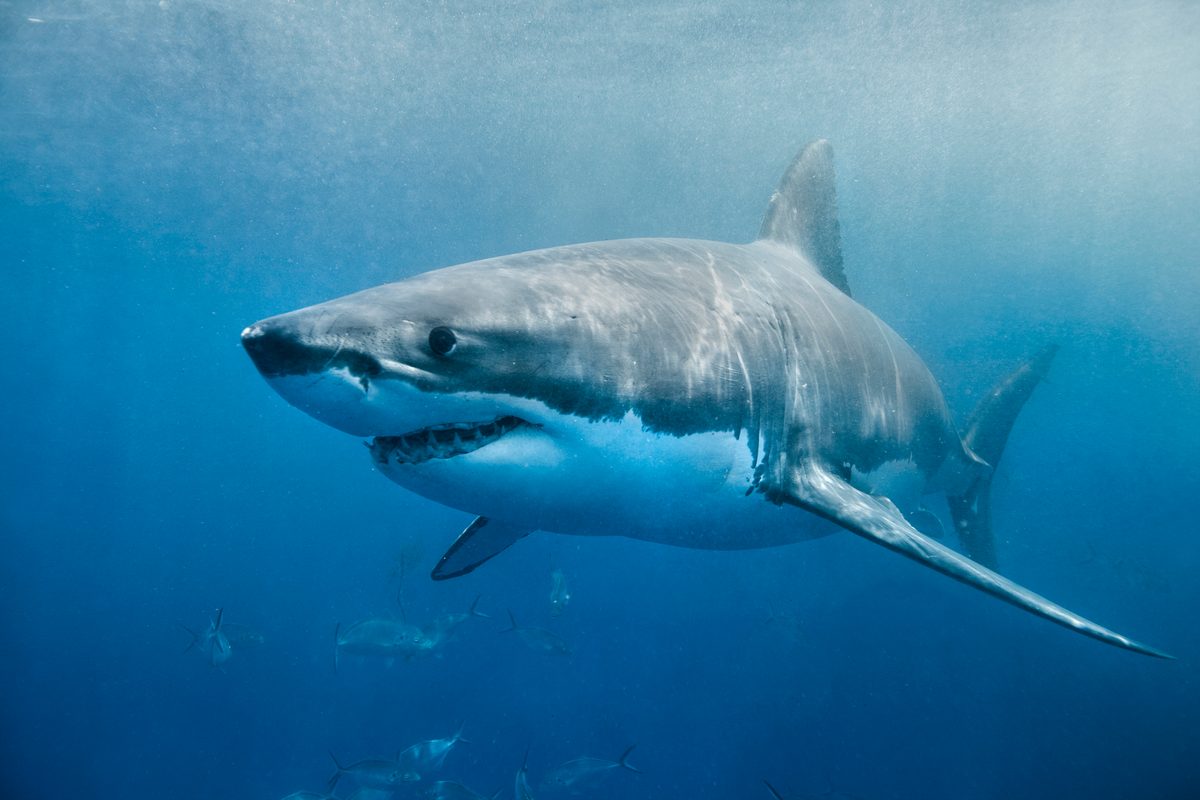
Top image: a great white shark. Credit: Gregory Sweeney/Getty Images
Discover more wildlife stories from a round the world: