
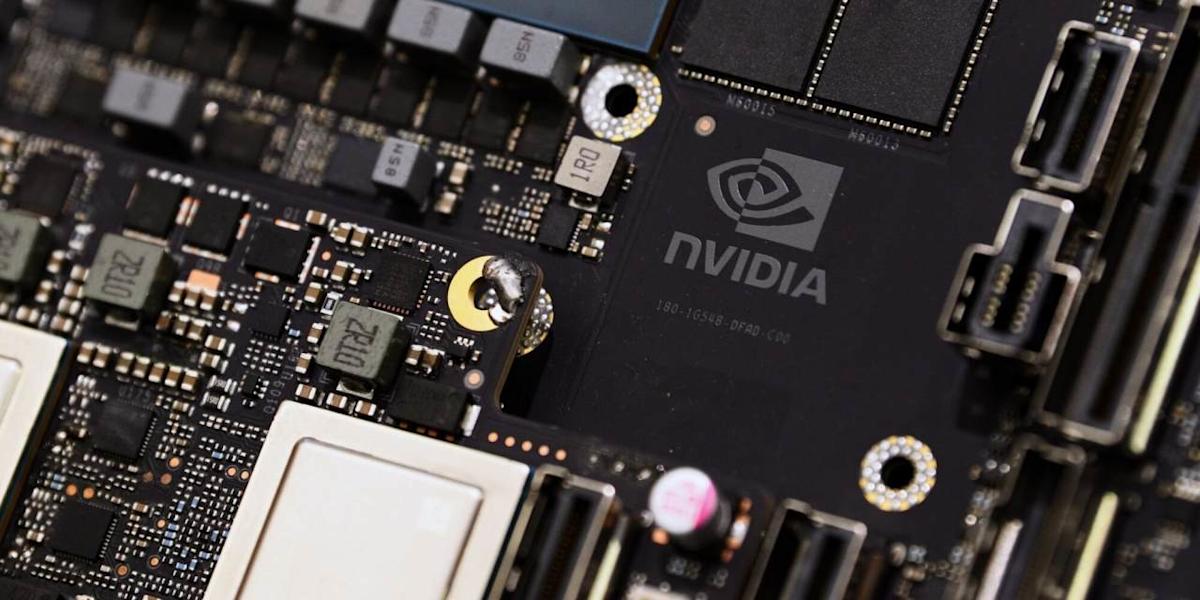
 An Nvidia Blackwell GPU chip. – Akio Kon/Bloomberg News
Microsoft said it has secured U.S. approval to ship Nvidia chips to the United Arab Emirates and would boost its investment there, two wins for the Middle East in the rapidly evolving artificial-intelligence race.
In a blog post Monday, the tech giant said the Trump administration has approved its plans to send chips to the U.A.E. for building data centers needed to train AI models. The approval was expected as part of a deal between the two nations that was first announced in May. Other companies involved include ChatGPT maker OpenAI and Oracle.
Microsoft also said it would invest an additional $8 billion on data centers, cloud computing and other AI projects in the Gulf state over the next four years. The tech giant is plowing money into data centers to keep up with competitors, a contest largely driven by access to computing power and energy.
The Middle East’s deep pockets and abundant energy have made it an attractive destination for tech executives frustrated with permitting delays and power shortages in the U.S. Security hawks warn that the deals could backfire given the U.A.E.’s close ties to China and worry about offshoring critical infrastructure.
Shares of Nvidia were up 2.4% in premarket trading, while Microsoft shares were down slightly.
The export licenses will allow the firm to ship the equivalent of 60,400 additional A100 chips, involving Nvidia’s more advanced GB300 graphics processing units, or GPUs.
The company had previously invested $1.5 billion in G42, a U.A.E. AI company trying to diversify the energy-rich economy. Concerns about sending chips directly to G42 have held up the U.S.-U.A.E. agreement, with some administration officials preferring to send chips directly to American companies operating there.
Microsoft has worked for years to win government support for its U.A.E. efforts, trying to show the Biden administration and now President Trump’s team that it has appropriate security measures in place.
The slow progress of the deal since it was announced in May had frustrated Nvidia Chief Executive Jensen Huang and other tech executives, The Wall Street Journal previously reported. Under the deal, the U.A.E. promised to invest in the U.S. in exchange for up to several hundred thousand Nvidia chips a year.
The Trump administration has given priority to chip exports as a way to get the world hooked on U.S. technology, rescinding a Biden-era rule that would have made it harder to send chips to many countries.