
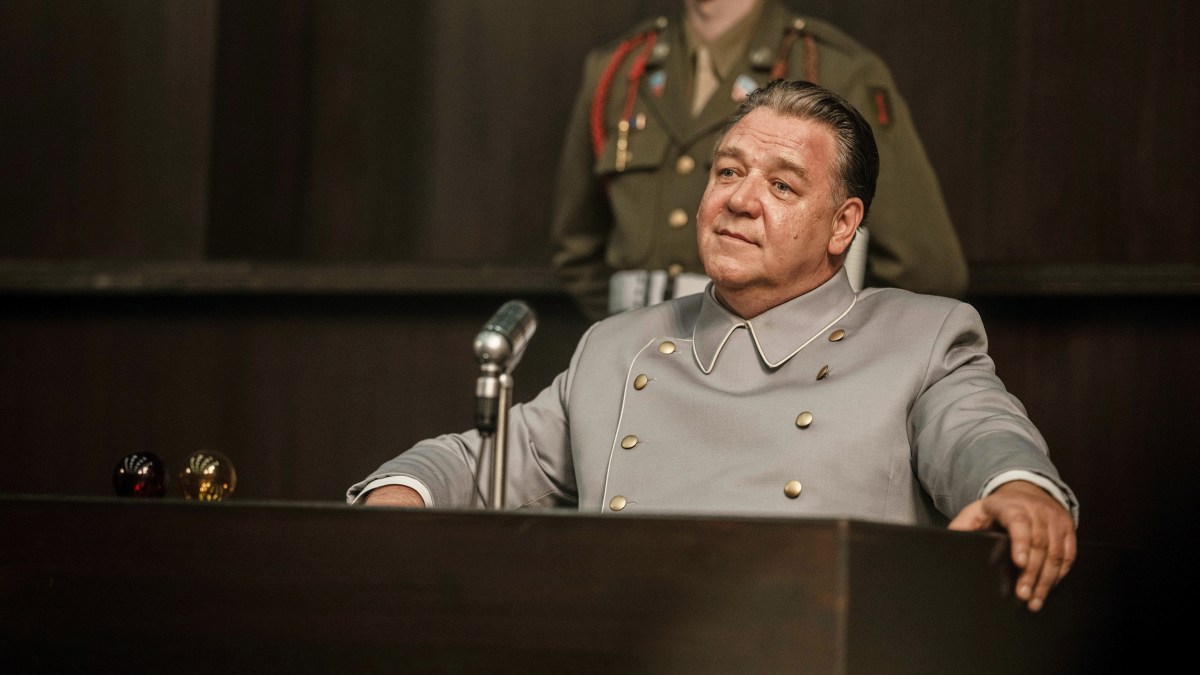
One March afternoon in 1945 in the House of Commons, an MP asked the foreign secretary whether troops fighting in Germany were expected to shoot Adolf Hitler, if they chanced to meet him, or to bring him back alive. Anthony Eden responded archly, “I am very content to leave that to the judgment of any British soldier,” prompting laughter at the hint that the monster might be killed out of hand.
Yet many people in high places, and especially Americans, were determined that at the end of the greatest conflict in human history, judicial process and not lynch law should decide the fate of the foremost Nazis. Among these was the US Supreme Court justice Robert Jackson, a man seized with a deep romantic faith in the power of law. He wished to embrace a unique opportunity to extend the frontiers of justice to address such newly defined crimes as waging aggressive war. He and others like him sought to lay bare for the rest of time the atrocities committed by Hitler and his people.
Thus it was that in November 1945 at the Palace of Justice in Nuremberg, a former temple of Nazism, an international military tribunal began to hear indictments against the 22 most important survivors of Hitler’s regime. Jackson, who had been appointed as chief American prosecutor, opened the proceedings with a long, surpassingly brilliant exposition of the Nazi assault on Europe’s peace, freedom and human rights.
Of the defendants in the dock, only the former armaments minister Albert Speer appeared to display contrition. The others, including Hermann Goering, listened with real or professed indifference, contempt, boredom, as the recital of bombings, shootings, gassings and genocide unfolded day after day, then week after week.
Much of Nuremberg, directed by James Vanderbilt, is set in the cells behind the courtroom, where the accused were confined under a scrutiny designed to prevent other Nazis from following Hitler, Himmler, Goebbels and the many generals who took their own lives. To the acute embarrassment of their custodian, Colonel Burton C Andrus, the former labour minister Robert Ley strangled himself with a torn-up towel.
• Read more film reviews, guides about what to watch and interviews
Thereafter the prisoners lived under 24-hour surveillance, though Goering made plain that he had no intention of emulating Ley. He was determined instead to have his day in court — proudly to defend both Nazism and his own role in it. From the beginning of the Nazis’ confinement, he emerged as the most forceful of the accused. Weaned off the drugs to which he was addicted, losing much of his accustomed corpulence, he sought a dignified end. In the movie, when Goering, played by Russell Crowe, demands to be addressed as Reichsmarschall, the American psychiatrist Douglas Kelley (Rami Malek, looking disconcertingly like Freddie Mercury) reminds him fiercely: “You are not Reichsmarschall here. You are only Hermann Goering the prisoner. You are not Alexander the Great. You are a fat man in a cell.”
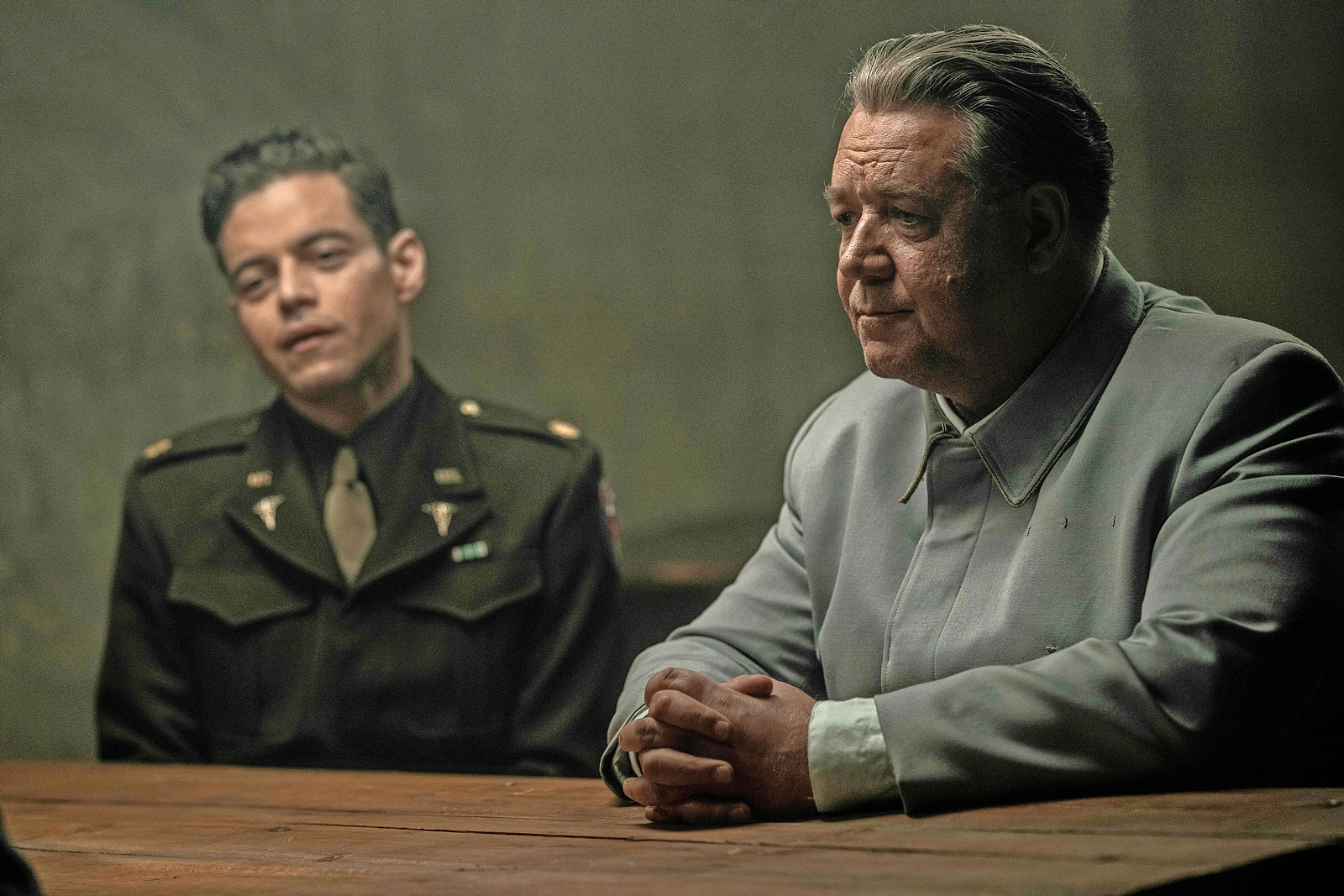
Rami Malek as the American psychiatrist Douglas Kelley, with Russell Crowe
SCOTT GARFIELD/SONY PICTURES CLASSICS VIA AP
Kelley and Goering are the two principals in the film, which focuses on their long exchanges while Kelley was investigating the mental state of the prisoners, conducting ink blot tests and other such professional rituals, and even showing off his talent for card tricks.
The psychiatrist sought to establish a semblance of intimacy with his charges. There was surely an element of voyeurism in his conduct. How could there not be when he was granted extraordinary access to some of the most wicked men in human history?
• Inside the Nuremberg Nazi trials — booze, chewing gum and affairs
Only on the 73rd day of the court hearings, in March 1946, did the defence at Nuremberg open its case, with Goering taking the stand for cross-examination by Jackson. What followed was an embarrassment to the Allied prosecutors and indeed to their countries. Goering delivered a brilliant, contemptuous, largely mendacious and yet courageously self-justifying assault on “conquerors’ justice”. He humiliated Jackson, made mock of his case.
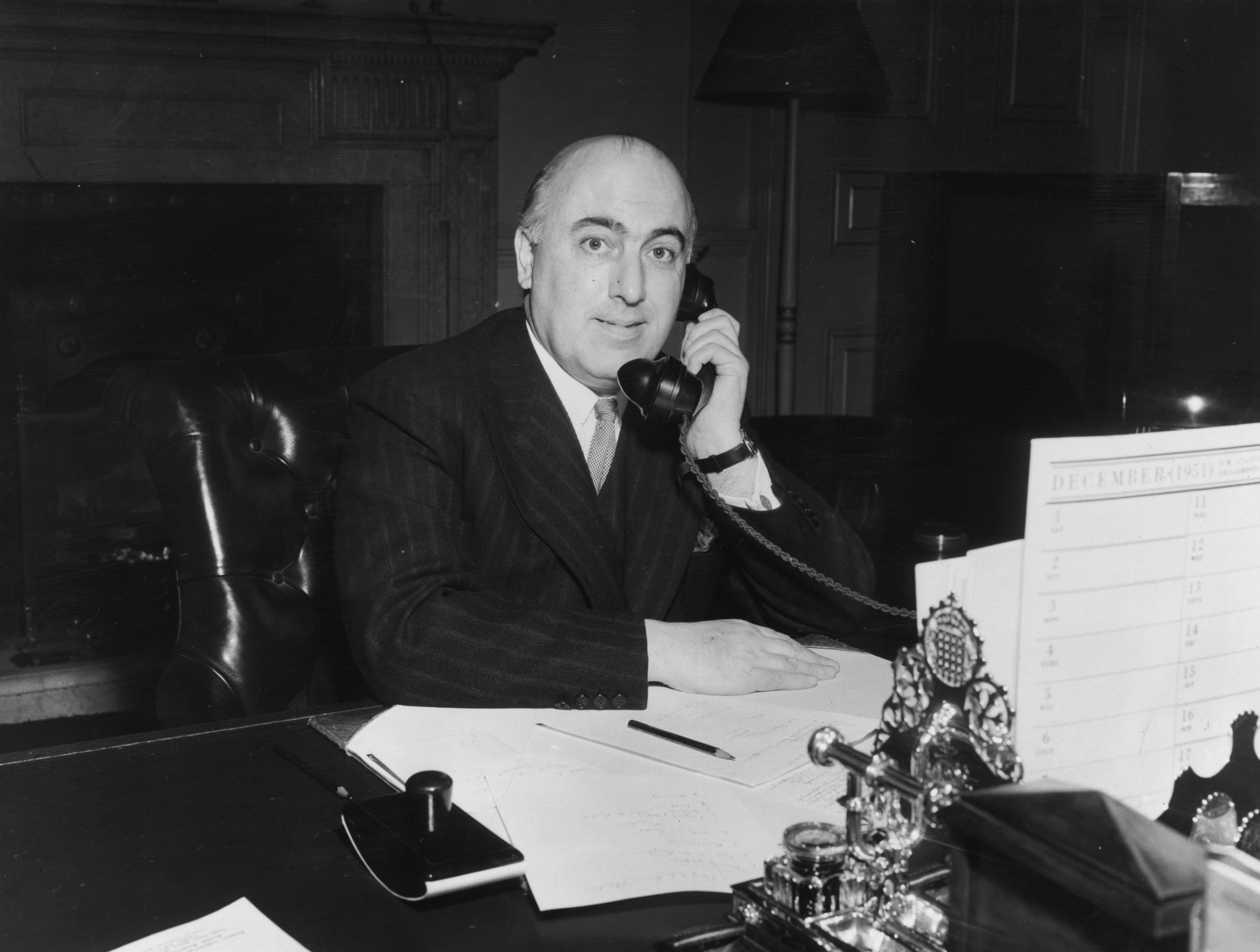
Sir David Maxwell Fyfe, the British politician and lawyer, portrayed in the film by Richard E Grant
MONTY FRESCO/TOPICAL PRESS AGENCY/GETTY IMAGES
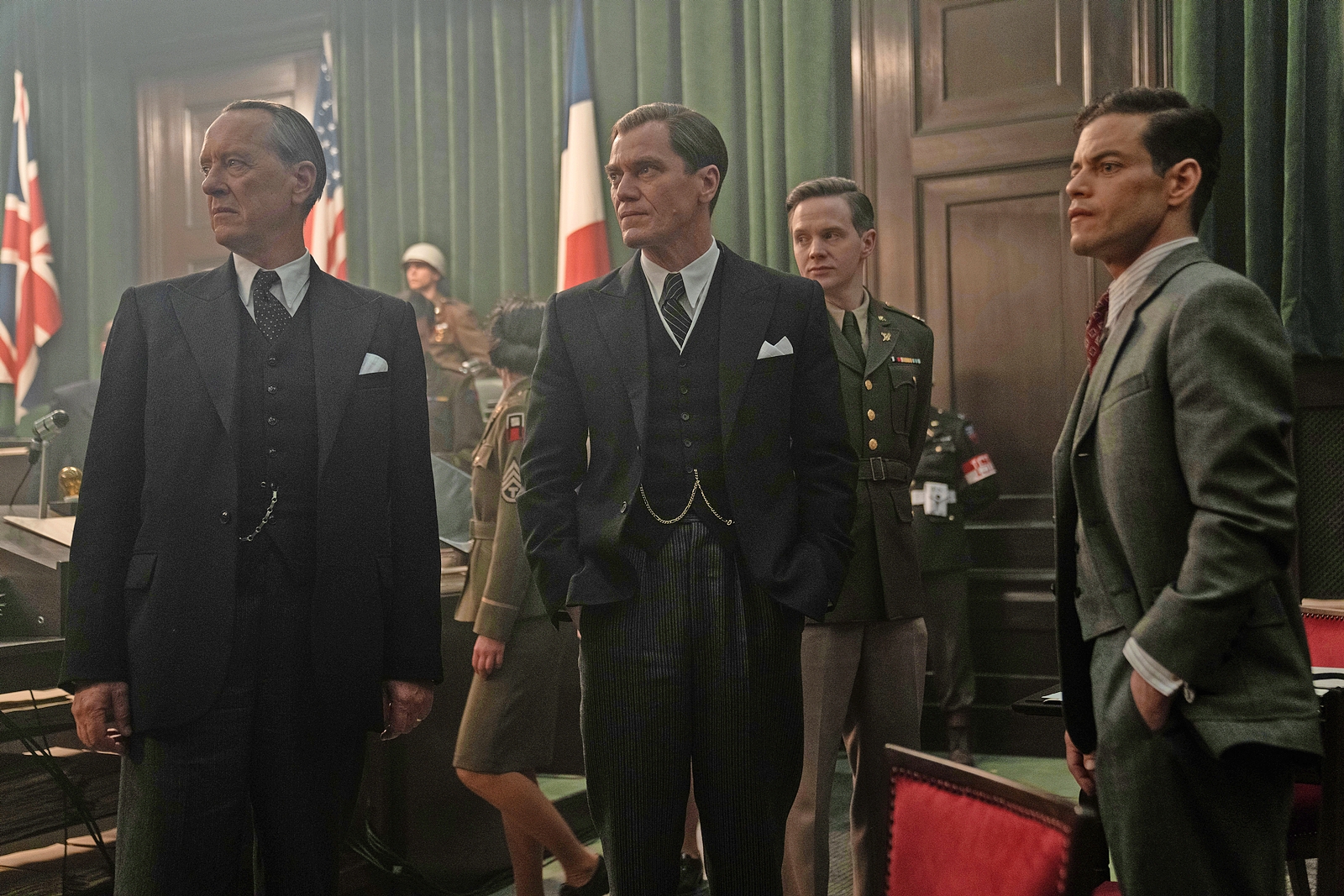
Richard E Grant, Michael Shannon and Rami Malek
SCOTT GARFIELD/SONY PICTURES CLASSICS VIA AP
The day was saved for the prosecutors only when the American lawyer sat down, defeated. His place was taken by his British counterpart, Sir David Maxwell Fyfe, played by Richard E Grant, who tore Goering to shreds. These scenes are the movie’s best, although absent from Crowe’s portrayal is the sense of greed, corruption and indeed evil that suffused the former Luftwaffe chief. Charm also existed but of a kind that fooled nobody with eyes to see. Crowe nonetheless makes a viewer feel that Hitler’s foremost acolyte was a more sympathetic character than Kelley.
The movie’s script — adapted by Vanderbilt from the 2013 book The Nazi and the Psychiatrist by Jack El-Hai — is better than some of its acting. Goering accused the prosecutors of “American hypocrisy” and he was by no means wrong. It was a mistake to include in Nuremberg’s prosecution evidence of such episodes as the 1940 Luftwaffe bombing of Rotterdam, when Allied air forces had since flattened half the cities of Europe. It seemed even to many contemporaries a travesty that Soviet judges sat on the bench at Nuremburg alongside the British, French and Americans: until at least 1942 Stalin had murdered far more people than Hitler.
It is chilling to hear Goering offer some of the same excuses for dispensing with the processes of democracy that are offered today by American Maga chiefs. This does not brand the latter as Nazis but it reflects a matching, terrifying contempt for law. It is probably inevitable that such a movie as this should include extended sequences of the concentration camp films shown to the court at Nuremberg, and of the executions of those convicted, though both represent in this context a sort of pornography. Goering cheated the hanging, dying by suicide on October 15, 1946, aged 53, by biting on a potassium cyanide capsule. Nothing in his career merits applause but at Nuremberg he was allowed to pursue his own agenda more closely than that of the Allies.
• Book reveals motives of lawyer who defended the Nazis
The war crimes trials did not represent injustice but instead partial justice. It was inevitable that they should have excluded such Soviet atrocities as the massacre of more than 20,000 Polish officers at Katyn. Not even a single token Allied soldier, sailor or airman was tried for well-attested war crimes, albeit on an infinitesimally smaller scale than those of the Axis.
While reading of the Nuremberg proceedings, Winston Churchill is alleged to have said to Air Marshal “Bomber” Harris, the ringmaster of the RAF’s area bombing of Germany: “You and I must take care not to lose the next war.” The story is almost certainly apocryphal but it makes a point.
Nuremberg is in cinemas from November 14
Two-for-one cinema tickets at Everyman
Times+ members can enjoy two-for-one cinema tickets at Everyman each Wednesday. Visit thetimes.com/timesplus to find out more
Which films have you enjoyed at the cinema recently? Let us know in the comments.