
Your support helps us to tell the story
From reproductive rights to climate change to Big Tech, The Independent is on the ground when the story is developing. Whether it’s investigating the financials of Elon Musk’s pro-Trump PAC or producing our latest documentary, ‘The A Word’, which shines a light on the American women fighting for reproductive rights, we know how important it is to parse out the facts from the messaging.
At such a critical moment in US history, we need reporters on the ground. Your donation allows us to keep sending journalists to speak to both sides of the story.
The Independent is trusted by Americans across the entire political spectrum. And unlike many other quality news outlets, we choose not to lock Americans out of our reporting and analysis with paywalls. We believe quality journalism should be available to everyone, paid for by those who can afford it.
Your support makes all the difference.Read more
Chinese and American agencies recently worked together to manoeuvre their satellites and prevent them from colliding with each other in a rare instance of collaboration to manage space traffic.
“We had a bit of a celebration because, for the first time, the Chinese National Space Agency reached out to us and said, ‘We see a conjunction amongst our satellites. We recommend you hold still. We’ll do the manoeuvre.’ And that’s the first time that’s ever happened,” Alvin Drew, director for Nasa’s space sustainability programme, said at the International Astronautical Congress in Sydney.
China and the US have been putting a strikingly high number of satellites into orbit around the Earth in the form of megaconstellations, increasing the odds of collision.
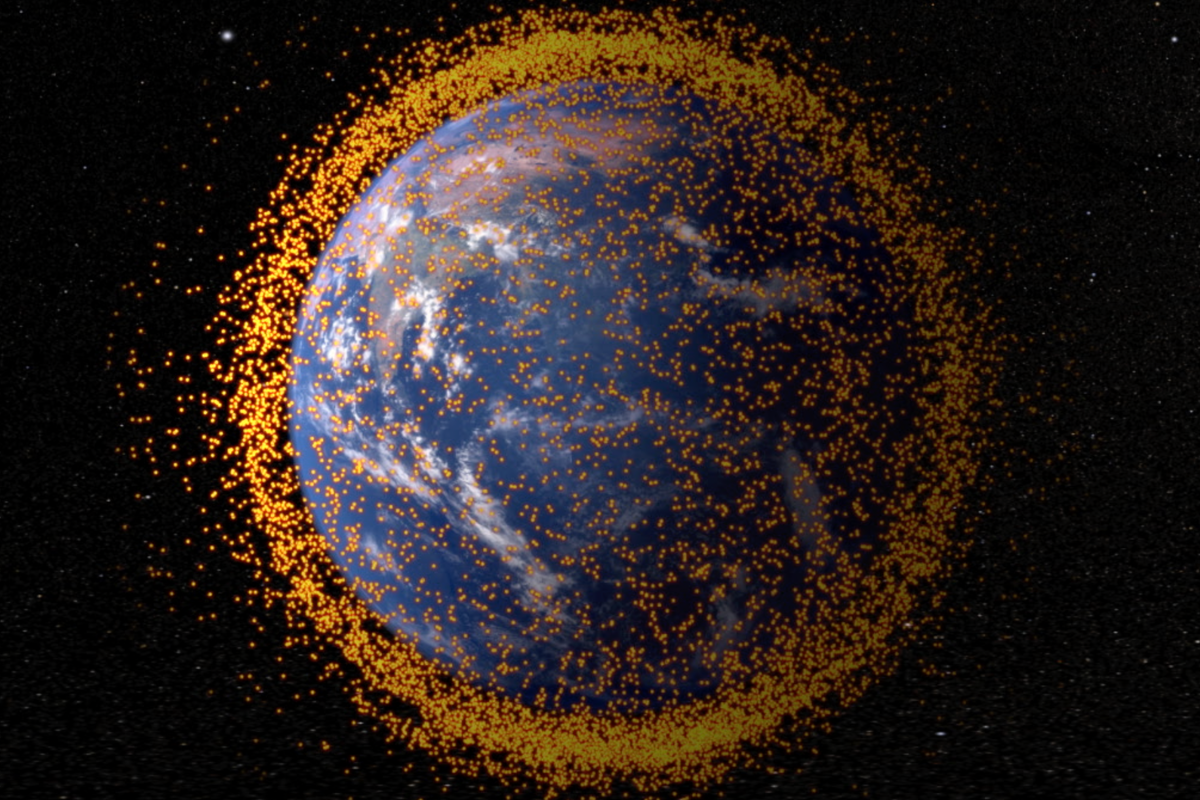
An estimated 200,000 objects sized 1cm to 10cm and tens of thousands of objects larger than 10cm crowd the low-Earth orbit occupied by satellites.
As many as 8,500 of the 12,955 active satellites in low-Earth orbit, just over 66 per cent, form the Starlink constellation ofSpaceX.
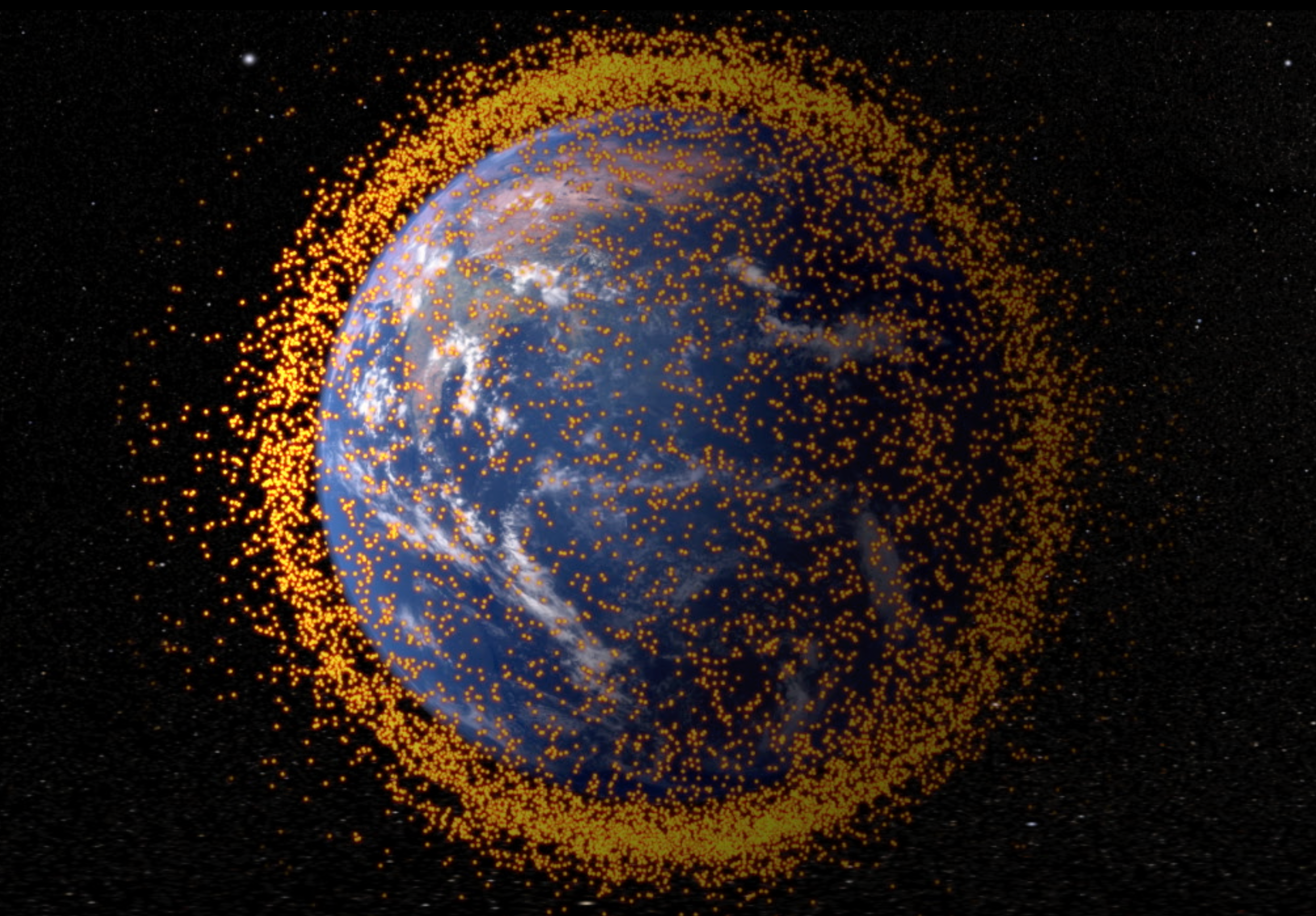 Illustration of orbital debris around the Earth (NASA’s Goddard Space Flight Center/JSC)
SpaceX chief Elon Musk said that he hoped to build the Starlink constellation to over 42,000 satellites eventually, with the company currently having permission to launch 12,000.
China recently announced a plan to have over 10,000 satellites orbiting the Earth by the 2030s.
In spite of growing space traffic and the urgent need to manage it, collaboration between Chinese and American space agencies remains rare.
The 2011 Wolf Amendment restricts Nasa from using federal money to cooperate bilaterally with China or any Chinese company unless the US Congress specifically approves it.
In the meantime, the risk of various government-owned probes colliding with each other, and with space debris from previous launches, grows by the day, threatening even astronauts.
Three astronauts were stranded on China’s Tiangong space station this week after their return capsule was struck by suspected space junk.
Researchers also warn that astronomy is facing a growing threat from satellites in low orbit.
“As the satellites overfly the observatories, they block the views of remote objects and phenomena, leaving obliterating white streaks on the collected imagery, and obscuring access to troves of vital data from distant sources of cosmic light and radio waves,” said legal expert David Koplow.
As tens of thousands of new satellites and associated mission debris are catapulted into the Earth’s orbit, he wrote in the Vanderbilt Journal of Transnational Law, “the dangers of congestion, collisions, and interference will soar accordingly”.