
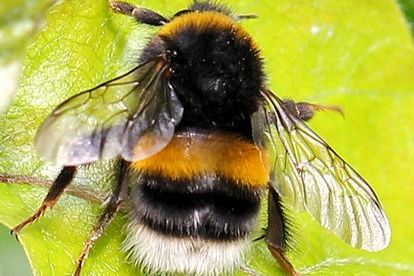
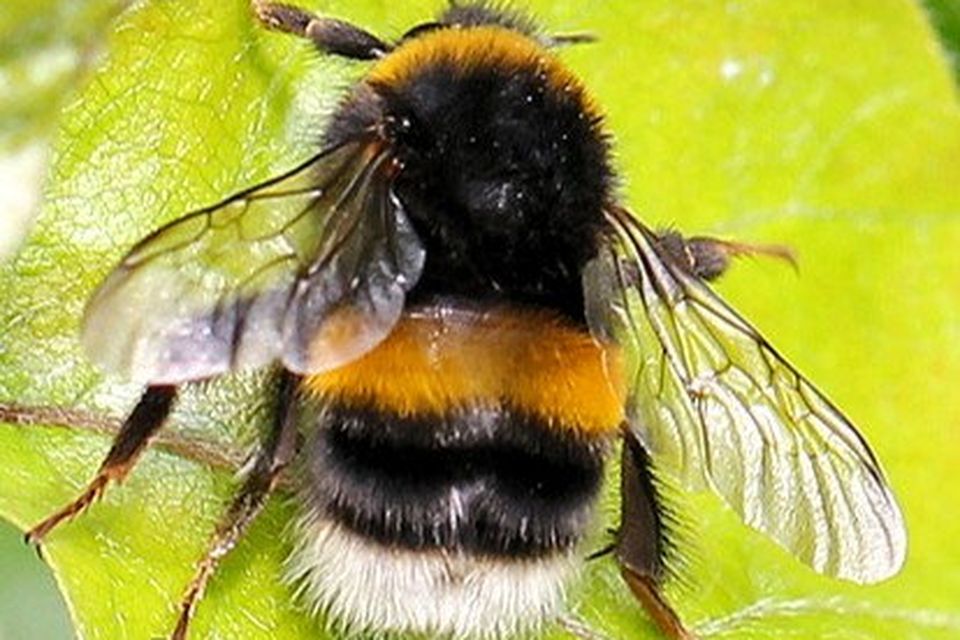
The Buff-tailed Bumblebee is one of our largest and most common bumblebees.
There was a time when there were no books available specifically about Irish wildlife; the only books available were about the wildlife of the British Isles. Ireland and Britain were lumped together as a single unit with the assumption that they shared a common biodiversity.
Slowly, it became more politically correct to refer to ‘Ireland and Britain’ rather than ‘the British Isles’ and intriguing questions were asked about why Ireland had species that do not occur in Britain and why species that are common and widespread in Britain never succeeded in colonising the Emerald Isle.
Britain left the EU and now Ireland is, from a biodiversity point of point, described as part of the Atlantic region of the European Union rather than part of any alignment with our nearest neighbour.
That our biodiversity is uniquely Irish is becoming clearer with the passage of time and new discoveries. The latest revelation is that the Buff-tailed Bumblebees found in Ireland are distinctly different to those found in Britain. They look the same, but their genes are different. Scientists who study these matters have discovered that Irish Buff-tailed Bumblebees are cut from a different cloth than those found elsewhere.
So what?, you may well ask. Does it make any difference? Well, it might. Buff-tailed Bumblebees are common and widespread throughout Ireland, Britain and mainland Europe. They are alsobred commercially to pollinate crops like apples and strawberries. Up to now, it was assumed that those found in Ireland, in Britain, and in mainland Europe were all the same and there was free movement of bees.
We now know, thanks to Dr Sarah Larragy and her colleagues, that Irish Buff-tailed Bumblebees are unique and distinct from the others. So, should our Irish stock be conserved and kept pure and distinct, or should interbreeding and genetic mixing be permitted? The answer may have consequences for disease resistance, competition, etc.
Nine subspecies of Buff-tailed Bumblebees are recognised across Europe and North Africa. As a result of the recently published findings do our Irish bees now require distinct classification? Since it would appear unlikely that a bumblebbe would fly across the Irish Sea under its own steam, the sea was a significant genetic barrier in the past. That situation is likely to change with increased imports of bees to pollinate orchards and greenhouse crops.