
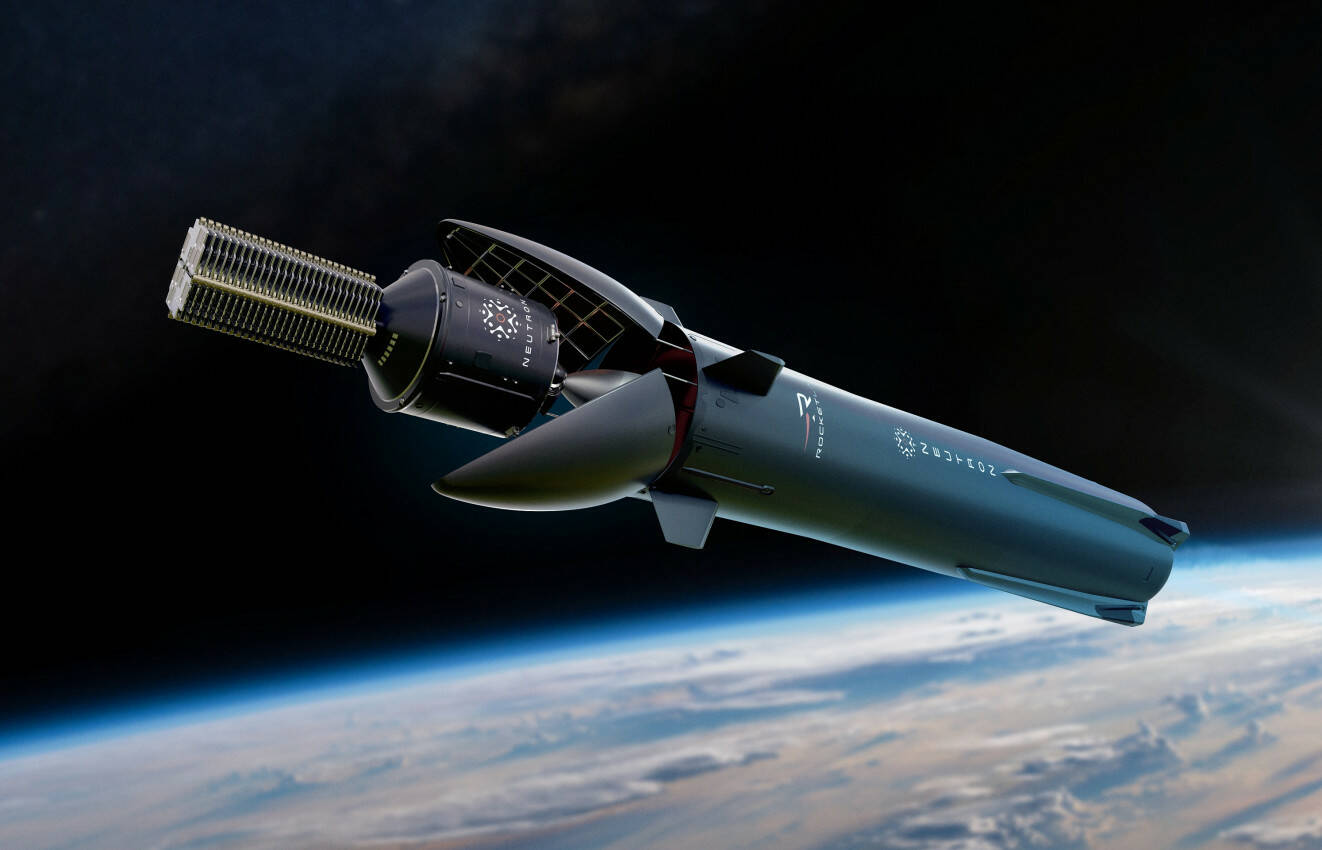
Aerospace manufacturer and launch service provider Rocket Lab has confirmed what many have long suspected: its “Hungry Hippo” Neutron rocket won’t be hitting the launchpad until 2026 at the earliest.
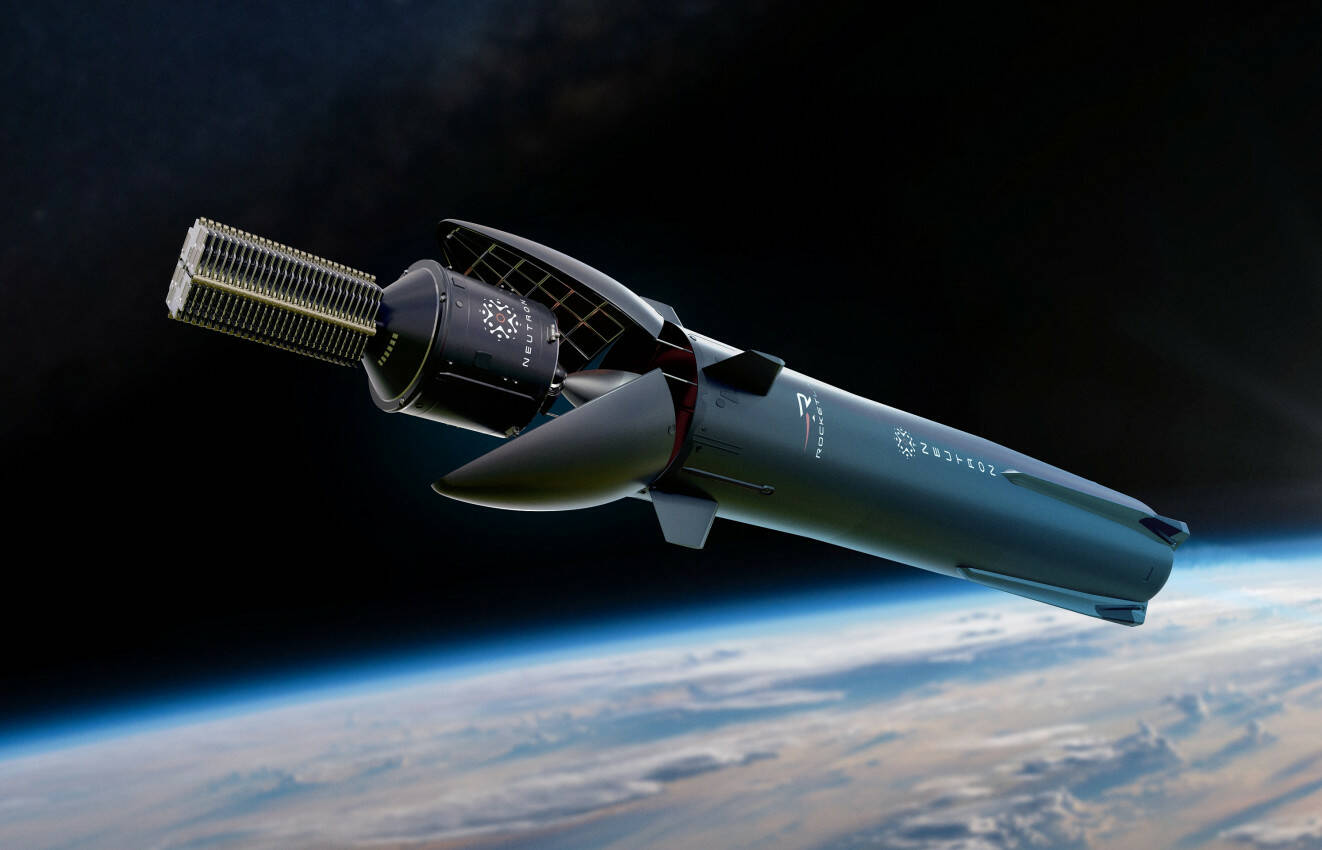
Hungry Hippo Neutron (pic: Rocket Lab)
The confirmation came during the company’s latest set of results, which showed revenues growing to $155 million for the three months ended September 30, up 48 percent year-on-year. Gross profit grew to $57 million compared from $28 million, however, operating losses edged up to $59 million from $52 million.
Although Rocket Lab has spent time launching its Electron rockets – its most recent and 74th launch was the sixth Earth-imaging satellite for the Institute for Q-shu Pioneers of Space, Inc. (iQPS) on November 5 – the corporation’s future is the altogether heftier Neutron rocket.
Neutron is designed to be reusable and features a “Hungry Hippo” fairing, which will open to release the second stage and payload, before closing again ahead of a return to Earth. According to Rocket Lab, it will be able to carry 13,000 kg of payload to Low Earth Orbit, and be powered by nine Archimedes engines, capable of generating a total lift-off thrust of 1,485,000 lbf.
That is assuming it can be made operational. As is often the case in the rocketry world, the timeline for Neutron has slipped over the years. In 2021, the estimate was for a first launch in 2024. However, the company did not cut the ribbon on Neutron’s Virginia launchpad, Launch Complex 3, until August 2025, although hope remained that a 2025 launch might be squeezed in.
With typical directness, Rocket Lab’s boss, Peter Beck, addressed Neutron’s launch date during an earnings call. “We are aiming to get Neutron to the pad in Q1 next year if all goes well, with the first launch thereafter.”
“That is provided that myself and the team are confident we have completed Neutron’s qualification testing and acceptance testing program to the Rocket Lab standard.”
Getting things right the first time is paramount. Rocket Lab has learned some hard lessons during its Electron campaign. The first test launch was deemed a failure due to telemetry problems, and the most recent loss occurred just over two years ago, following a short circuit that resulted in a loss of power to the second stage and a failure to reach orbital velocity.
“Our aim,” said Beck, “is to make it to orbit on the first try. You won’t see us minimizing some qualifier about us just clearing the pad and claiming success and whatnot. That means that we don’t want to learn something during Neutron’s first flight that could be learned on the ground during the testing phase.”
Getting to orbit will be the primary goal of the first flight, and the company’s drone ship, named “Return on Investment,” will, according to Beck, be ready for the second launch.
Neutron is an ambitious rocket, packed with firsts. Beck said it was “the world’s largest composite structure ever built” and the “Hungry Hippo” approach to its fairing still carries a whiff of science fiction about it.
“At the end of the day,” said Beck, “Neutron will fly when we’re very confident it’s ready.”
Currently, the rocket is expected to arrive at Launch Complex 3 in Q1 2026. That could translate to a first launch later that year. A delay from the initial estimates, but compared to how late other heavy-lift rockets have been – Ariane 6, made its maiden flight four years later than first planned – an impressive achievement nonetheless. ®