
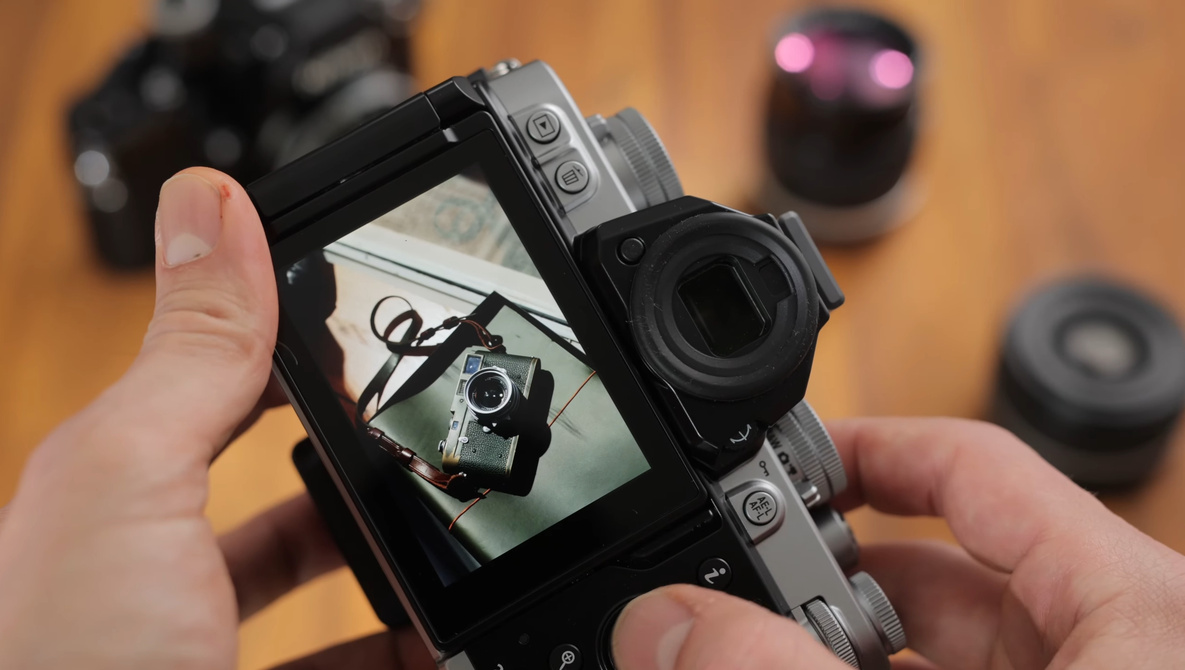
The new Nikon Zf firmware update quietly turns a familiar camera into a stronger everyday tool, especially if you chase a film look without giving up digital speed. If you want JPEGs that feel intentional straight out of camera instead of plastic and cold, this one deserves attention.
Coming to you from Hashem McAdam of Pushing Film, this thoughtful video walks through how the new film grain feature transforms the way you approach the Nikon Zf as a daily shooter. You see unedited JPEGs with grain applied in camera, not as a gimmick, but as a way to strip that sterile edge from modern files so you can rely less on a screen and more on instinct. The firmware adds three grain sizes and six intensity levels, with randomized rendering per frame that keeps things from looking like a repeating overlay. That level of control lets you tune a subtle texture for casual work or push it closer to high-speed stocks when you want something rougher. You get a sense that the camera is finally catching up to how you already think about images instead of forcing everything through the same clean default.
McAdam shows how the grain integrates with picture controls, monochrome modes, and Imaging Recipes from Nikon Imaging Cloud, which is where the update starts to feel practical rather than theoretical. When you mix those tools, you can dial in a look that stays consistent across a day of shooting, so your JPEGs do not feel like test shots waiting for a desktop. Using Nikon NX Studio to build custom profiles, McAdam leans into film-inspired color with slight pushes and pulls that respond well to the grain, taking advantage of per color adjustments that many systems still bury or limit. You see how this helps when you want to send images straight to clients or friends without touching sliders later, while still keeping raws as a safety net. The video makes it clear that this setup is less about pretending you are shooting film and more about recovering some of that immediacy and constraint in a digital workflow.
The short flange distance and Z mount let you bring in vintage F mount lenses, classic M mount lenses, and modern NIKKOR Z primes and zooms, turning the camera into a small base for a lot of different looks without feeling like a science project. Having real-time, baked-in grain on top of those lenses means your rendering comes from a mix of optics, color profile, and texture that you choose before pressing the shutter, not a preset pack you scroll through later. McAdam also hints at how much is still left to push in custom recipes, which should get you thinking less about specs and more about building a signature look that survives across jobs and personal work. Check out the video above for the full rundown from McAdam.