
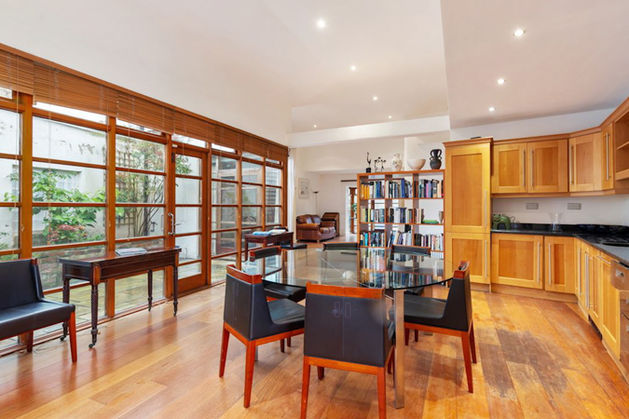
Sam Stephenson is known for his large-scale civic works, but this Portobello house shows his gift for human-centred design
Asking price: €945,000
Agent: Felicity Fox (01) 633 4431
Almost two decades after his death, the architect Sam Stephenson’s name still divides opinion. Depending on where you stand, he is the philistine who helped destroy a large swathe of Dublin’s Georgian built heritage, or he is a genius; the country’s most original and strident brutalist, a calligrapher of the architectural signature of a confident modern Ireland.

The exterior of 33b Daniel Street, Portobello, Dublin 8
But there is another side to Stephenson’s work that appears to contradict the image of intellectual bulldozer of history, a gentler side, revealed by a handful of domestic projects he undertook during the course of his career: buildings such as broadcaster Eamon Andrews’ home at The Quarry in Portmarnock, a modern family home with cubist protrusions, playful fish-eye porthole windows and internal mezzanines. It’s modern, but displays little of the grim brutalism of his Civic Office bunkers or the ESB headquarters.
There are interiors, such as the famous Horseshoe Bar in Dublin’s Shelbourne Hotel, more welcoming cocoon than flashy cocktail venue, more conservation than innovation. And now on the open market is a ‘mews’, tucked behind Daniel Street in Portobello in Dublin 8, designed by Stephenson and filling a space between two modest streets in the Liberties.
Number 33b extends to just under 1,500sq ft across a single level, something a good deal larger than, say, an average three-bed suburban semi. It has, as you might expect, an open-plan layout with high ceilings, using lots of glass and timber and five sets of French doors to connect the main rooms to a private internal courtyard and south-westerly garden.
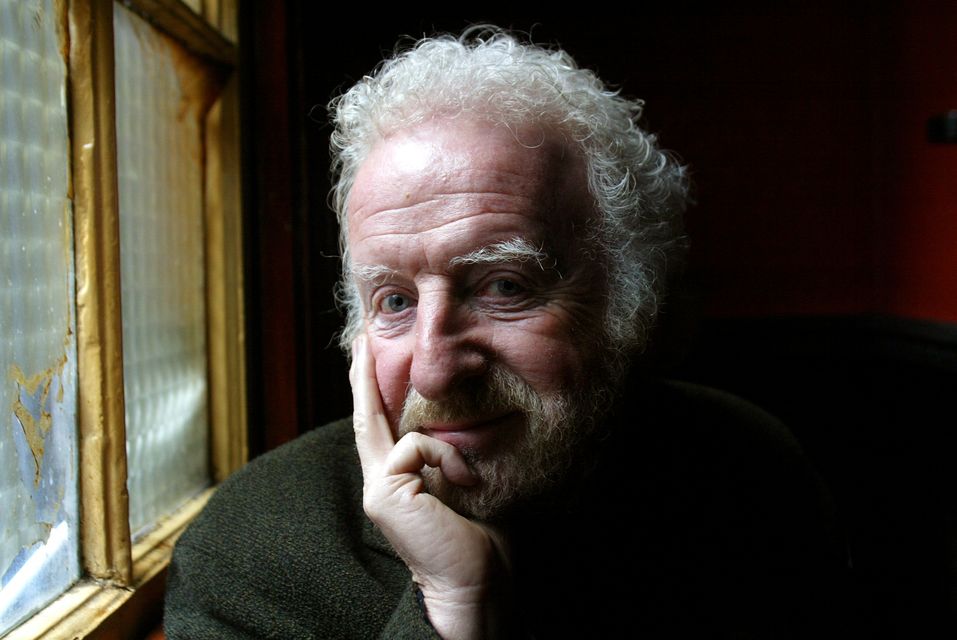
Architect Sam Stephenson. Photo: Julien Behal
Exotic timber is everywhere. There is alder kitchen cabinetry and merbau flooring, lots of ‘warmth’ and little of the fortress feeling that helped make his civic buildings so contentious.
The house comes to market at a time when Stephenson’s residential legacy is being quietly reassessed, thanks in part to the high profile of his most famous domestic project, 31 Leeson Close, which has been in operation as a boutique guesthouse for years now and which has also been on display to the public a number of times thanks to the annual Open House architectural festival.
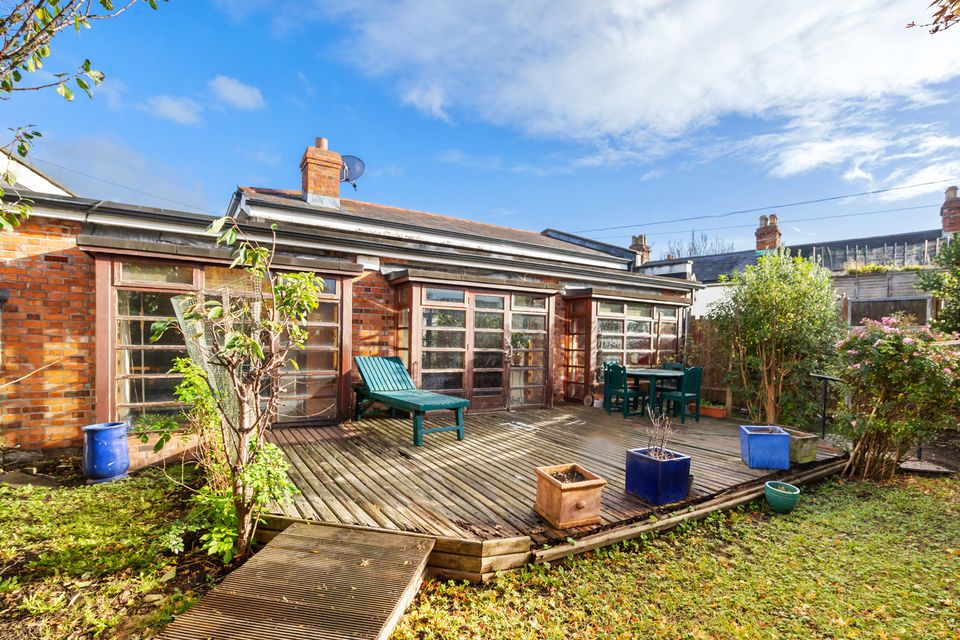
The garden of 33b Daniel Street, Portobello, Dublin 8
Stephenson bought the former coach house in 1957 for £1,000 and transformed it into a party pad which became an after-hours meeting place, not just for some of the famous mohair-suit set of the 1960s, but for creatives and media types too. The double-height living room he created there, with its sunken conversation pit, achieved what he called “a nicely judged allocation of limited space”.

The courtyard of 33b Daniel Street, Portobello, Dublin 8
Before he became the architect everyone loved to argue about, he started his career designing exhibition stands during the severe building industry recession of the mid-1950s. When work dried up, he remodelled a Dublin pub by stripping out the chrome and plastic to reveal something more honest underneath. His design for the Horseshoe Bar in the Shelbourne Hotel in 1959 “combined the intimacy of the Dublin snug with the sophistication of a London cocktail bar”.
The Daniel Street mews suggests similar instincts: respect for materials, attention to light, an understanding that domestic architecture is about the everyday rituals of living rather than grand statements. The house has four double bedrooms, two with ensuite bathrooms, a main shower room, a utility room, and an open-plan kitchen, living and dining space. It’s a straightforward arrangement, but the devil is in the detail and the ‘flow’ of the spaces.

The sitting room of 33b Daniel Street, Portobello, Dublin 8
Stephenson came from a particular Dublin. His father, Patrick Joseph Stephenson, was the city librarian and a founder of the Old Dublin Society and had fought in the 1916 Rising. His later reputation as someone indifferent to Georgian architecture always sat oddly with that background, but probably fitted with his connections to early 1960s Fianna Fáil and that party’s ‘modernisers’ attitude to anything inherited from the British.
A seating area in 33b Daniel Street, Portobello, Dublin 8
Some suggest there is a simpler explanation, one that says Stephenson was good at small, human-scaled design, and less successful when asked to make civic statements in concrete. Hugo Lamont, the architectural writer, noted that 31 Leeson Close demonstrated “a discipline and sense of hierarchy to the spaces” and “an inventive mind brought to bay by a sense of proportion and order”, qualities that don’t translate easily to brutalist office blocks built on politically charged sites.
The Central Bank, the ESB headquarters, the Wood Quay civic offices – these buildings made Stephenson’s name and reputation. It is easy to forget that many of these won prestigious awards for Stephenson and that, like it or loathe it, his Central Bank was lauded as an engineering marvel, built as it was from the top down.
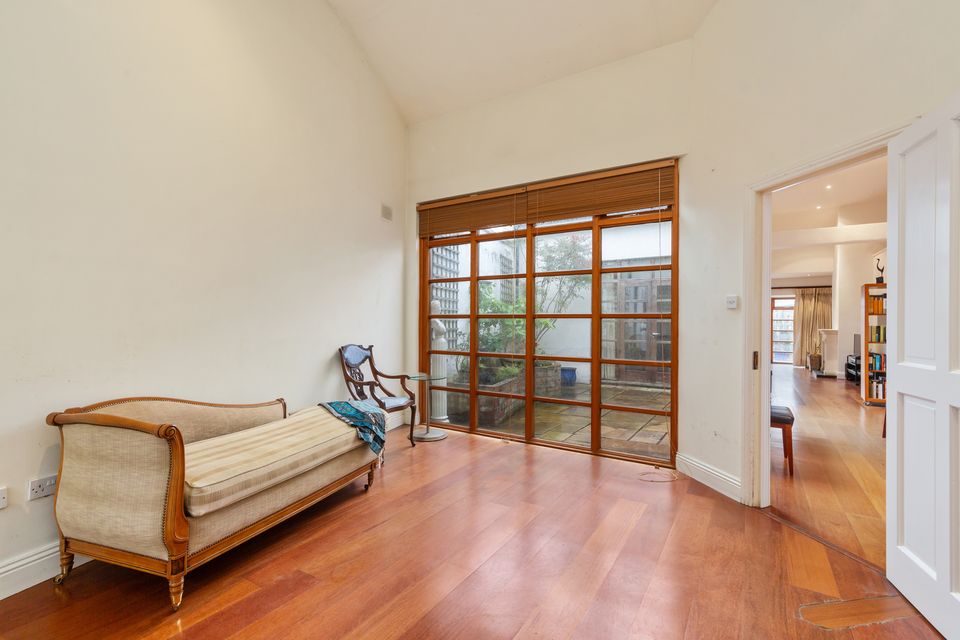
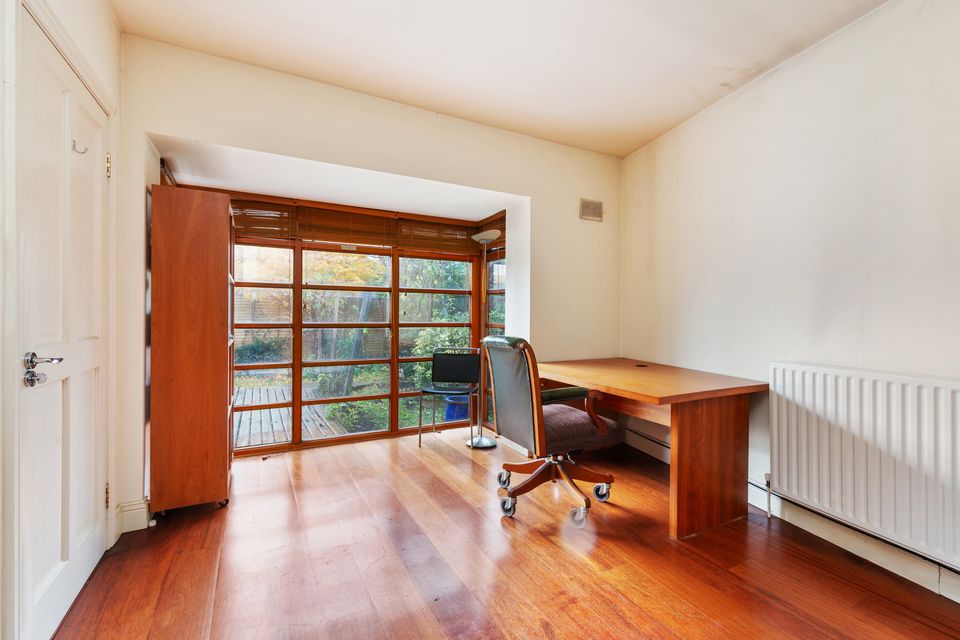
A room overlooking the courtyard at 33b Daniel Street, Portobello, Dublin 8
By the late 1980s, Stephenson had softened his position, stating: “I used to be an apostle of modern architecture, but I’ve given up that religion completely and I’m now an atheist… I go to bed with Palladio in the evening and get up with Lutyens”.
Looking at 33b Daniel Street, a viewer might be forgiven for wondering if he had been reading Palladio all along, at least when designing for people rather than institutions. The proportions are classical, even if the materials are modern, and the relationship between inside and outside could be described as ‘Mediterranean’.
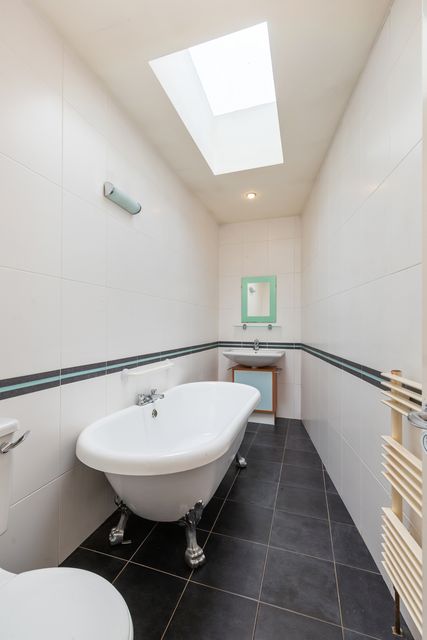
The bathroom of 33b Daniel Street, Portobello, Dublin 8
This house needs a little bit of work. Some of the decking outside is not in such good condition and the interior is looking a little tired in places, but the bones of an unusual family home are there. The rooms are large, as is the south-westerly garden (measuring approximately 50 feet by 27 feet). There is off-street parking for two cars, should you need it, given St Stephen’s Green is walkable in 15 minutes.
Ultimately, this is one for a buyer with a deep pockets and ideally an interest in architectural history. You could certainly get a villa-style 19th century period property in some of the surrounding streets for the same money or less. But No33b is nothing if not a one-off, surrounded by tiny artisan dwellings, but a home that could function as a modern family dwelling in the heart of the city, and perhaps this is one area where the famous architect may have really been ahead of his time.
Agent Felicity Fox (01 633 4431) is seeking offers in the region of €945,000.