
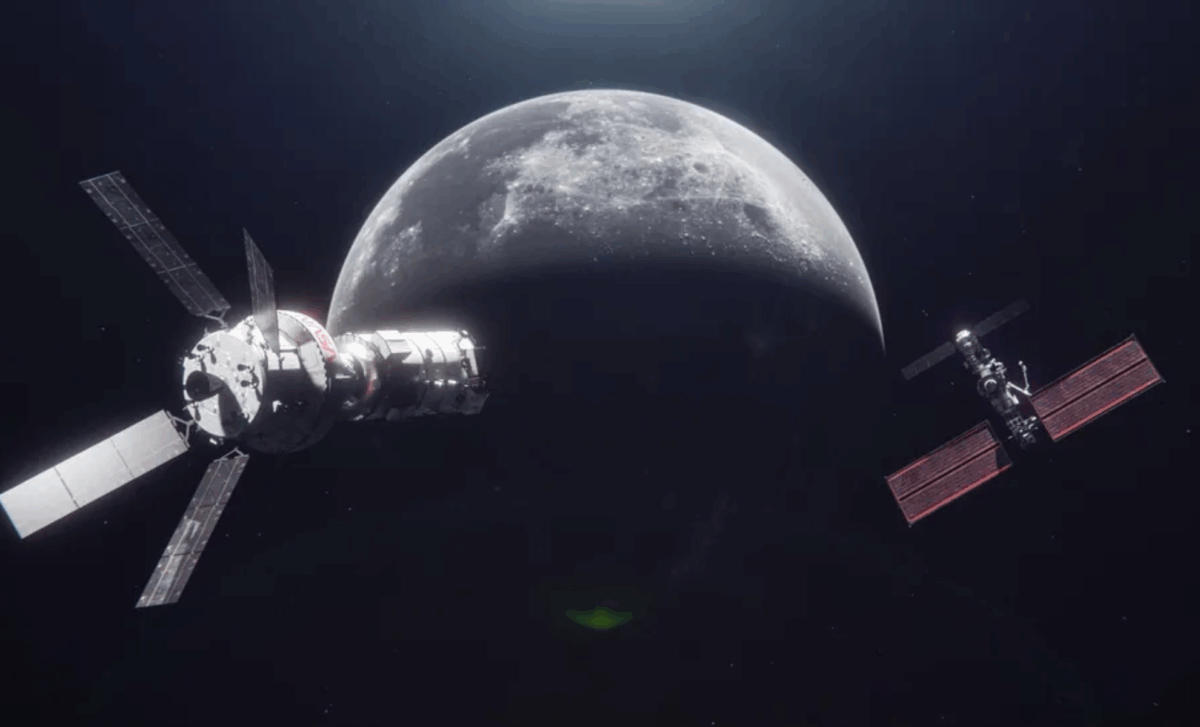
As global powers set their sights on the moon, the United States military is taking steps to extend its surveillance far beyond Earth’s orbit. The Defense Advanced Research Projects Agency (DARPA) has initiated a new program to detect and track objects moving through cislunar space — the vast region between Earth and the moon. The effort highlights growing security concerns tied to lunar exploration and the race for dominance beyond Earth’s orbit.
Tracking The Unknown In Cislunar Space
According to Space.com, DARPA’s initiative — known as Tactical Boost Demonstration 2 (TBD2) — represents a significant leap in how the U.S. military plans to monitor potential threats in the expanding frontier between Earth and the moon. For decades, American tracking systems have focused on low Earth orbit (LEO) and geosynchronous orbit (GEO), where most satellites operate. But as spacecraft from multiple nations venture farther out, DARPA aims to fill what defense experts describe as a “blind spot” in national security.
The agency envisions deploying advanced optical sensors equipped with onboard computers capable of processing signals autonomously. These systems would track faint objects — as small as 10 to 20 centimeters — up to 250,000 miles away. By positioning sensors at Lagrange points, stable gravitational zones between the Earth, sun, and moon, DARPA hopes to maintain a persistent watch over what it calls the “Earth-Moon corridor.”
The Strategic Moon Race
The race to return to the moon is no longer driven solely by exploration. It is about influence, resources, and geopolitical leverage. The U.S. Space Force and the Air Force Research Laboratory (AFRL) are testing propulsion systems for spacecraft designed to provide “persistent situational awareness” in cislunar space. These missions reflect a growing belief that whoever dominates lunar operations could set the rules for accessing and exploiting extraterrestrial resources.
Former NASA Administrator Jim Bridenstine told the U.S. Senate earlier this year, “Unless something changes, it is highly unlikely the United States will beat China’s projected timeline.” China, which plans to land astronauts on the moon by 2030, is seen as a key competitor in this emerging domain. Meanwhile, NASA’s Artemis 3 mission, originally set for 2027, continues to face development delays, underscoring the urgency felt in Washington.
Beyond The Horizon
DARPA’s initiative reflects more than just technological ambition; it signals the militarization of the next frontier. As governments and private companies accelerate lunar missions, the challenge of ensuring safe and transparent operations grows more complex. Tracking technology like TBD2 could serve as both a defensive shield and a strategic tool, offering visibility into activities unfolding hundreds of thousands of miles from Earth.
The vastness of cislunar space — once a poetic symbol of human aspiration — is quickly becoming a contested zone where technology, defense, and exploration intersect. Whether the moon becomes a place of collaboration or competition will depend largely on how nations choose to watch, communicate, and act in the silent expanse between worlds.