
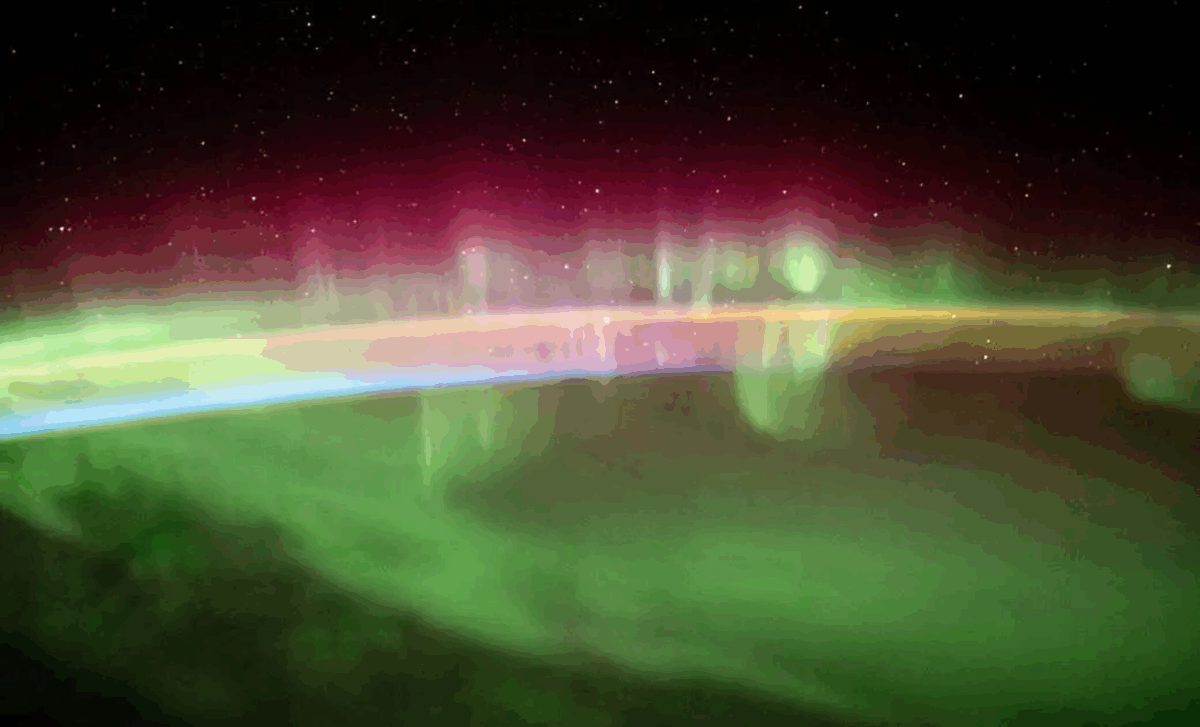
A recent solar storm event caused more than just breathtaking auroras across the Northern Hemisphere; it triggered a series of precautions aboard the International Space Station (ISS). Astronauts had to adjust their sleeping arrangements to shield themselves from radiation. The source of this energy surge? The sun, releasing coronal mass ejections that brought both beauty and danger to Earth and space alike.
Solar Storms and Their Impact on the ISS
Solar storms are a natural phenomenon that can have both spectacular and hazardous effects on Earth and in orbit. On November 11 and 12, 2025, coronal mass ejections (CMEs) from a sunspot group known as AR4274 unleashed a wave of charged particles towards Earth. While these particles interact with Earth’s magnetosphere to create dazzling auroras, they also carry significant radiation that can be harmful to astronauts aboard the ISS.
“We entered into an energetic solar particle event this morning, and we’re going to go in and out of holes of higher than the baseline [radiation] risk,” one operator told NASA astronaut Mike Fincke over the comms channel.
This warning highlighted the seriousness of the situation, with astronauts needing to be aware of the fluctuating radiation levels during the event.
In response to the heightened radiation risks, the crew aboard the ISS had to take preventive measures to minimize exposure. Russian cosmonauts Oleg Platonov, Sergey Ryzhikov, and Alexey Zubritsky were instructed to relocate to the station’s laboratory module for the night, a decision aimed at offering them extra protection from the storm’s radiation. The rest of the crew, including astronauts from NASA and Japan’s space agency JAXA, remained in their designated sleeping quarters.
Space.com reports that while the USOS crew slept in their quarters, the Roscosmos cosmonauts camped out in the lab as a precautionary step. These preventive measures were crucial in ensuring the safety of the astronauts, as radiation exposure during solar storms can have long-term health consequences if not managed carefully.
The Science Behind Solar Storms
To understand the precautions taken by the ISS crew, it’s important to grasp the science behind solar storms and their potential risks. A solar storm, also known as a solar energetic particle (SEP) event, is caused by the release of high-energy particles from the sun. These particles travel through space and, when they reach Earth, they can interfere with satellite communications, GPS systems, and even power grids.
However, the most immediate threat posed by solar storms to astronauts in space is radiation exposure. Unlike on Earth, where the atmosphere and magnetic field offer protection, astronauts aboard the ISS are vulnerable to the full brunt of these solar particles. The ISS does have some shielding, but during intense solar events, additional precautions, like moving to more shielded parts of the station, are necessary.
In this case, the coronal mass ejections from AR4274 created radiation levels that were high enough to warrant these special measures.
“The USOS crew slept in their crew quarters and the Roscosmos cosmonauts camped out in the lab as a preventative measure due to the solar storm,” said Sandra Jones, a NASA public affairs official, to Space.com.
Preparing for Future Solar Storms: A Growing Concern
Solar storms are not a rare occurrence, but their intensity can vary. As space agencies continue to send astronauts beyond Earth’s atmosphere, preparing for these storms is becoming increasingly important. The current solar cycle is known for having some of the most active sunspot groups in recent years, leading experts to warn that we may see more frequent and intense solar storms in the coming months.
For the crew aboard the ISS, staying informed about solar activity is a matter of safety. NASA and other space agencies monitor solar weather closely, using tools like the Solar and Heliospheric Observatory (SOHO) to predict potential solar storms. As we move into more ambitious space exploration missions, such as lunar and Martian expeditions, these solar events will need to be factored into mission planning and astronaut safety protocols.
Solar storm events like the one in November are a stark reminder of the challenges of human space exploration. While the auroras they create are a beautiful spectacle, the radiation accompanying them can pose a serious threat to those in space. Preparing for these storms is not just about shielding astronauts but also about understanding how the sun’s activity can impact the vast expanse of space we are venturing into.
The Aurora Phenomenon: Beauty with a Hidden Danger
While the solar storm posed risks to astronauts aboard the ISS, it also offered a breathtaking visual display for those on Earth. The auroras, created by the interaction of solar particles with Earth’s magnetic field, were visible across much of the Northern Hemisphere. These light displays, often seen as one of the wonders of nature, are caused when the energized particles collide with gases in Earth’s atmosphere, creating colorful light shows in the sky.
For those on the ground, these auroras may seem like a purely aesthetic phenomenon, but for those in space, they represent a powerful reminder of the forces at play in our solar system. The same energetic particles that cause the auroras are the ones that pose a threat to astronauts, highlighting the fine balance that must be maintained between the beauty of space and the dangers it holds.